THE ADVENTURE COLLECTIVE® · Independent discovery and booking for outdoor travel

Explore the British Museum with a private expert guide who tailors a 2.5–3 hour route through mummies, the Rosetta Stone and the Elgin Marbles. Skip-the-line access and personalized commentary make this an efficient way to cover the collection's highlights.
Explore the British Museum with a private expert guide who tailors a 2.5–3 hour route through mummies, the Rosetta Stone and the Elgin Marbles. Skip-the-line access and personalized commentary make this an efficient way to cover the collection's highlights.
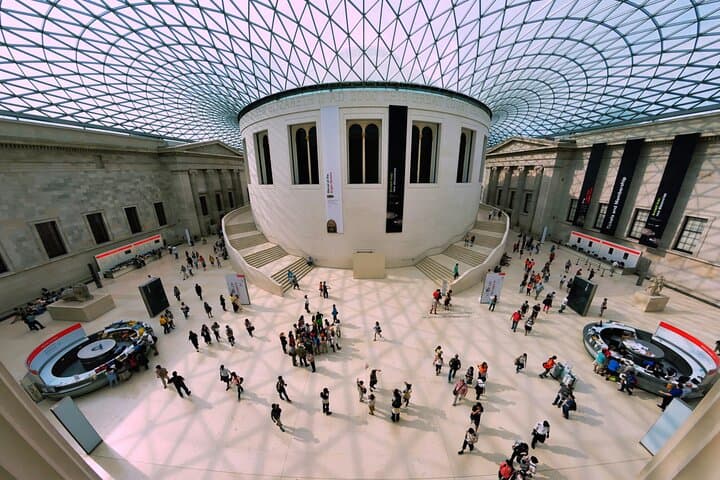
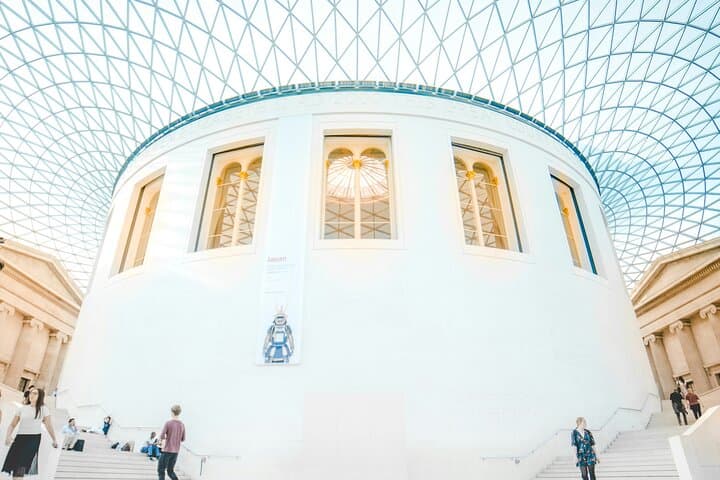
Stand beneath the Great Court's glass canopy and feel the hush of objects that have traveled continents and centuries.
Verified experiences and guided adventures in the surrounding area.
Operated by HandMedinaCo Tours · London, England
Stand beneath the Great Court's glass canopy and feel the hush of objects that have traveled continents and centuries.
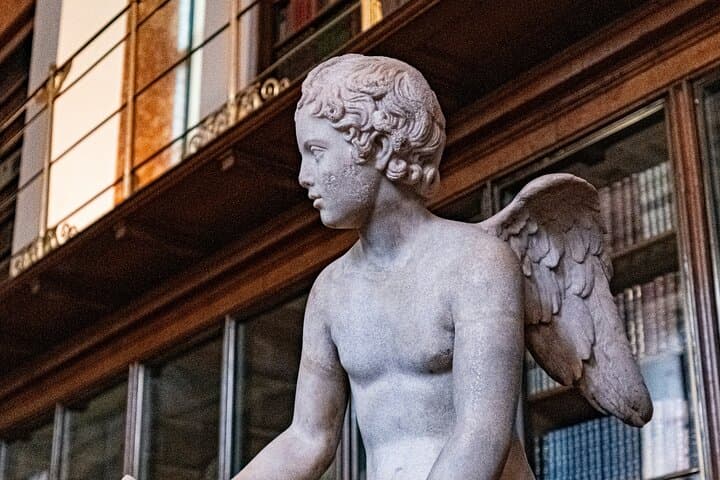
A private guided tour of the British Museum moves at a deliberate pace: your guide threads context through stone, papyrus and plaster — from the Rosetta Stone’s Greek inscriptions to the weathered faces of the Elgin Marbles. The route typically includes Egyptian mummies, Assyrian reliefs, and highlights chosen to match your interests, allowing deep looks without the bustle of group tours.
Founded in 1753 on Sir Hans Sloane’s bequest, the museum grew rapidly through exploration, donation and excavation. The building itself is a palimpsest of eras — 19th-century neoclassical façades meet the modern Great Court. Geology is literal here: Parian marble of the Elgin fragments, Egyptian granite sarcophagi and carved limestone reliefs tell stories of material, trade and technique across millennia. London’s cultural layers sit just outside — Bloomsbury’s bookshops and academic institutions that fed the collection.
Practical guidance: tours run about 2.5–3 hours; wear comfortable shoes and expect moderate walking and standing. Skip-the-line entry is included, but security screening is standard and backpacks may be checked. Photography is generally allowed without flash in permanent galleries; special exhibitions often restrict images. If you need wheelchair access or have mobility concerns, request accommodations when booking — lifts and ramps are available but some galleries have steps. Bring a charged phone for notes and photos, but rely on your guide to connect objects to broader history—this is where the experience becomes more than a checklist.
easy.
2.5–3 hours.
Suitable for most fitness levels; requires standing and moderate walking but no technical exertion.
Yes — the private tour includes skip-the-line entry to the British Museum as listed in the inclusions.
The museum has lifts and step-free routes; notify the operator when booking so the guide can plan an accessible route.
Photography is generally allowed in permanent galleries without flash, but special exhibitions or specific objects may restrict photography—confirm with your guide.
The tour is conducted for your booking party only, allowing the guide to tailor stops and depth of commentary to your interests and pace.
Founded in 1753 from Sir Hans Sloane’s collection, the British Museum expanded through donations, purchases and archaeological expeditions, becoming a central public repository for global material culture.
The museum runs active conservation and research programs; galleries are climate-controlled to protect sensitive materials, and the institution publishes conservation findings to support best practices.
HandMedinaCo Tours operates guided outdoor trips and adventures with an emphasis on safety, stewardship, and memorable experiences.
Stand beneath the Great Court's glass canopy and feel the hush of objects that have traveled continents and centuries.
Stand beneath the Great Court's glass canopy and feel the hush of objects that have traveled continents and centuries.
A private guided tour of the British Museum moves at a deliberate pace: your guide threads context through stone, papyrus and plaster — from the Rosetta Stone’s Greek inscriptions to the weathered faces of the Elgin Marbles. The route typically includes Egyptian mummies, Assyrian reliefs, and highlights chosen to match your interests, allowing deep looks without the bustle of group tours.
Founded in 1753 on Sir Hans Sloane’s bequest, the museum grew rapidly through exploration, donation and excavation. The building itself is a palimpsest of eras — 19th-century neoclassical façades meet the modern Great Court. Geology is literal here: Parian marble of the Elgin fragments, Egyptian granite sarcophagi and carved limestone reliefs tell stories of material, trade and technique across millennia. London’s cultural layers sit just outside — Bloomsbury’s bookshops and academic institutions that fed the collection.
Practical guidance: tours run about 2.5–3 hours; wear comfortable shoes and expect moderate walking and standing. Skip-the-line entry is included, but security screening is standard and backpacks may be checked. Photography is generally allowed without flash in permanent galleries; special exhibitions often restrict images. If you need wheelchair access or have mobility concerns, request accommodations when booking — lifts and ramps are available but some galleries have steps. Bring a charged phone for notes and photos, but rely on your guide to connect objects to broader history—this is where the experience becomes more than a checklist.