THE ADVENTURE COLLECTIVE® · Independent discovery and booking for outdoor travel

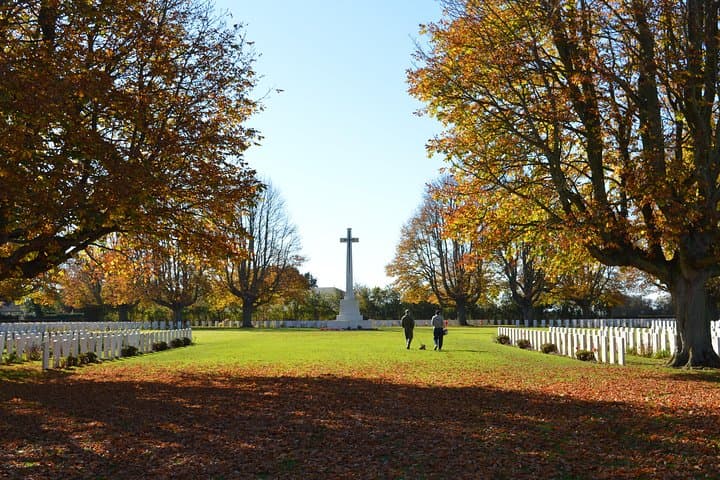
Trace the British D‑Day sectors from Pegasus Bridge to Gold Beach on a private full‑day tour from Bayeux. Visit gun batteries, the Mulberry harbour remains and the British War Cemetery with expert local context and short guided walks.
Trace the British D‑Day sectors from Pegasus Bridge to Gold Beach on a private full‑day tour from Bayeux. Visit gun batteries, the Mulberry harbour remains and the British War Cemetery with expert local context and short guided walks.
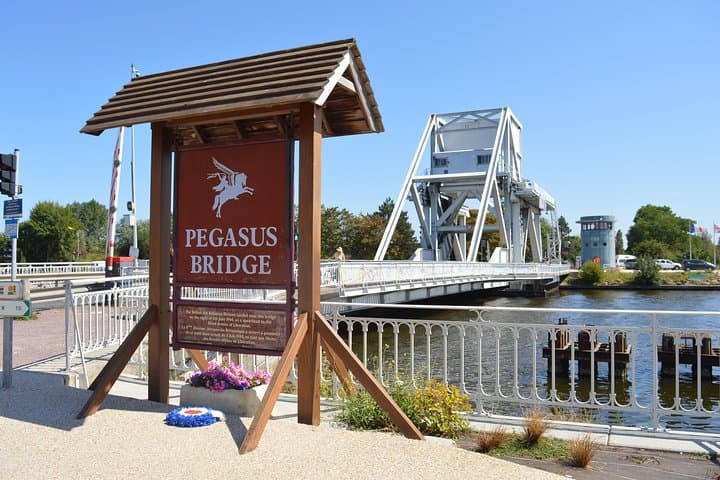
A low, salt-laced wind meets the coach as you drive out of Bayeux; hedgerows slide past like green walls and the flat coastline opens to a grey-silver sea. By midmorning you stand at Pegasus Bridge where the canal watches, the metal spans remembering the glider landings that seized them in the first hours of D-Day. The route moves east along beaches and gun emplacements, each stop a place where landscape and strategy collided.
Verified experiences and guided adventures in the surrounding area.
Operated by Allied Victory Tours · Bayeux, Calvados
A low, salt-laced wind meets the coach as you drive out of Bayeux; hedgerows slide past like green walls and the flat coastline opens to a grey-silver sea. By midmorning you stand at Pegasus Bridge where the canal watches, the metal spans remembering the glider landings that seized them in the first hours of D-Day. The route moves east along beaches and gun emplacements, each stop a place where landscape and strategy collided.
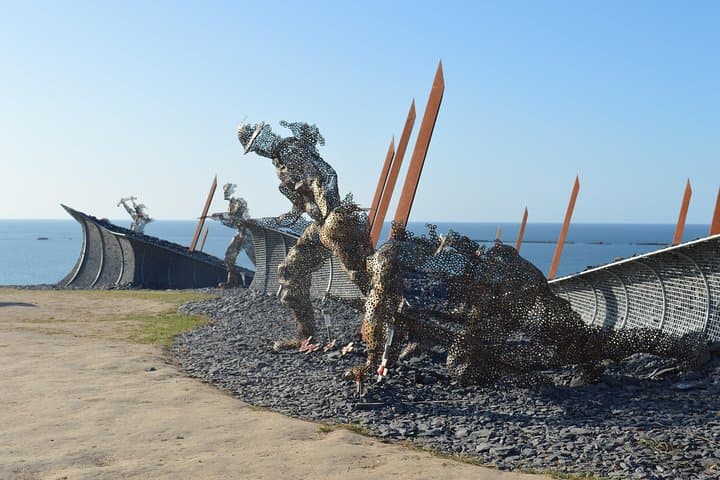
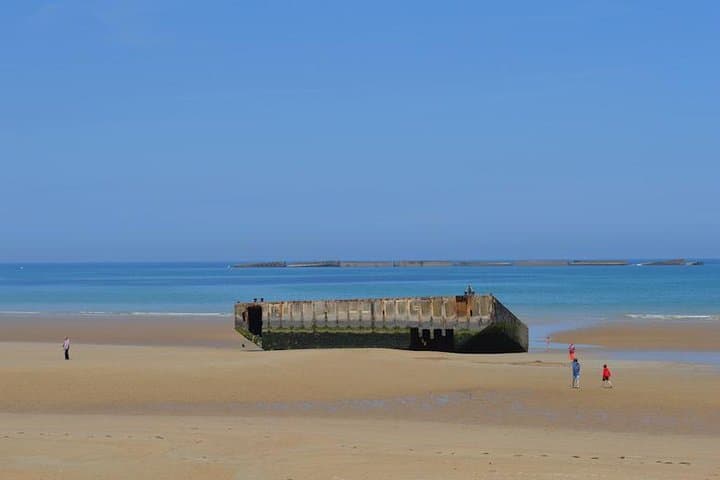
This full-day private tour traces the British sectors of June 6, 1944: airborne actions at Pegasus, the hard slog at Hillman strongpoint, the wide expanse of Sword and Gold Beaches, the remains of the Mulberry harbour at Arromanches and the intact concrete casemates at Longues-sur-Mer. Geologically, the Normandy coast is a mix of low chalk cliffs, pebble and sand beaches and pastoral bocage inland — terrain that shaped both defenders’ fields of fire and attackers’ options. Locally, Bayeux is steeped in medieval layers; the town’s 11th-century tapestry and the cathedral sit a short drive from wartime cemeteries and memorials.
Practical notes: expect frequent short walks on uneven ground and the chance for coffee or restroom breaks at most stops. The guide provides private transport and local context; admissions are typically not included. Wear sturdy shoes and layered clothing for coastal winds; bring a reusable water bottle and respectful silence at cemeteries. Photography is welcome but observe memorial etiquette. The tour’s pace balances stops for reflection with historical briefing — a full eight to nine hours that places you at the intersection of landscape, memory and history.
easy.
8–9 hours.
Suitable for most fitness levels; expect multiple short walks of 5–20 minutes on uneven terrain and ability to board the vehicle.
Yes — the tour includes pickup and drop-off from your accommodation in Bayeux or a pre-agreed nearby location.
Most stops on this itinerary do not include admission; the tour visits outdoor sites and some locations where entry fees may be extra.
The tour is not recommended for children under 8; there are long sections focused on historical interpretation and several solemn memorials.
Transport is described as wheelchair accessible, but some sites have uneven ground or steps—check with the operator in advance for specific site access details.
These sites mark the British 6th Airborne’s glider seizure of bridges and the landing sectors of the 3rd and 50th Infantry Divisions that pushed inland on D‑Day, June 6, 1944.
Visitors should stay on paths and avoid climbing emplacements; local groups monitor coastal erosion and maintain cemeteries and memorials — respectful behavior supports preservation.
Allied Victory Tours operates guided outdoor trips and adventures with an emphasis on safety, stewardship, and memorable experiences.
A low, salt-laced wind meets the coach as you drive out of Bayeux; hedgerows slide past like green walls and the flat coastline opens to a grey-silver sea. By midmorning you stand at Pegasus Bridge where the canal watches, the metal spans remembering the glider landings that seized them in the first hours of D-Day. The route moves east along beaches and gun emplacements, each stop a place where landscape and strategy collided.
A low, salt-laced wind meets the coach as you drive out of Bayeux; hedgerows slide past like green walls and the flat coastline opens to a grey-silver sea. By midmorning you stand at Pegasus Bridge where the canal watches, the metal spans remembering the glider landings that seized them in the first hours of D-Day. The route moves east along beaches and gun emplacements, each stop a place where landscape and strategy collided.
This full-day private tour traces the British sectors of June 6, 1944: airborne actions at Pegasus, the hard slog at Hillman strongpoint, the wide expanse of Sword and Gold Beaches, the remains of the Mulberry harbour at Arromanches and the intact concrete casemates at Longues-sur-Mer. Geologically, the Normandy coast is a mix of low chalk cliffs, pebble and sand beaches and pastoral bocage inland — terrain that shaped both defenders’ fields of fire and attackers’ options. Locally, Bayeux is steeped in medieval layers; the town’s 11th-century tapestry and the cathedral sit a short drive from wartime cemeteries and memorials.
Practical notes: expect frequent short walks on uneven ground and the chance for coffee or restroom breaks at most stops. The guide provides private transport and local context; admissions are typically not included. Wear sturdy shoes and layered clothing for coastal winds; bring a reusable water bottle and respectful silence at cemeteries. Photography is welcome but observe memorial etiquette. The tour’s pace balances stops for reflection with historical briefing — a full eight to nine hours that places you at the intersection of landscape, memory and history.