THE ADVENTURE COLLECTIVE® · Independent discovery and booking for outdoor travel

Spend half a day exploring Boulder's Flatirons, Flagstaff Mountain and Pearl Street on a private tour from Denver. Expect short hikes, panoramic pullouts, local insight from a driver-guide, and practical logistics like water refills and hotel pickup across Denver Metro.
Spend half a day exploring Boulder's Flatirons, Flagstaff Mountain and Pearl Street on a private tour from Denver. Expect short hikes, panoramic pullouts, local insight from a driver-guide, and practical logistics like water refills and hotel pickup across Denver Metro.
You arrive from Denver with the Front Range pushing itself into the windshield — a stepped horizon of pines and sandstone. The van eases up Flagstaff Road and the city below opens: a patchwork of ski‑white roofs in winter, a green sprawl in summer, and the Flatirons rising like sliced stone blades to the west. For four hours the tour moves at the pace of the land: brief hikes on well-worn trails, panoramic pullouts, and a threaded walk through Pearl Street where local vendors and CU Boulder students cross paths.
Verified experiences and guided adventures in the surrounding area.
Operated by Explorer Tours · Boulder, Colorado
You arrive from Denver with the Front Range pushing itself into the windshield — a stepped horizon of pines and sandstone. The van eases up Flagstaff Road and the city below opens: a patchwork of ski‑white roofs in winter, a green sprawl in summer, and the Flatirons rising like sliced stone blades to the west. For four hours the tour moves at the pace of the land: brief hikes on well-worn trails, panoramic pullouts, and a threaded walk through Pearl Street where local vendors and CU Boulder students cross paths.
Flagstaff Mountain stands at roughly 6,983 feet and serves as an immediate contrast to Boulder's downtown elevation of about 5,400 feet. Geologically the Flatirons are slabs of Fountain Formation sandstone, tilted and exposed as the Rockies pushed up over the last 300 million years. That ancient rock feels impatient underfoot — it wants you higher — and the ridgelines reveal how wind and water have carved the foothills into readable strata.
Boulder’s modern character is a blend of university energy and outdoor culture. The University of Colorado was established in the same era Colorado achieved statehood, and Pearl Street's brick promenades have been a civic meeting place for generations. Indigenous groups, including the Ute and Arapaho, traversed these valleys long before towns formed; traces of that history sit quietly at the edge of developed trails and in place names.
The tour is intentionally pragmatic: a professional driver-guide handles logistics, water refills are available in the van, and the schedule mixes short climbs — expect segments of trail with a few hundred feet of elevation gain — with driving between viewpoints. Nature here is restless: weather can flip from sun to thunder in an hour, and wind at the ridgeline will push at you as if to test your balance.
Practical planning is simple but important. Wear grippy footwear — sandstone can be slick when damp — and layer for temperature swings. Bring a reusable water bottle; the operator provides refills. If you’re coming from Denver, allow 30–45 minutes of drive time depending on traffic. Mornings and late afternoons offer the best light for photography and cooler trail conditions. For families, infant and car seats are available on request.
This private tour is a compact introduction to Boulder's landscape and culture: the geology that shapes views, the human history threaded through downtown, and accessible hikes that let you feel the foothills rather than simply see them. It’s an efficient day out that hands you panoramic reward for modest effort — the kind of outing that makes returning to these mountains a practical inevitability.
moderate.
4 hours (total tour).
Suitable for travelers in general physical condition; short hikes include a few hundred feet of elevation gain and uneven terrain.
Pickup is available anywhere in Denver Metro; confirm your address during booking for the private transfer.
The tour is rated easy-to-moderate: most walking is short with occasional climbs of a few hundred feet; it’s suitable for most fitness levels.
Yes — there are restroom facilities at trailheads and in downtown Boulder during the tour segments.
Yes — infant and car seats are available on request; specify needs in the special requirements field at booking.
Layered clothing, insulated boots, and traction devices for icy patches are recommended for winter outings on Flagstaff and Flatirons trails.
Tipping is customary for good service; 10–20% of the tour price is a typical range depending on satisfaction.
Boulder grew rapidly in the late 19th century with the arrival of the railroad and the founding of the University of Colorado; the Flatirons' rock is part of the Fountain Formation deposited hundreds of millions of years ago.
Visitors are asked to follow Leave No Trace practices; trail erosion and crowding are managed by seasonal trail closures and local stewardship programs.
Explorer Tours operates guided outdoor trips and adventures with an emphasis on safety, stewardship, and memorable experiences.
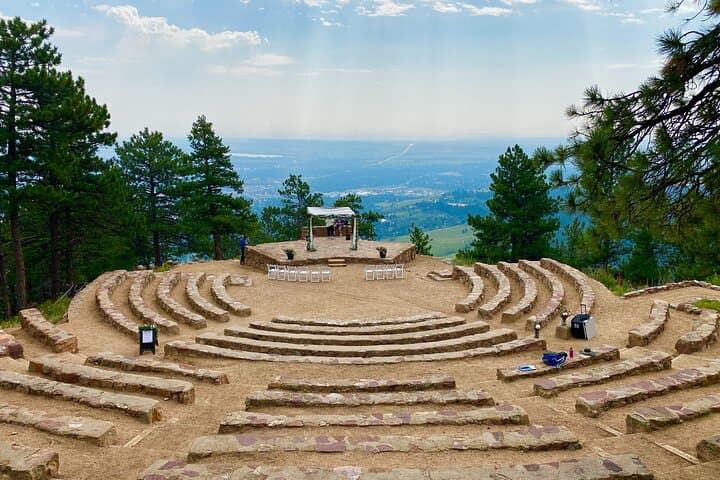
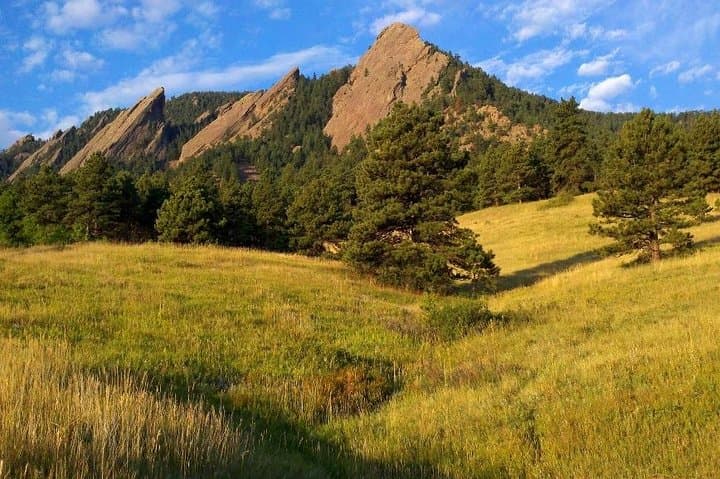
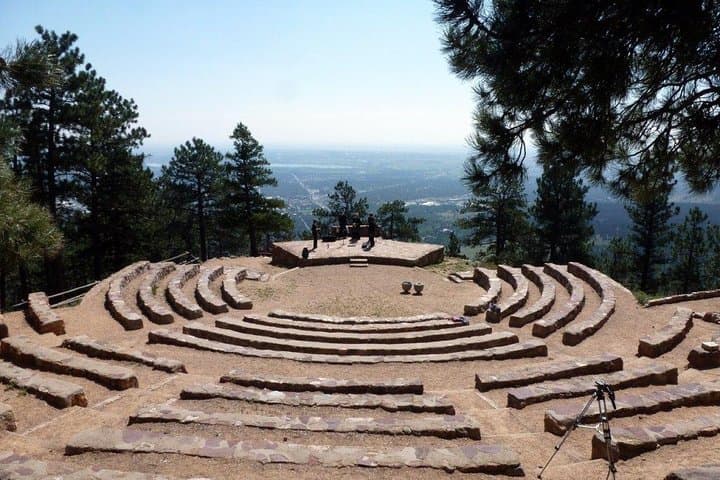
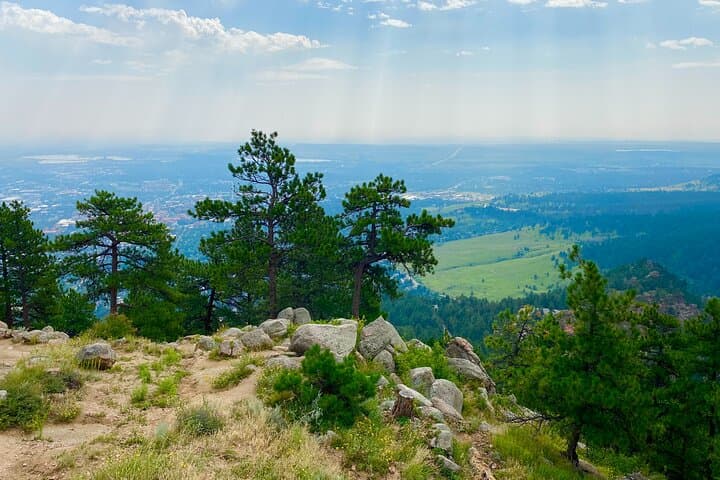
You arrive from Denver with the Front Range pushing itself into the windshield — a stepped horizon of pines and sandstone. The van eases up Flagstaff Road and the city below opens: a patchwork of ski‑white roofs in winter, a green sprawl in summer, and the Flatirons rising like sliced stone blades to the west. For four hours the tour moves at the pace of the land: brief hikes on well-worn trails, panoramic pullouts, and a threaded walk through Pearl Street where local vendors and CU Boulder students cross paths.
You arrive from Denver with the Front Range pushing itself into the windshield — a stepped horizon of pines and sandstone. The van eases up Flagstaff Road and the city below opens: a patchwork of ski‑white roofs in winter, a green sprawl in summer, and the Flatirons rising like sliced stone blades to the west. For four hours the tour moves at the pace of the land: brief hikes on well-worn trails, panoramic pullouts, and a threaded walk through Pearl Street where local vendors and CU Boulder students cross paths.
Flagstaff Mountain stands at roughly 6,983 feet and serves as an immediate contrast to Boulder's downtown elevation of about 5,400 feet. Geologically the Flatirons are slabs of Fountain Formation sandstone, tilted and exposed as the Rockies pushed up over the last 300 million years. That ancient rock feels impatient underfoot — it wants you higher — and the ridgelines reveal how wind and water have carved the foothills into readable strata.
Boulder’s modern character is a blend of university energy and outdoor culture. The University of Colorado was established in the same era Colorado achieved statehood, and Pearl Street's brick promenades have been a civic meeting place for generations. Indigenous groups, including the Ute and Arapaho, traversed these valleys long before towns formed; traces of that history sit quietly at the edge of developed trails and in place names.
The tour is intentionally pragmatic: a professional driver-guide handles logistics, water refills are available in the van, and the schedule mixes short climbs — expect segments of trail with a few hundred feet of elevation gain — with driving between viewpoints. Nature here is restless: weather can flip from sun to thunder in an hour, and wind at the ridgeline will push at you as if to test your balance.
Practical planning is simple but important. Wear grippy footwear — sandstone can be slick when damp — and layer for temperature swings. Bring a reusable water bottle; the operator provides refills. If you’re coming from Denver, allow 30–45 minutes of drive time depending on traffic. Mornings and late afternoons offer the best light for photography and cooler trail conditions. For families, infant and car seats are available on request.
This private tour is a compact introduction to Boulder's landscape and culture: the geology that shapes views, the human history threaded through downtown, and accessible hikes that let you feel the foothills rather than simply see them. It’s an efficient day out that hands you panoramic reward for modest effort — the kind of outing that makes returning to these mountains a practical inevitability.