THE ADVENTURE COLLECTIVE® · Independent discovery and booking for outdoor travel

A private half‑day speedboat from Split pairs crystal‑clear swimming in the Blue Lagoon between Drvenik Veli and the Krknjaši islets with a walk through UNESCO‑listed Trogir. Fast boat time, extended water play, and a compact cultural stop make this an easy maritime day trip.
A private half‑day speedboat from Split pairs crystal‑clear swimming in the Blue Lagoon between Drvenik Veli and the Krknjaši islets with a walk through UNESCO‑listed Trogir. Fast boat time, extended water play, and a compact cultural stop make this an easy maritime day trip.
You step onto the Split Riva as gulls wheel and the harbor breathes salt and diesel. A compact speedboat slips away from the quay, cutting the Adriatic until the water turns the exact blue that makes photographers quiet. The boat docks in a sheltered sill between Drvenik Veli and the two Krknjaši islets; the lagoon invites a cool, buoyant welcome and a chance to drop into transparent water that pushes back against you with a gentle current.
Verified experiences and guided adventures in the surrounding area.
Operated by Šugaman Tours · Split, Split-Dalmatia County
You step onto the Split Riva as gulls wheel and the harbor breathes salt and diesel. A compact speedboat slips away from the quay, cutting the Adriatic until the water turns the exact blue that makes photographers quiet. The boat docks in a sheltered sill between Drvenik Veli and the two Krknjaši islets; the lagoon invites a cool, buoyant welcome and a chance to drop into transparent water that pushes back against you with a gentle current.
This stretch of the central Dalmatian coast has layers of history — Roman trade routes, Venetian naval charts and Ottoman borderlines — visible in stone forts and narrow streets of Trogir. Geologically, the islands are limestone outcrops shaped by karstification and wave action; underwater, beds of Posidonia oceanica stabilize the shallows and host small reef life. Culturally, Trogir’s UNESCO core reads like a medieval ledger: palaces, a Romanesque cathedral and gates that still measure arrivals.
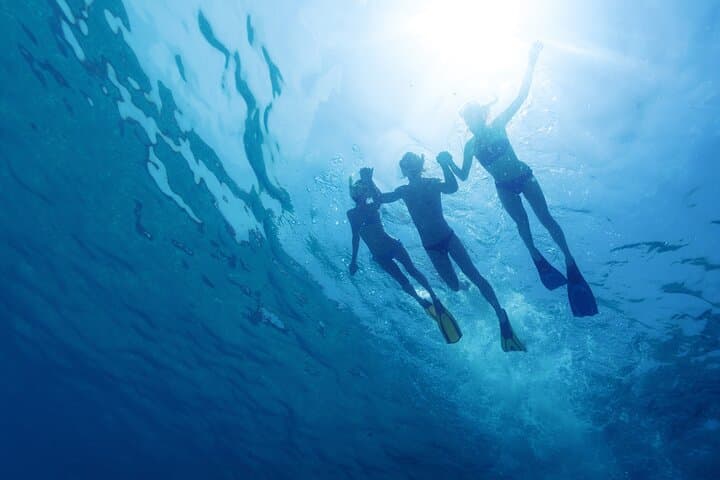
Practically, expect a half‑day rhythm: a 20–40 minute cruise from Split, 90–120 minutes in the lagoon for swimming and snorkeling, then time to walk Trogir’s waterfront and enter through its main gate. Bring your own mask and snorkel, reef‑safe sunscreen, and a light wind layer for the return. Be ready for sun on the boat and stone shade in Trogir; currents can shift quickly near the islets, so follow your skipper’s guidance. The tour is private and suits most fitness levels; it’s an efficient way to combine clear-water swimming with a short cultural stop in one outing.
easy.
4–4.5 hours.
Suitable for most fitness levels; basic mobility for boarding and shallow snorkeling recommended
Most itineraries take approximately 20–40 minutes each way depending on sea conditions and boat speed.
Due to hygiene protocols masks are not routinely provided—bring your own well‑fitting snorkel gear.
Yes—the tour moors at Trogir’s main promenade and allows time (usually ~90 minutes) to walk the UNESCO core independently.
Yes—there’s shallow water for wading at the lagoon and the boat remains close at hand, but non‑swimmers should wear a flotation aid if uncomfortable in deeper water.
Trogir’s compact historic center dates to Hellenistic and Roman settlements and flourished under Venetian rule, leaving a dense cluster of medieval churches and palaces.
Anchoring near Posidonia meadows can damage seagrass—stick to designated mooring spots, avoid touching marine life, and use reef‑safe sunscreen.
Šugaman Tours operates guided outdoor trips and adventures with an emphasis on safety, stewardship, and memorable experiences.
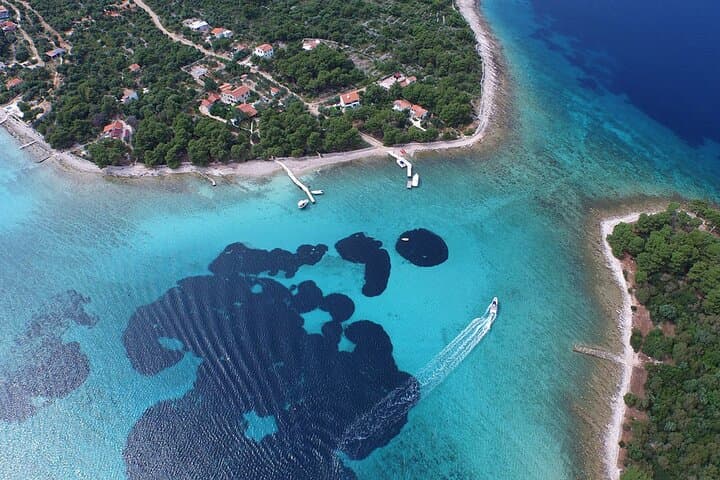
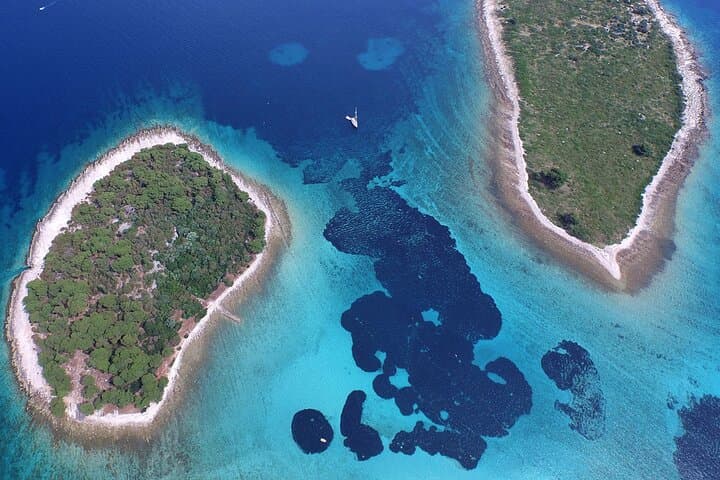
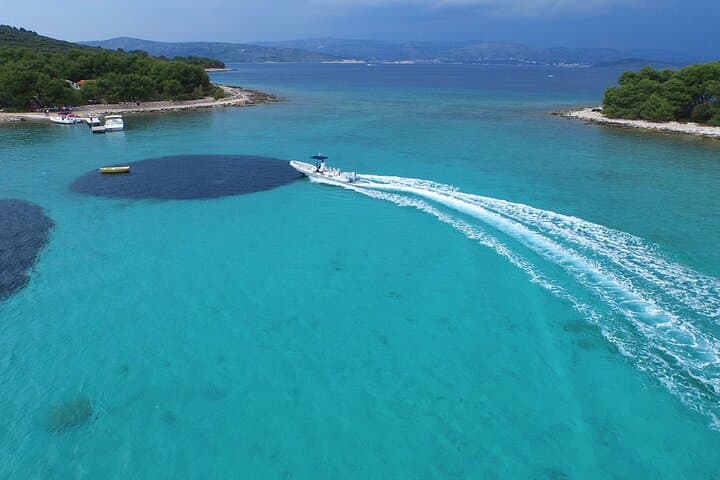
You step onto the Split Riva as gulls wheel and the harbor breathes salt and diesel. A compact speedboat slips away from the quay, cutting the Adriatic until the water turns the exact blue that makes photographers quiet. The boat docks in a sheltered sill between Drvenik Veli and the two Krknjaši islets; the lagoon invites a cool, buoyant welcome and a chance to drop into transparent water that pushes back against you with a gentle current.
You step onto the Split Riva as gulls wheel and the harbor breathes salt and diesel. A compact speedboat slips away from the quay, cutting the Adriatic until the water turns the exact blue that makes photographers quiet. The boat docks in a sheltered sill between Drvenik Veli and the two Krknjaši islets; the lagoon invites a cool, buoyant welcome and a chance to drop into transparent water that pushes back against you with a gentle current.
This stretch of the central Dalmatian coast has layers of history — Roman trade routes, Venetian naval charts and Ottoman borderlines — visible in stone forts and narrow streets of Trogir. Geologically, the islands are limestone outcrops shaped by karstification and wave action; underwater, beds of Posidonia oceanica stabilize the shallows and host small reef life. Culturally, Trogir’s UNESCO core reads like a medieval ledger: palaces, a Romanesque cathedral and gates that still measure arrivals.
Practically, expect a half‑day rhythm: a 20–40 minute cruise from Split, 90–120 minutes in the lagoon for swimming and snorkeling, then time to walk Trogir’s waterfront and enter through its main gate. Bring your own mask and snorkel, reef‑safe sunscreen, and a light wind layer for the return. Be ready for sun on the boat and stone shade in Trogir; currents can shift quickly near the islets, so follow your skipper’s guidance. The tour is private and suits most fitness levels; it’s an efficient way to combine clear-water swimming with a short cultural stop in one outing.