THE ADVENTURE COLLECTIVE® · Independent discovery and booking for outdoor travel

Spend a full day on a private Colnago 35 exploring the glowing Blue Cave, Stiniva Bay, Pakleni Islands and historic Hvar. This practical guide previews what to expect — from karst geology and seagrass snorkeling to timing, gear and local tips.
Spend a full day on a private Colnago 35 exploring the glowing Blue Cave, Stiniva Bay, Pakleni Islands and historic Hvar. This practical guide previews what to expect — from karst geology and seagrass snorkeling to timing, gear and local tips.
The day opens on the Adriatic with the hum of an outboard and the coastline of Split shrinking behind you. Salt air sharpens the senses as the Colnago 35 cuts toward the tiny island of Biševo; sunlight slips into the Blue Cave and turns the water an impossible electric blue that seems to glow from below.
Verified experiences and guided adventures in the surrounding area.
The day opens on the Adriatic with the hum of an outboard and the coastline of Split shrinking behind you. Salt air sharpens the senses as the Colnago 35 cuts toward the tiny island of Biševo; sunlight slips into the Blue Cave and turns the water an impossible electric blue that seems to glow from below.
This route threads together Dalmatia’s layered past — ancient seafaring routes, Venetian fortifications on Hvar, and fishing hamlets that survived on tuna and trade. Geologically, the cave is a sea-eroded pocket in karst limestone; Stiniva Bay on Vis is a collapsed roof and narrow entrance that opens into a pebbled crescent. Hvar town offers Renaissance façades, a 16th-century fortress, and a culture shaped by sailing, olive oil and wine.
Expect a mix of short swims, anchored snorkeling over Posidonia seagrass beds, and a guided shore stop to stroll Hvar’s harbor. The day is sensory: the sea dares you into the water, rocky cliffs push wind over the deck, and small coves offer calm to change into dry clothes.
Practical notes: departures run early to mid-morning from Split and return after roughly nine hours. Boats are small and close to the water; bring reef‑safe sunscreen, a hat, and shoes that grip damp decks. Weather and sea state dictate the order of stops — the Blue Cave’s light depends on the sun angle and calm seas — so flexibility is part of the experience. For photographers, mid‑morning light and a polarizer help; for swimmers, basic snorkeling skills and respect for protected seagrass zones will improve the day for everyone.
moderate.
9 hours.
Moderate fitness: able to board a small boat, do short swims/snorkels, and walk cobbled streets for 20–40 minutes.
Access depends on sea state and light; calm seas and a favorable sun angle are required—operators may alter the itinerary for safety.
This private tour runs on a Colnago 35 with a maximum of 12 guests, keeping the group small and flexible.
Yes — stops typically include swimming and snorkeling; some operators provide masks while others recommend bringing your own for fit and comfort.
Yes — the tour usually includes an afternoon stop in Hvar for a short walk, café time, or quick sightseeing before returning to Split.
Hvar and nearby Vis were strategic ports in Venetian and later Austro‑Hungarian maritime networks; the islands’ architecture and harbors reflect centuries of seafaring commerce.
Posidonia oceanica meadows are protected; avoid anchoring on seagrass and use reef‑safe sunscreen to reduce chemical impacts.
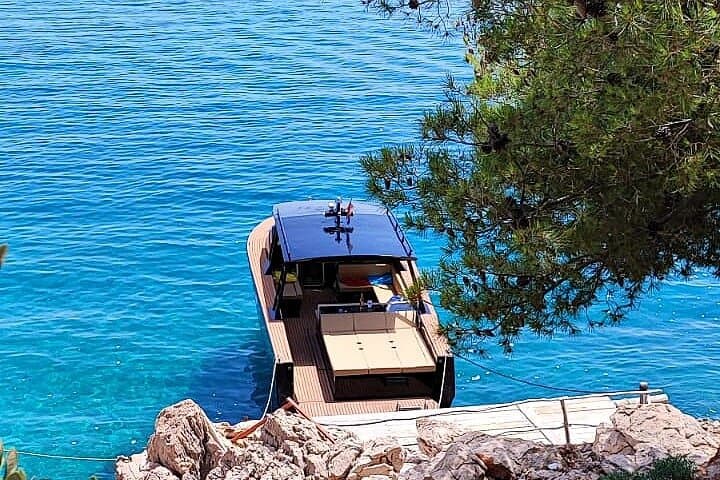
The day opens on the Adriatic with the hum of an outboard and the coastline of Split shrinking behind you. Salt air sharpens the senses as the Colnago 35 cuts toward the tiny island of Biševo; sunlight slips into the Blue Cave and turns the water an impossible electric blue that seems to glow from below.
The day opens on the Adriatic with the hum of an outboard and the coastline of Split shrinking behind you. Salt air sharpens the senses as the Colnago 35 cuts toward the tiny island of Biševo; sunlight slips into the Blue Cave and turns the water an impossible electric blue that seems to glow from below.
This route threads together Dalmatia’s layered past — ancient seafaring routes, Venetian fortifications on Hvar, and fishing hamlets that survived on tuna and trade. Geologically, the cave is a sea-eroded pocket in karst limestone; Stiniva Bay on Vis is a collapsed roof and narrow entrance that opens into a pebbled crescent. Hvar town offers Renaissance façades, a 16th-century fortress, and a culture shaped by sailing, olive oil and wine.
Expect a mix of short swims, anchored snorkeling over Posidonia seagrass beds, and a guided shore stop to stroll Hvar’s harbor. The day is sensory: the sea dares you into the water, rocky cliffs push wind over the deck, and small coves offer calm to change into dry clothes.
Practical notes: departures run early to mid-morning from Split and return after roughly nine hours. Boats are small and close to the water; bring reef‑safe sunscreen, a hat, and shoes that grip damp decks. Weather and sea state dictate the order of stops — the Blue Cave’s light depends on the sun angle and calm seas — so flexibility is part of the experience. For photographers, mid‑morning light and a polarizer help; for swimmers, basic snorkeling skills and respect for protected seagrass zones will improve the day for everyone.