THE ADVENTURE COLLECTIVE® · Independent discovery and booking for outdoor travel

Glide from Camana Bay into a blackened sea that answers every stroke with blue light. This private bioluminescence tour on Grand Cayman pairs a short night sail with swimming and guided natural history for an intimate, eco-focused encounter.
Glide from Camana Bay into a blackened sea that answers every stroke with blue light. This private bioluminescence tour on Grand Cayman pairs a short night sail with swimming and guided natural history for an intimate, eco-focused encounter.
The boat slips away from the Camana Bay dock and the island’s bright edges fall behind you—only a dark horizon and a sky thick with stars. In that black glass, each paddle stroke becomes a ribbon of brief blue fire as microscopic organisms light up under your hands. The water seems to remember every motion and answers with a soft electric pulse that dares you to reach deeper.
Verified experiences and guided adventures in the surrounding area.
Operated by Island Charter · Camana Bay, Grand Cayman
The boat slips away from the Camana Bay dock and the island’s bright edges fall behind you—only a dark horizon and a sky thick with stars. In that black glass, each paddle stroke becomes a ribbon of brief blue fire as microscopic organisms light up under your hands. The water seems to remember every motion and answers with a soft electric pulse that dares you to reach deeper.
Bioluminescence in the Cayman Islands is less a spectacle and more a biological conversation. Dinoflagellates—tiny plankton—produce light when disturbed; this was recorded here long before modern tours, and local fishermen once used the glow to read tides and tracks. The shallow bays and mangrove-fringed channels that nurture this phenomenon are the product of the island’s limestone geology and protected reefs, where calm waters let the plankton concentrate.
Culturally, the experience ties to Caymanian respect for the sea: guides often combine natural history with practical seamanship, pointing out mangrove roots and reef edges as they navigate. Expect an intimate, eco-minded outing—small groups, minimal lights, and a focus on leaving the bay as you found it.
Practical guidance: bring reef-safe sunscreen applied well before boarding, a lightweight long-sleeve rashguard to limit mosquito bites, and a waterproof light for moving on the dock only. Be prepared to swim or float; moderate fitness and basic snorkeling comfort are required. Tours are best on moonless nights after calm weather—check cancellations for rough seas. Move slowly in the water and avoid bright lights to preserve the glow for everyone.
moderate.
2 hours.
Moderate — comfortable swimming and moving in saltwater; basic snorkeling skill recommended
Yes — the operator allows guests to bring alcoholic beverages; request a cooler or cups ahead of time if needed.
Yes — the tour includes an opportunity to swim and float in the bioluminescent bay; basic swimming ability is required.
Tours may be canceled for rough seas; the operator offers a full refund if you cancel at least 24 hours before departure or if they cancel due to weather.
Not recommended for pregnant travelers or those with serious spinal or heart conditions; children who can swim and follow safety briefings are typically permitted.
Local mariners observed glowing waters long before tourism; the bay’s sheltered limestone channels and mangroves concentrate plankton that produce bioluminescence when disturbed.
Operators emphasize low‑impact practices—no bright lights, limited group sizes, and use of reef‑safe products—to protect sensitive plankton and mangrove habitats.
Island Charter operates guided outdoor trips and adventures with an emphasis on safety, stewardship, and memorable experiences.
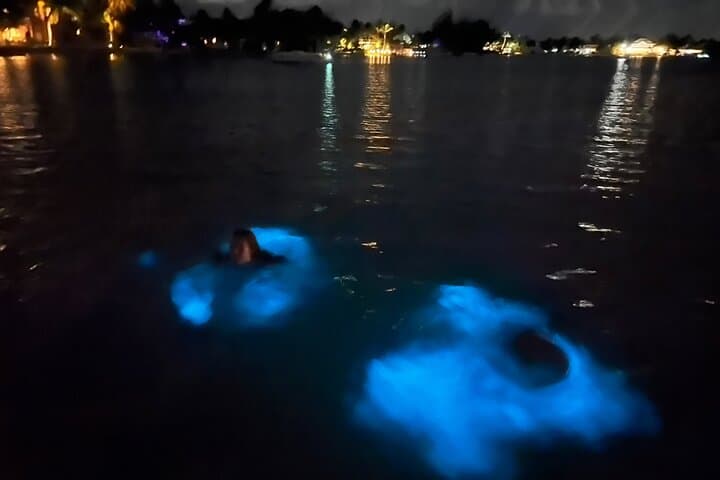
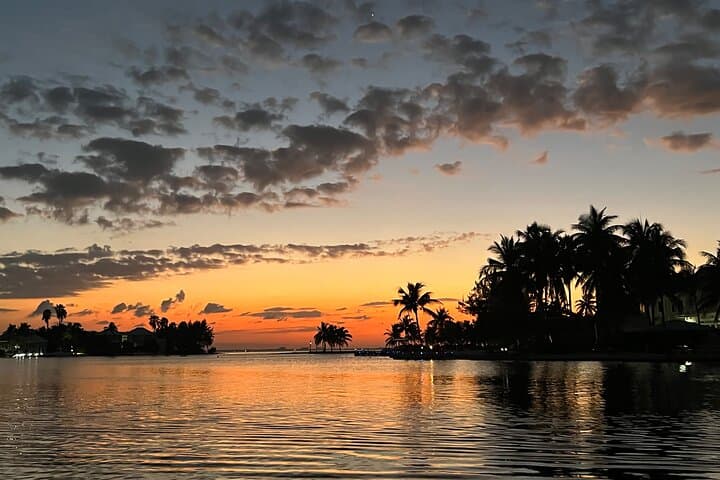
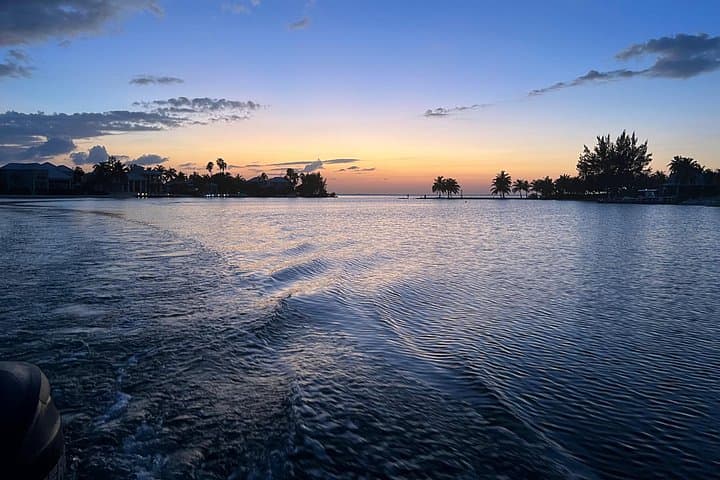
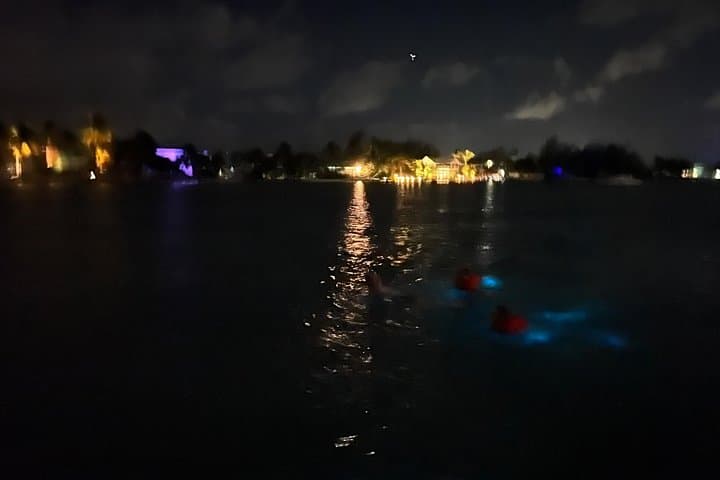
The boat slips away from the Camana Bay dock and the island’s bright edges fall behind you—only a dark horizon and a sky thick with stars. In that black glass, each paddle stroke becomes a ribbon of brief blue fire as microscopic organisms light up under your hands. The water seems to remember every motion and answers with a soft electric pulse that dares you to reach deeper.
The boat slips away from the Camana Bay dock and the island’s bright edges fall behind you—only a dark horizon and a sky thick with stars. In that black glass, each paddle stroke becomes a ribbon of brief blue fire as microscopic organisms light up under your hands. The water seems to remember every motion and answers with a soft electric pulse that dares you to reach deeper.
Bioluminescence in the Cayman Islands is less a spectacle and more a biological conversation. Dinoflagellates—tiny plankton—produce light when disturbed; this was recorded here long before modern tours, and local fishermen once used the glow to read tides and tracks. The shallow bays and mangrove-fringed channels that nurture this phenomenon are the product of the island’s limestone geology and protected reefs, where calm waters let the plankton concentrate.
Culturally, the experience ties to Caymanian respect for the sea: guides often combine natural history with practical seamanship, pointing out mangrove roots and reef edges as they navigate. Expect an intimate, eco-minded outing—small groups, minimal lights, and a focus on leaving the bay as you found it.
Practical guidance: bring reef-safe sunscreen applied well before boarding, a lightweight long-sleeve rashguard to limit mosquito bites, and a waterproof light for moving on the dock only. Be prepared to swim or float; moderate fitness and basic snorkeling comfort are required. Tours are best on moonless nights after calm weather—check cancellations for rough seas. Move slowly in the water and avoid bright lights to preserve the glow for everyone.