THE ADVENTURE COLLECTIVE® · Independent discovery and booking for outdoor travel

Explore Berlin with a local for a private, four-hour walking tour tailored to your interests. Visit landmarks from Tränenpalast to the East Side Gallery while your host connects architecture, wartime history, and modern city life.
Explore Berlin with a local for a private, four-hour walking tour tailored to your interests. Visit landmarks from Tränenpalast to the East Side Gallery while your host connects architecture, wartime history, and modern city life.
You meet your guide outside Tränenpalast and the city opens up like a book that refuses easy endings.
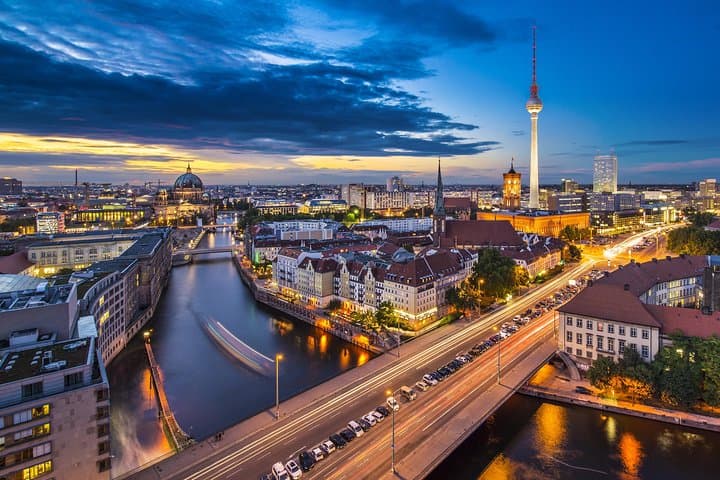
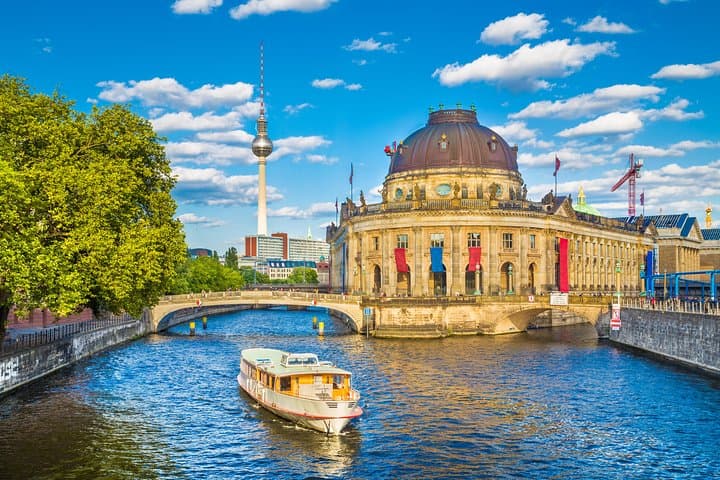
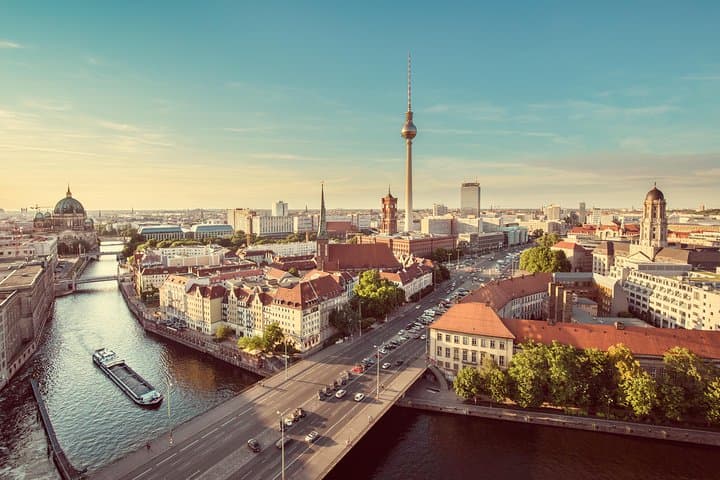
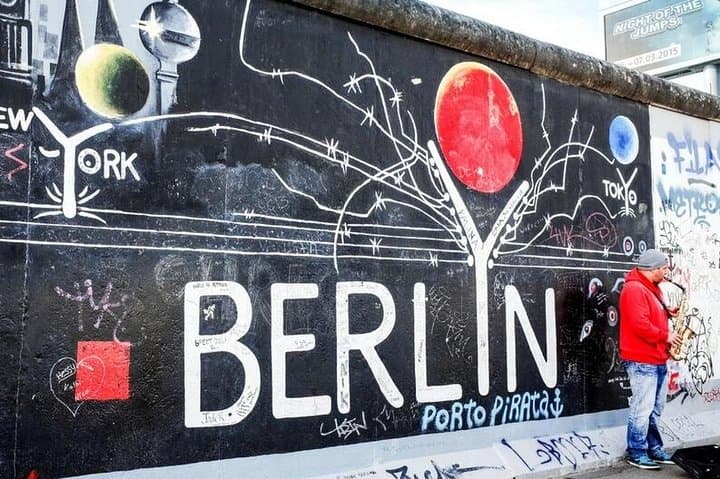
The walk moves at your pace: through the concrete geometry of Mitte, past the scarred lines of Checkpoint Charlie, and along the painted length of the East Side Gallery where the River Spree keeps time to the city’s restless history.
Berlin’s streets record layers—Prussian boulevards, wartime trenches, Cold War borders—and a local host translates those layers into human stories, not just dates on a plaque.
Expect architecture as argument: the neoclassical hush of Brandenburg Gate, the compact modernity of Potsdamer Platz, and the stark planes of the Holocaust Memorial that demand silence and reflection.
The tour also touches social history—postwar reconstruction, the role of Stasi surveillance, and the contemporary blend of immigrant neighborhoods, galleries, and markets.
Practically: this is a 4-hour walking experience on mostly paved city streets with public-transport options nearby; it’s wheelchair- and stroller-accessible in many sections but some stretches may use cobbles or tram crossings.
Your host will tailor the route after a short questionnaire, so itineraries change; bring layers for sudden rain, a charged phone for maps, and comfortable shoes for roughly 5–6 km of walking at an urban pace.
Timing matters: mornings feel quieter at memorials, evenings animate neighborhood squares and food markets. Leave space in the schedule to linger—conversation with a guide can turn a façade into a living history.
Verified experiences and guided adventures in the surrounding area.
Operated by City Unscripted · Berlin, Berlin
You meet your guide outside Tränenpalast and the city opens up like a book that refuses easy endings.
The walk moves at your pace: through the concrete geometry of Mitte, past the scarred lines of Checkpoint Charlie, and along the painted length of the East Side Gallery where the River Spree keeps time to the city’s restless history.
Berlin’s streets record layers—Prussian boulevards, wartime trenches, Cold War borders—and a local host translates those layers into human stories, not just dates on a plaque.
Expect architecture as argument: the neoclassical hush of Brandenburg Gate, the compact modernity of Potsdamer Platz, and the stark planes of the Holocaust Memorial that demand silence and reflection.
The tour also touches social history—postwar reconstruction, the role of Stasi surveillance, and the contemporary blend of immigrant neighborhoods, galleries, and markets.
Practically: this is a 4-hour walking experience on mostly paved city streets with public-transport options nearby; it’s wheelchair- and stroller-accessible in many sections but some stretches may use cobbles or tram crossings.
Your host will tailor the route after a short questionnaire, so itineraries change; bring layers for sudden rain, a charged phone for maps, and comfortable shoes for roughly 5–6 km of walking at an urban pace.
Timing matters: mornings feel quieter at memorials, evenings animate neighborhood squares and food markets. Leave space in the schedule to linger—conversation with a guide can turn a façade into a living history.
easy.
4 hours.
Suitable for most fitness levels; expect 5–6 km of mostly flat walking with intermittent stops
The standard experience is four hours and typically covers about 5–6 km of mostly flat, paved city streets with frequent stops for discussion and photos.
Yes — the tour is fully personalised; your host will tailor the route to your interests and you can adjust plans during the experience.
Many sections are wheelchair- and stroller-accessible, especially around major memorials and museums, though some streets have cobbles and tram crossings; discuss mobility needs when booking.
Admission is not included by default; if you choose to enter paid sites your host can advise and you’ll cover tickets separately.
Berlin’s modern identity is shaped by 20th-century ruptures: imperial ambition, WWII destruction, and a Cold War division that left visible checkpoints and rebuilt urban blocks.
Visitors are asked to treat memorials with care, follow local guidelines at sensitive sites, and support small local businesses and guides to keep neighbourhood economies resilient.
City Unscripted operates guided outdoor trips and adventures with an emphasis on safety, stewardship, and memorable experiences.
You meet your guide outside Tränenpalast and the city opens up like a book that refuses easy endings.
The walk moves at your pace: through the concrete geometry of Mitte, past the scarred lines of Checkpoint Charlie, and along the painted length of the East Side Gallery where the River Spree keeps time to the city’s restless history.
Berlin’s streets record layers—Prussian boulevards, wartime trenches, Cold War borders—and a local host translates those layers into human stories, not just dates on a plaque.
Expect architecture as argument: the neoclassical hush of Brandenburg Gate, the compact modernity of Potsdamer Platz, and the stark planes of the Holocaust Memorial that demand silence and reflection.
The tour also touches social history—postwar reconstruction, the role of Stasi surveillance, and the contemporary blend of immigrant neighborhoods, galleries, and markets.
Practically: this is a 4-hour walking experience on mostly paved city streets with public-transport options nearby; it’s wheelchair- and stroller-accessible in many sections but some stretches may use cobbles or tram crossings.
Your host will tailor the route after a short questionnaire, so itineraries change; bring layers for sudden rain, a charged phone for maps, and comfortable shoes for roughly 5–6 km of walking at an urban pace.
Timing matters: mornings feel quieter at memorials, evenings animate neighborhood squares and food markets. Leave space in the schedule to linger—conversation with a guide can turn a façade into a living history.
You meet your guide outside Tränenpalast and the city opens up like a book that refuses easy endings.
The walk moves at your pace: through the concrete geometry of Mitte, past the scarred lines of Checkpoint Charlie, and along the painted length of the East Side Gallery where the River Spree keeps time to the city’s restless history.
Berlin’s streets record layers—Prussian boulevards, wartime trenches, Cold War borders—and a local host translates those layers into human stories, not just dates on a plaque.
Expect architecture as argument: the neoclassical hush of Brandenburg Gate, the compact modernity of Potsdamer Platz, and the stark planes of the Holocaust Memorial that demand silence and reflection.
The tour also touches social history—postwar reconstruction, the role of Stasi surveillance, and the contemporary blend of immigrant neighborhoods, galleries, and markets.
Practically: this is a 4-hour walking experience on mostly paved city streets with public-transport options nearby; it’s wheelchair- and stroller-accessible in many sections but some stretches may use cobbles or tram crossings.
Your host will tailor the route after a short questionnaire, so itineraries change; bring layers for sudden rain, a charged phone for maps, and comfortable shoes for roughly 5–6 km of walking at an urban pace.
Timing matters: mornings feel quieter at memorials, evenings animate neighborhood squares and food markets. Leave space in the schedule to linger—conversation with a guide can turn a façade into a living history.