THE ADVENTURE COLLECTIVE® · Independent discovery and booking for outdoor travel

Ride a private two-hour horseback tour along St. Lucia’s undeveloped northeast coast, where forested trails open to quiet beaches and, when conditions permit, a rare ocean swim with your horse. This intimate experience balances scenic coastal riding with practical guidance on tides, seaweed, and local weather.
Ride a private two-hour horseback tour along St. Lucia’s undeveloped northeast coast, where forested trails open to quiet beaches and, when conditions permit, a rare ocean swim with your horse. This intimate experience balances scenic coastal riding with practical guidance on tides, seaweed, and local weather.
The horse steps from shaded trail onto a strip of sand where the Atlantic hammers the shore—salt on the wind, hooves falling into cooled sand. Riders move single-file along a quiet, undeveloped stretch of coastline: a mix of forested track, open scrub, and two beaches that still see fishers rather than resort umbrellas.
Verified experiences and guided adventures in the surrounding area.
Operated by Sandy Hoofs St. Lucia Riding Stables · Gros Islet, Gros Islet Quarter
The horse steps from shaded trail onto a strip of sand where the Atlantic hammers the shore—salt on the wind, hooves falling into cooled sand. Riders move single-file along a quiet, undeveloped stretch of coastline: a mix of forested track, open scrub, and two beaches that still see fishers rather than resort umbrellas.
This stretch of St. Lucia bears geological marks of volcanic uplift and longshore drift; black sand and coral rubble meet expanses of pale sand where waves sort shells and seaweed. The northeast coast was less hospitable to plantation sugarcane than the leeward west, so settlements are small and fishing culture remains visible: wooden boats, hand-netters, and coastal hamlets whose rhythms echo earlier colonial and Amerindian presences.
Guides from Sandy Hoofs share local tales—places where parrot calls still echo in the hills—and point out where descending trails cut through limestone outcrops to hidden coves. If sea conditions allow, riders can swim horses in calm surf, a rare thrill shaped by tides and the seasonal arrival of Sargassum.
Practicalities matter: tours are private and two hours long, suitable for beginners and experienced riders, but a 220 lb / 99 kg weight limit applies. Helmets are provided and guides carry bottled water and camera-ready encouragement. Expect mixed terrain—soft sand, compact paths and occasional wet patches—so wear closed-toe shoes, reef-safe sunscreen, and a light rain shell in the wet season. Book early in dry months (Jan–May) for clearer water and firmer trails; allow flexibility for weather and seaweed conditions.
moderate.
2 hours.
Moderate fitness—able to mount/dismount, maintain posture for up to two hours, and handle light trail shifts.
No—tours accommodate beginners and experienced riders; guides adjust pace and give basic instruction at the start.
Yes when sea conditions and Sargassum levels permit; your guide makes the call for horse and rider safety.
Full refund if cancelled at least 24 hours before departure; dangerous weather may prompt a reschedule handled by the operator.
Helmets are provided; the operator asks for age bands during booking and enforces a maximum weight of 220 lbs (99 kg).
The northeast coastline saw less plantation development than the sheltered west; small fishing communities and colonial-era paths remain part of local life.
Sargassum blooms affect beach swimming; use reef-safe products, stay on established tracks, and respect nesting zones to reduce impact.
Sandy Hoofs St. Lucia Riding Stables operates guided outdoor trips and adventures with an emphasis on safety, stewardship, and memorable experiences.
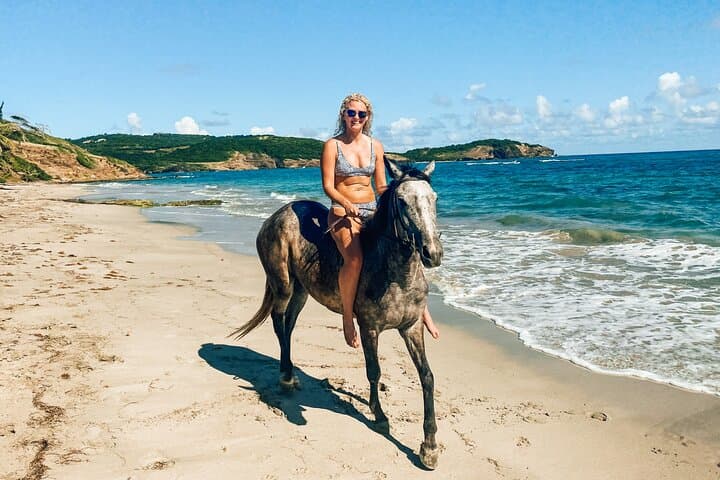
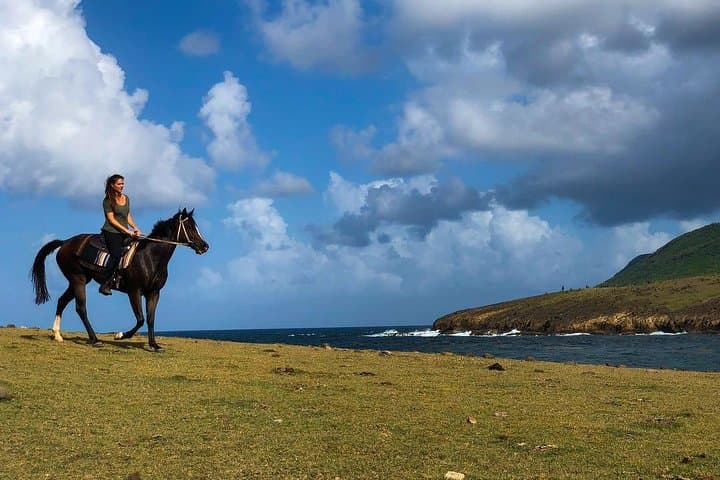
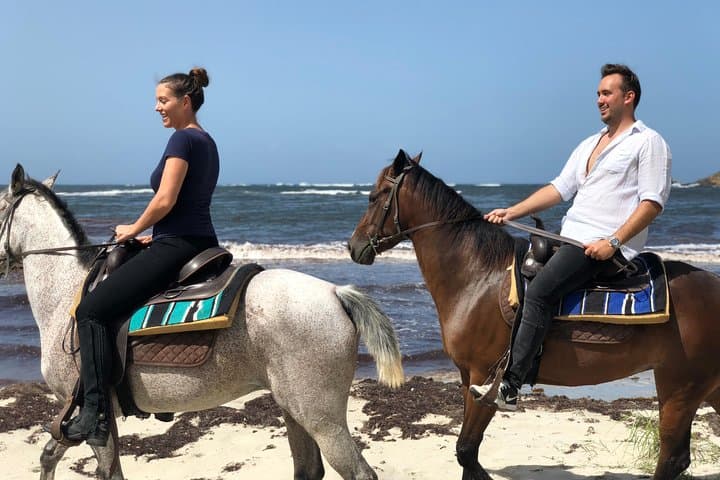
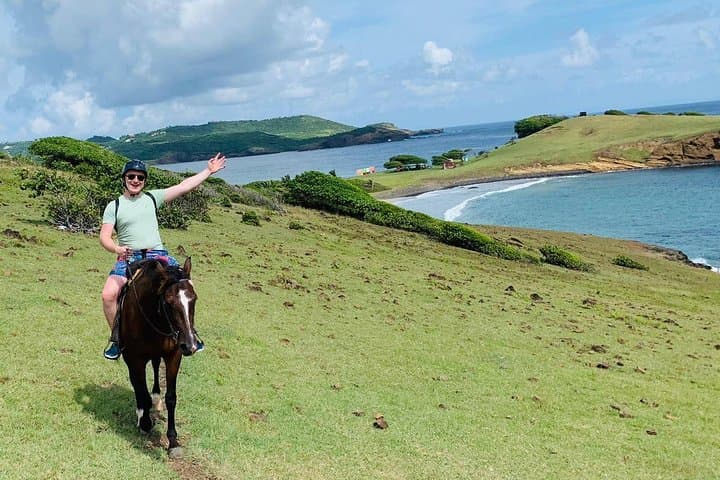
The horse steps from shaded trail onto a strip of sand where the Atlantic hammers the shore—salt on the wind, hooves falling into cooled sand. Riders move single-file along a quiet, undeveloped stretch of coastline: a mix of forested track, open scrub, and two beaches that still see fishers rather than resort umbrellas.
The horse steps from shaded trail onto a strip of sand where the Atlantic hammers the shore—salt on the wind, hooves falling into cooled sand. Riders move single-file along a quiet, undeveloped stretch of coastline: a mix of forested track, open scrub, and two beaches that still see fishers rather than resort umbrellas.
This stretch of St. Lucia bears geological marks of volcanic uplift and longshore drift; black sand and coral rubble meet expanses of pale sand where waves sort shells and seaweed. The northeast coast was less hospitable to plantation sugarcane than the leeward west, so settlements are small and fishing culture remains visible: wooden boats, hand-netters, and coastal hamlets whose rhythms echo earlier colonial and Amerindian presences.
Guides from Sandy Hoofs share local tales—places where parrot calls still echo in the hills—and point out where descending trails cut through limestone outcrops to hidden coves. If sea conditions allow, riders can swim horses in calm surf, a rare thrill shaped by tides and the seasonal arrival of Sargassum.
Practicalities matter: tours are private and two hours long, suitable for beginners and experienced riders, but a 220 lb / 99 kg weight limit applies. Helmets are provided and guides carry bottled water and camera-ready encouragement. Expect mixed terrain—soft sand, compact paths and occasional wet patches—so wear closed-toe shoes, reef-safe sunscreen, and a light rain shell in the wet season. Book early in dry months (Jan–May) for clearer water and firmer trails; allow flexibility for weather and seaweed conditions.