THE ADVENTURE COLLECTIVE® · Independent discovery and booking for outdoor travel

Scale basalt walls cut by Tungurahua’s lava flows on a private, guided climb just outside Baños. This four‑hour outing pairs short sport routes and guided rappels with local knowledge and a riverside approach.
Scale basalt walls cut by Tungurahua’s lava flows on a private, guided climb just outside Baños. This four‑hour outing pairs short sport routes and guided rappels with local knowledge and a riverside approach.
A half-hour drive from Baños turns into a smaller world: a ribbon of road, a sudden dip, and then the Pastaza River appears — a restless line of white that seems to dare you forward. The guide—born in the valley and reading the cliffs like a map—leads you down a narrow trail between ferns and young alder until basalt walls close in. The rock is dark and cool under your hand, columns and seams cut by past lava flows from Tungurahua, and the canyon’s vertical faces offer short, technical routes that reward concentration as much as strength.
Verified experiences and guided adventures in the surrounding area.
Operated by Catso Trips · Baños de Agua Santa, Tungurahua
A half-hour drive from Baños turns into a smaller world: a ribbon of road, a sudden dip, and then the Pastaza River appears — a restless line of white that seems to dare you forward. The guide—born in the valley and reading the cliffs like a map—leads you down a narrow trail between ferns and young alder until basalt walls close in. The rock is dark and cool under your hand, columns and seams cut by past lava flows from Tungurahua, and the canyon’s vertical faces offer short, technical routes that reward concentration as much as strength.
Geology here is honest and recent. Tungurahua’s eruptions over the last several centuries laid thick basaltic layers that chilled into the cliffs you climb today. The Pastaza River, energetic and impatient, has carved steps and overhangs into that lava, exposing finger-sized holds and compact faces ideal for sport climbing and guided rappels. Culturally, Baños has long been a crossroads—an agricultural town where local fruit and herbal markets meet adventure operators. Your snack at the top—chunks of tropical fruit—reminds you that this landscape supports people as much as it challenges them.
The climb itself is focused: expect a 20–40 minute approach (roughly 0.5–1 km) with about 80–150 m of net ascent on foot to the base, then single-pitch routes ranging from 10–25 m. Guides provide certified harnesses, helmets, and ropes; routes are typically bolted for sport climbing and use clear anchors for rappels. The elevation here sits near 1,800–1,900 m (5,900–6,200 ft), so sun and altitude can both affect breathing and grip.
Practical notes: arrive with sticky-soled approach shoes and a light, breathable base layer. Bring 1–1.5 liters of water, sunscreen, and a small first-aid kit. Weather shifts quickly in the Andes—clouds can roll in and drizzle can slick the basalt—so aim for morning departures when rock is coolest and runoff from the river hasn't overtaken approach paths.
This private outing is as much local story as sport: a small operator with deep regional experience runs the day, emphasizing safety, technique, and a modest, social pace. For photographers, the interplay of dark rock, rushing water, and distant volcano angles creates dramatic frames, especially during golden-hour light on clear afternoons. Conservation-wise, stick to established trails and avoid chalking holds excessively; the basalt weathers slowly and trails heal faster when traffic is managed.
If you want a short, intense climb with expert local guidance, a taste of volcanic geology, and the immediacy of river-carved cliffs, Basalto Tungurahua delivers a compact, satisfying adventure that connects skills, scenery, and regional culture.
moderate.
4 hours.
Moderate — able to hike short steep approaches and climb using basic technique for up to 25 m pitches
No — guided sessions accommodate beginners, but you should be comfortable with heights and have a moderate fitness level.
Guides supply certified ropes, harnesses and helmets; confirm whether climbing shoes are provided or available to rent.
Plan for a 20–40 minute approach and sport climbs of 10–25 m; the total activity runs about four hours.
Children may join if they meet age and fitness requirements set by the operator; check booking details and discuss with the guide.
The operator cancels for bad weather; full refunds are available if you cancel at least 24 hours before the start time.
Yes — private pickup from hotels in Baños is offered; confirm exact pickup point when booking.
Basalt cliffs here are direct remnants of Tungurahua’s lava flows; human settlement in Baños grew around hot springs and the fertile valley below the volcano.
Stick to established trails and avoid excessive chalk use; local guides help manage group size to reduce erosion and impact.
Catso Trips operates guided outdoor trips and adventures with an emphasis on safety, stewardship, and memorable experiences.
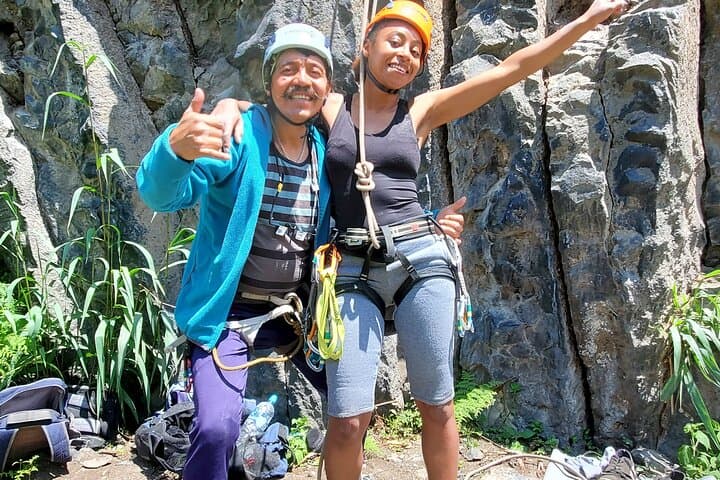
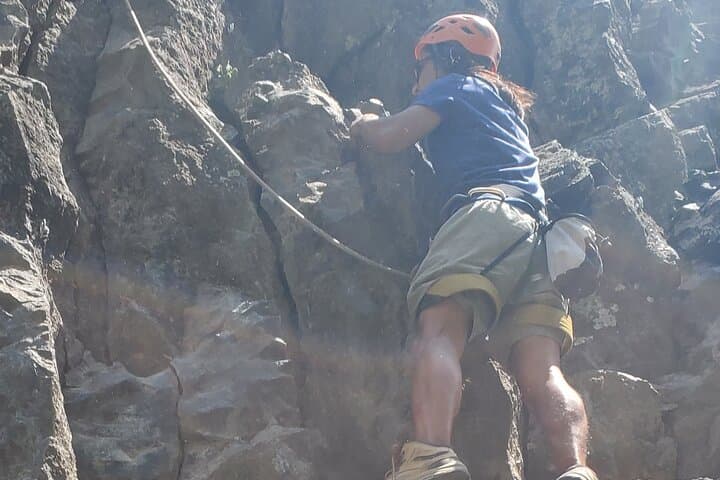
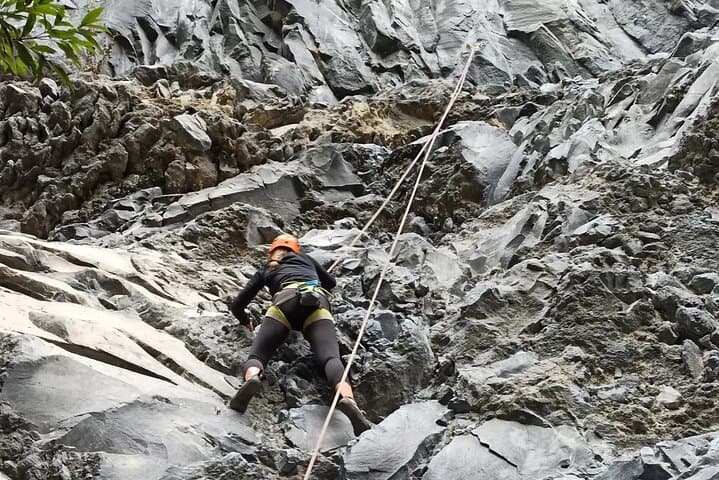
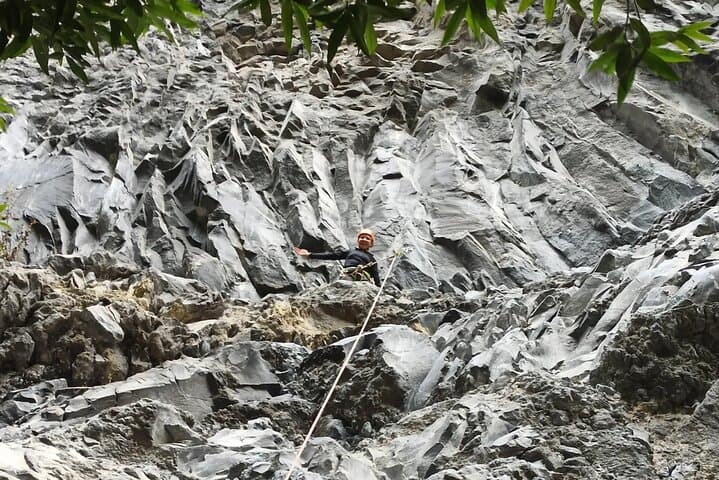
A half-hour drive from Baños turns into a smaller world: a ribbon of road, a sudden dip, and then the Pastaza River appears — a restless line of white that seems to dare you forward. The guide—born in the valley and reading the cliffs like a map—leads you down a narrow trail between ferns and young alder until basalt walls close in. The rock is dark and cool under your hand, columns and seams cut by past lava flows from Tungurahua, and the canyon’s vertical faces offer short, technical routes that reward concentration as much as strength.
A half-hour drive from Baños turns into a smaller world: a ribbon of road, a sudden dip, and then the Pastaza River appears — a restless line of white that seems to dare you forward. The guide—born in the valley and reading the cliffs like a map—leads you down a narrow trail between ferns and young alder until basalt walls close in. The rock is dark and cool under your hand, columns and seams cut by past lava flows from Tungurahua, and the canyon’s vertical faces offer short, technical routes that reward concentration as much as strength.
Geology here is honest and recent. Tungurahua’s eruptions over the last several centuries laid thick basaltic layers that chilled into the cliffs you climb today. The Pastaza River, energetic and impatient, has carved steps and overhangs into that lava, exposing finger-sized holds and compact faces ideal for sport climbing and guided rappels. Culturally, Baños has long been a crossroads—an agricultural town where local fruit and herbal markets meet adventure operators. Your snack at the top—chunks of tropical fruit—reminds you that this landscape supports people as much as it challenges them.
The climb itself is focused: expect a 20–40 minute approach (roughly 0.5–1 km) with about 80–150 m of net ascent on foot to the base, then single-pitch routes ranging from 10–25 m. Guides provide certified harnesses, helmets, and ropes; routes are typically bolted for sport climbing and use clear anchors for rappels. The elevation here sits near 1,800–1,900 m (5,900–6,200 ft), so sun and altitude can both affect breathing and grip.
Practical notes: arrive with sticky-soled approach shoes and a light, breathable base layer. Bring 1–1.5 liters of water, sunscreen, and a small first-aid kit. Weather shifts quickly in the Andes—clouds can roll in and drizzle can slick the basalt—so aim for morning departures when rock is coolest and runoff from the river hasn't overtaken approach paths.
This private outing is as much local story as sport: a small operator with deep regional experience runs the day, emphasizing safety, technique, and a modest, social pace. For photographers, the interplay of dark rock, rushing water, and distant volcano angles creates dramatic frames, especially during golden-hour light on clear afternoons. Conservation-wise, stick to established trails and avoid chalking holds excessively; the basalt weathers slowly and trails heal faster when traffic is managed.
If you want a short, intense climb with expert local guidance, a taste of volcanic geology, and the immediacy of river-carved cliffs, Basalto Tungurahua delivers a compact, satisfying adventure that connects skills, scenery, and regional culture.