THE ADVENTURE COLLECTIVE® · Independent discovery and booking for outdoor travel

Explore the ornate pink sandstone of Banteay Srei and four quieter Angkor-era temples on a private, full-day guided circuit. Expect short walks over uneven stone, detailed carvings, and a mix of inland views and island-temple settings.
Explore the ornate pink sandstone of Banteay Srei and four quieter Angkor-era temples on a private, full-day guided circuit. Expect short walks over uneven stone, detailed carvings, and a mix of inland views and island-temple settings.
Morning light slants across cracked sandstone as the air-conditioned vehicle eases out of Siem Reap and the countryside opens: rice paddies flatten into long mirrors, and oxen graze while temple spires loom ahead like memory made stone. The day moves with purposeful calm — short drives, guided walks and time to look closely at carving after carving until detail begins to read like a language.
Verified experiences and guided adventures in the surrounding area.
Operated by Asia Voyage Tour · Siem Reap, Siem Reap Province
Morning light slants across cracked sandstone as the air-conditioned vehicle eases out of Siem Reap and the countryside opens: rice paddies flatten into long mirrors, and oxen graze while temple spires loom ahead like memory made stone. The day moves with purposeful calm — short drives, guided walks and time to look closely at carving after carving until detail begins to read like a language.
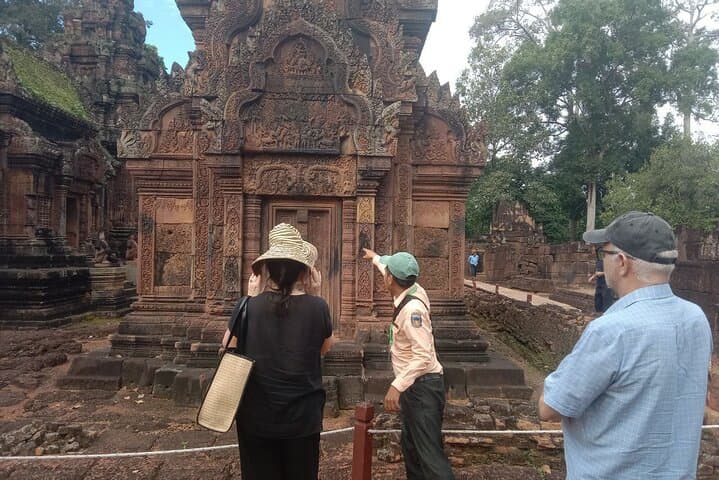
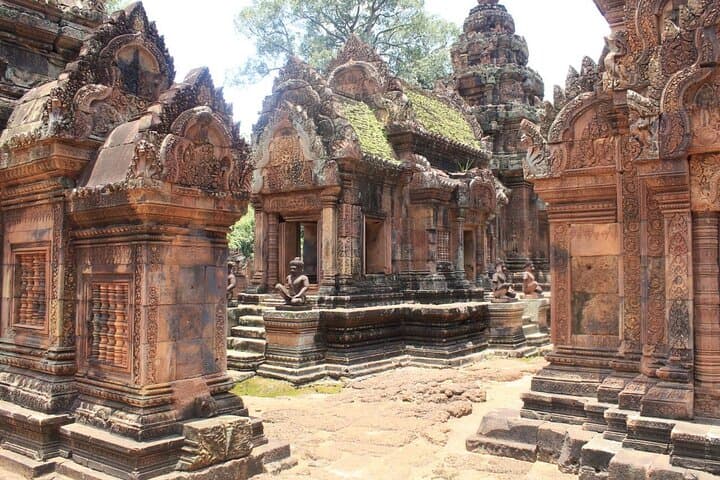
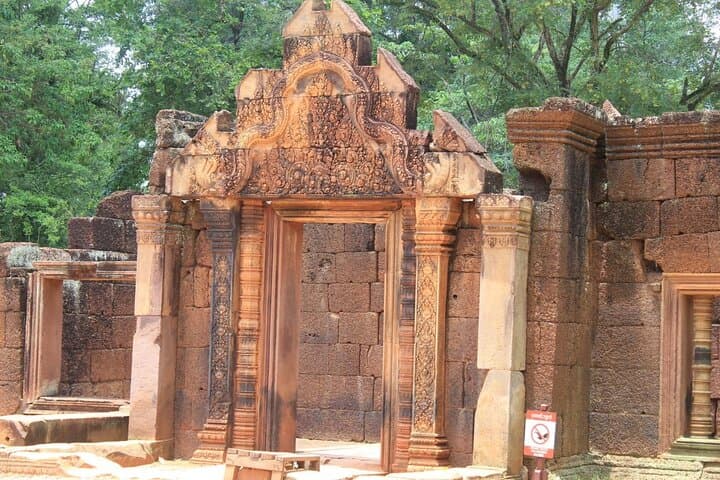
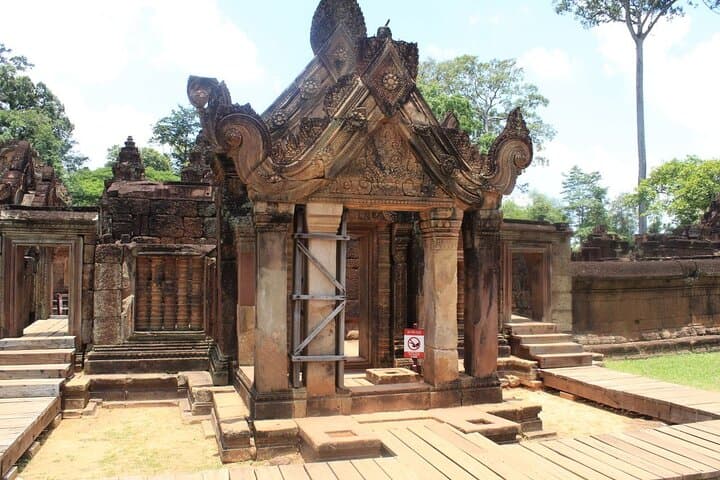
The route focuses on smaller, characterful monuments beyond Angkor Wat. Banteay Srei, carved from pink sandstone in the 10th century, rewards slow study with some of the most intricate bas-relief in Khmer art. Pre Rup offers a stepped silhouette and broad views from its laterite terraces; Ta Som is known for a single, dramatic strangler-fig framing an entrance; East Mebon sits on what was once an island in the now-vanished East Baray; Neak Pean occupies a small artificial island used historically for ritual purification.
Culturally, these sites reflect Hindu and Buddhist patronage, royal ambition and sophisticated hydraulic engineering that shaped Angkorian life. Geologically, the local sandstone and laterite erode differently, which explains both the fine sculpting at Banteay Srei and the blockier profiles at Pre Rup.
Practical guidance: start at first light to avoid heat and crowds, bring sun protection and closed-toe shoes for uneven paths, and purchase an Angkor ticket in advance. Respect dress codes, follow your guide’s route, and avoid stepping on fragile carvings — the places endure because visitors keep them so.
easy.
8 hours.
Suitable for most fitness levels; includes multiple short walks on uneven surfaces and steps.
Yes. Temple entrance passes are not included; buy them in Siem Reap beforehand or the vehicle can stop at the Angkor Enterprise office en route, which costs time.
No. Many areas have uneven steps, broken stone and narrow passages—this tour is not advised for people using a wheelchair.
Photography is permitted in most outdoor areas, but obey signs and guides; do not climb on monuments or enter restricted sanctuaries.
The cool, dry season from November to February is most comfortable; early morning departures reduce heat and afternoon storms in the wet season.
Banteay Srei dates to the 10th century and was dedicated to Hindu deities; its pink sandstone allowed particularly fine carving, often attributed to non-royal patrons.
High visitor numbers stress fragile carving and original mortar; follow site rules, avoid touching carvings, and hire licensed guides to support responsible tourism.
Asia Voyage Tour operates guided outdoor trips and adventures with an emphasis on safety, stewardship, and memorable experiences.
Morning light slants across cracked sandstone as the air-conditioned vehicle eases out of Siem Reap and the countryside opens: rice paddies flatten into long mirrors, and oxen graze while temple spires loom ahead like memory made stone. The day moves with purposeful calm — short drives, guided walks and time to look closely at carving after carving until detail begins to read like a language.
Morning light slants across cracked sandstone as the air-conditioned vehicle eases out of Siem Reap and the countryside opens: rice paddies flatten into long mirrors, and oxen graze while temple spires loom ahead like memory made stone. The day moves with purposeful calm — short drives, guided walks and time to look closely at carving after carving until detail begins to read like a language.
The route focuses on smaller, characterful monuments beyond Angkor Wat. Banteay Srei, carved from pink sandstone in the 10th century, rewards slow study with some of the most intricate bas-relief in Khmer art. Pre Rup offers a stepped silhouette and broad views from its laterite terraces; Ta Som is known for a single, dramatic strangler-fig framing an entrance; East Mebon sits on what was once an island in the now-vanished East Baray; Neak Pean occupies a small artificial island used historically for ritual purification.
Culturally, these sites reflect Hindu and Buddhist patronage, royal ambition and sophisticated hydraulic engineering that shaped Angkorian life. Geologically, the local sandstone and laterite erode differently, which explains both the fine sculpting at Banteay Srei and the blockier profiles at Pre Rup.
Practical guidance: start at first light to avoid heat and crowds, bring sun protection and closed-toe shoes for uneven paths, and purchase an Angkor ticket in advance. Respect dress codes, follow your guide’s route, and avoid stepping on fragile carvings — the places endure because visitors keep them so.