THE ADVENTURE COLLECTIVE® · Independent discovery and booking for outdoor travel

Share a private, in-home Balinese meal with Dewa’s family in a village compound just north of Ubud. Learn about local spices, tour the family pavilions, and enjoy authentic dishes in a quiet, ritual-minded setting.
Share a private, in-home Balinese meal with Dewa’s family in a village compound just north of Ubud. Learn about local spices, tour the family pavilions, and enjoy authentic dishes in a quiet, ritual-minded setting.
You arrive from Ubud along a narrow lane, the air thick with coconut smoke and the sharp scent of turmeric. A low wall parts to reveal an open compound: pavilions ring a courtyard, chickens move like punctuation between family shrines, and the garden presses green against the stone. Inside, spices and banana leaves dominate the kitchen—ingredients that will become a home-cooked feast.
Verified experiences and guided adventures in the surrounding area.
Operated by Traveling Spoon · Ubud, Bali
You arrive from Ubud along a narrow lane, the air thick with coconut smoke and the sharp scent of turmeric. A low wall parts to reveal an open compound: pavilions ring a courtyard, chickens move like punctuation between family shrines, and the garden presses green against the stone. Inside, spices and banana leaves dominate the kitchen—ingredients that will become a home-cooked feast.
The village compound echoes Bali’s layered history: Hindu family temples, rice terraces fed by ancient subak irrigation, and an island shaped by spice trade and ritual. Your hosts maintain daily offerings and a quiet etiquette—Balinese meals at home are part nourishment, part spiritual practice—so note they will not dine at the table with you.
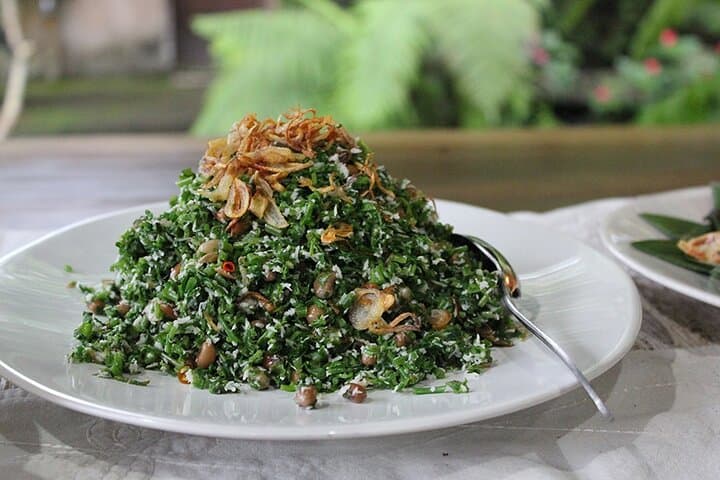
Expect dishes built on turmeric, coconut, galangal and local fish—pepes ikan wrapped in banana leaf, bumbu kuning chicken, corn fritters and seasonal jukut urab. The visit is sensory and small-scale: a short walk through medicinal herb beds, a tour of the pavilions, then the shared meal served in the home.
Practical edge: pickup from Ubud hotels is usually included; if not, meet at Alam Sari Resort. Reserve dietary needs in advance for vegetarian options. Dress modestly (shoulders covered) and bring cash for gratuities. Photography is welcome but be mindful of shrine areas and the hosts’ privacy. Meals run about two hours—arrive hungry and ready to learn a few family recipes to take home.
easy.
2 hours.
Suitable for most fitness levels; involves short, flat village walks and low-impact movement inside a home compound.
No—following their tradition, the family eats separately and the meal is offered for guests; this is respectful of their spiritual practice.
Pickup and drop-off from Ubud hotels is typically included; if you’re staying elsewhere you’ll be asked to meet at Alam Sari Resort.
Yes—vegetarian options are available but must be requested at the time of booking so the family can prepare appropriate ingredients.
Yes—infants must sit on laps; the home setting is family-friendly but spaces can be intimate so consider noise and movement.
Balinese family compounds (palemahan) and subak irrigation systems reflect centuries of Hindu ritual and cooperative rice cultivation that shaped village life.
Support local families by minimizing single-use plastics, respecting shrine areas and following hosts’ guidance to reduce visitor impact on village routines.
Traveling Spoon operates guided outdoor trips and adventures with an emphasis on safety, stewardship, and memorable experiences.


You arrive from Ubud along a narrow lane, the air thick with coconut smoke and the sharp scent of turmeric. A low wall parts to reveal an open compound: pavilions ring a courtyard, chickens move like punctuation between family shrines, and the garden presses green against the stone. Inside, spices and banana leaves dominate the kitchen—ingredients that will become a home-cooked feast.
You arrive from Ubud along a narrow lane, the air thick with coconut smoke and the sharp scent of turmeric. A low wall parts to reveal an open compound: pavilions ring a courtyard, chickens move like punctuation between family shrines, and the garden presses green against the stone. Inside, spices and banana leaves dominate the kitchen—ingredients that will become a home-cooked feast.
The village compound echoes Bali’s layered history: Hindu family temples, rice terraces fed by ancient subak irrigation, and an island shaped by spice trade and ritual. Your hosts maintain daily offerings and a quiet etiquette—Balinese meals at home are part nourishment, part spiritual practice—so note they will not dine at the table with you.
Expect dishes built on turmeric, coconut, galangal and local fish—pepes ikan wrapped in banana leaf, bumbu kuning chicken, corn fritters and seasonal jukut urab. The visit is sensory and small-scale: a short walk through medicinal herb beds, a tour of the pavilions, then the shared meal served in the home.
Practical edge: pickup from Ubud hotels is usually included; if not, meet at Alam Sari Resort. Reserve dietary needs in advance for vegetarian options. Dress modestly (shoulders covered) and bring cash for gratuities. Photography is welcome but be mindful of shrine areas and the hosts’ privacy. Meals run about two hours—arrive hungry and ready to learn a few family recipes to take home.