THE ADVENTURE COLLECTIVE® · Independent discovery and booking for outdoor travel

Join a guided, private baby sea turtle release on the Pacific shore of Huatulco. Learn from biologists, follow protected-area rules and watch hatchlings make their first dash to the ocean in this structured, conservation-focused evening experience.
Join a guided, private baby sea turtle release on the Pacific shore of Huatulco. Learn from biologists, follow protected-area rules and watch hatchlings make their first dash to the ocean in this structured, conservation-focused evening experience.
The late-afternoon beach arrives soft and bright: surf hurries in, then pauses as if consulting the sand, currents nudging the newborns toward the water. Guides meet you at your hotel and the drive along the Pacific coast gives a first lesson in the landscape—rocky headlands, low mangrove pockets and the wide arc of Bahías de Huatulco.
Verified experiences and guided adventures in the surrounding area.
Operated by Homietours · Huatulco, Oaxaca
The late-afternoon beach arrives soft and bright: surf hurries in, then pauses as if consulting the sand, currents nudging the newborns toward the water. Guides meet you at your hotel and the drive along the Pacific coast gives a first lesson in the landscape—rocky headlands, low mangrove pockets and the wide arc of Bahías de Huatulco.
This private release takes place in a federally protected nesting zone where local biologists monitor nests and coordinate timed releases. Oaxaca’s Pacific coast is young in geologic terms—coastlines shaped by tectonic uplift and seasonal swell—so beaches here offer long sand corridors favored by olive ridley and occasionally green turtles. Human culture along this coast has layered fishing traditions, small coastal villages, and a growing conservation ethic driven by local NGOs and federal reserves.
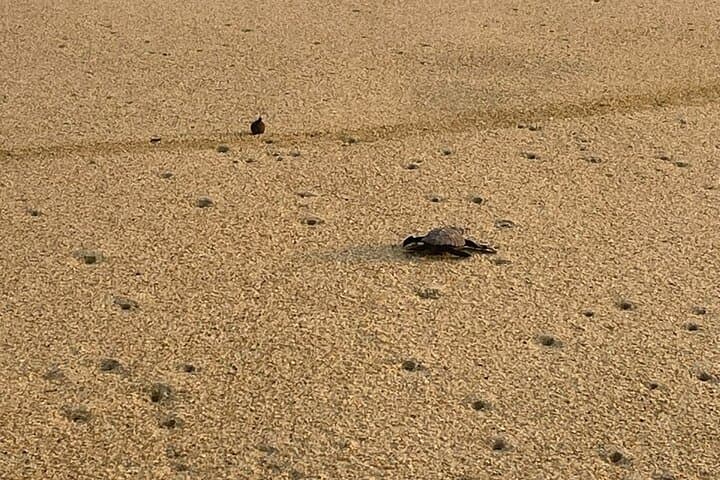
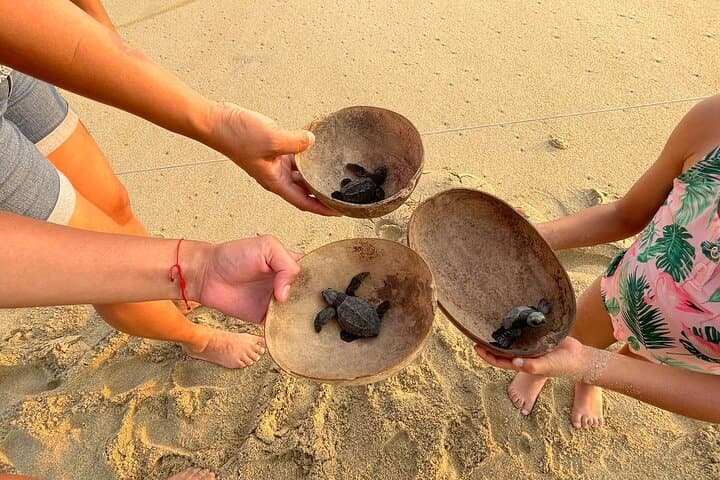
Expect a structured, rules-driven experience: afternoon timing, no direct handling of hatchlings, and direction from authorized staff to ensure turtles' survival. The moment you open the special container the hatchlings move as a single urgency, flippers scrabbling; the sea pulls like a magnet and the waves practically dare them forward.
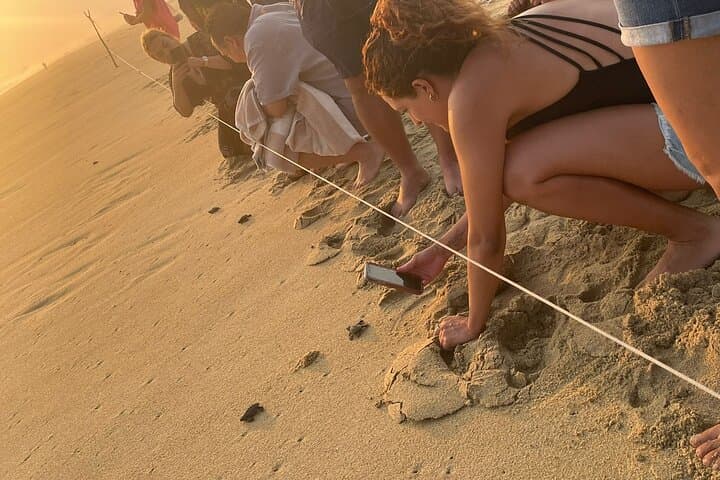
Practical notes: the tour includes A/C transport and a bilingual guide; wear quick-dry clothing, closed sandals or light hiking shoes, and bring water and sun protection. Afternoon light is best for visibility and to reduce predation risks for hatchlings, but also brings heat—hydrate and plan for insect repellent. Photography is allowed but avoid flash and keep distance. The activity runs about 5–6 hours from hotel pickup and is suitable for all fitness levels, though it requires following strict conservation instructions.
easy.
5–6 hours.
Minimal fitness required—short walks on sand and short periods standing; suitable for most ages.
No—direct contact is prohibited to protect hatchlings from oils and bacteria on human skin; releases are done from special containers by trained staff.
Most releases feature olive ridley hatchlings; green turtles are possible but less common in this section of Oaxaca's coast.
Yes—children can participate, but infants should be closely supervised and everyone must follow the biologist's instructions.
Bring sunscreen, a hat, water, and light layers for changing coastal temperatures; cameras are allowed but avoid flash.
Coastal Oaxaca has a long fishing heritage and communities that have increasingly collaborated with federal conservation programs to protect nesting beaches since the late 20th century.
Releases occur in a federally protected zone with strict protocols; visitors help by observing no-contact rules, using reef-safe products and minimizing light pollution at night.
Homietours operates guided outdoor trips and adventures with an emphasis on safety, stewardship, and memorable experiences.
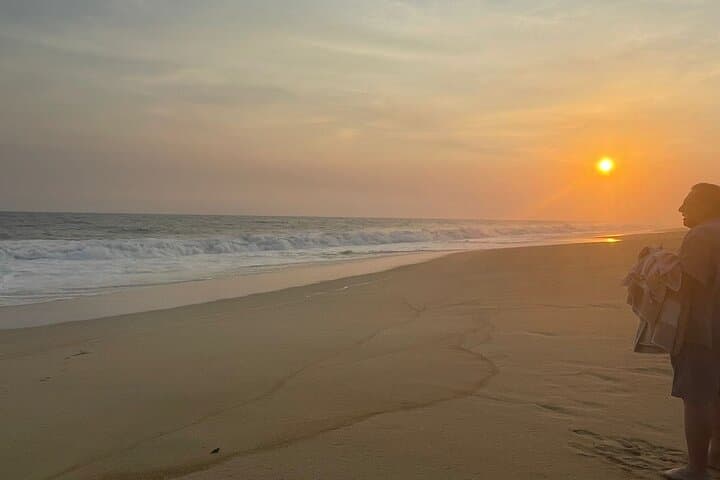
The late-afternoon beach arrives soft and bright: surf hurries in, then pauses as if consulting the sand, currents nudging the newborns toward the water. Guides meet you at your hotel and the drive along the Pacific coast gives a first lesson in the landscape—rocky headlands, low mangrove pockets and the wide arc of Bahías de Huatulco.
The late-afternoon beach arrives soft and bright: surf hurries in, then pauses as if consulting the sand, currents nudging the newborns toward the water. Guides meet you at your hotel and the drive along the Pacific coast gives a first lesson in the landscape—rocky headlands, low mangrove pockets and the wide arc of Bahías de Huatulco.
This private release takes place in a federally protected nesting zone where local biologists monitor nests and coordinate timed releases. Oaxaca’s Pacific coast is young in geologic terms—coastlines shaped by tectonic uplift and seasonal swell—so beaches here offer long sand corridors favored by olive ridley and occasionally green turtles. Human culture along this coast has layered fishing traditions, small coastal villages, and a growing conservation ethic driven by local NGOs and federal reserves.
Expect a structured, rules-driven experience: afternoon timing, no direct handling of hatchlings, and direction from authorized staff to ensure turtles' survival. The moment you open the special container the hatchlings move as a single urgency, flippers scrabbling; the sea pulls like a magnet and the waves practically dare them forward.
Practical notes: the tour includes A/C transport and a bilingual guide; wear quick-dry clothing, closed sandals or light hiking shoes, and bring water and sun protection. Afternoon light is best for visibility and to reduce predation risks for hatchlings, but also brings heat—hydrate and plan for insect repellent. Photography is allowed but avoid flash and keep distance. The activity runs about 5–6 hours from hotel pickup and is suitable for all fitness levels, though it requires following strict conservation instructions.