THE ADVENTURE COLLECTIVE® · Independent discovery and booking for outdoor travel

Walk among reconstructed rainforests, coastal scrub, and desert enclosures on a private guided tour that highlights Colombia’s enormous bird diversity. Expect focused conservation exhibits, immersive aviaries, and practical access from Cartagena for a 3–4 hour experience.
Walk among reconstructed rainforests, coastal scrub, and desert enclosures on a private guided tour that highlights Colombia’s enormous bird diversity. Expect focused conservation exhibits, immersive aviaries, and practical access from Cartagena for a 3–4 hour experience.
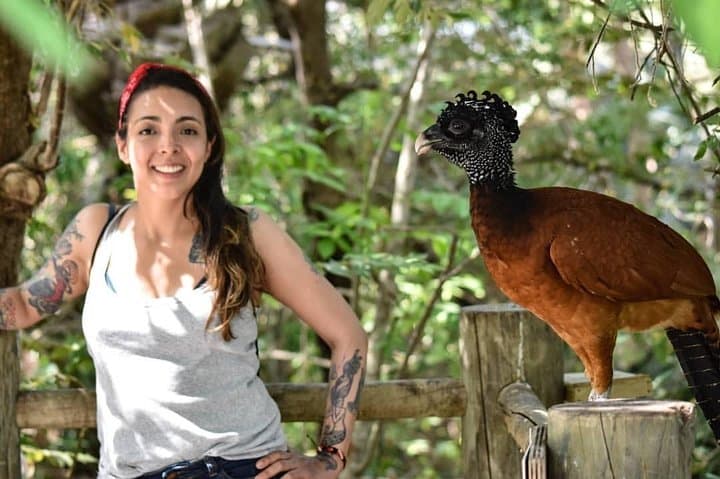
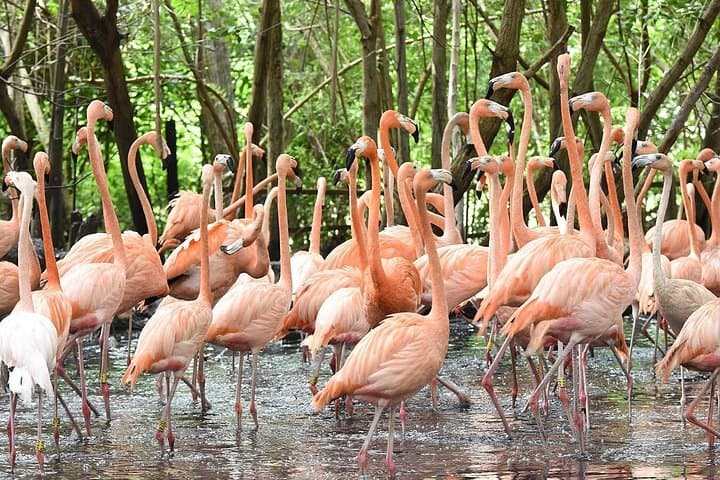
You step through a wide gate and the air changes — warm, humid breath threaded with calls and wingbeats. Paths curve past planted lagoons where herons stalk and dense aviaries hum with the busy chatter of 170 native species. The aviary compels attention: birds move with intent, beaks and feathers declaring the lives they’ve reclaimed here.
Verified experiences and guided adventures in the surrounding area.
Operated by Cartagena For Travelers S.A.S. · Cartagena, Bolívar
You step through a wide gate and the air changes — warm, humid breath threaded with calls and wingbeats. Paths curve past planted lagoons where herons stalk and dense aviaries hum with the busy chatter of 170 native species. The aviary compels attention: birds move with intent, beaks and feathers declaring the lives they’ve reclaimed here.
Colombia leads the world in bird species, and the national aviary in Cartagena presents that diversity across three recreated ecosystems — tropical rainforest, coastal scrub, and desert — plus focused enclosures for condors, herons and migratory lake birds. The facility pairs modern immersion aviaries and radial enclosures with conservation programs for threatened species including the Andean condor, harpy eagle and the blue-billed curassow (Crax alberti).
Geologically the Cartagena region sits on low Caribbean plains and mangrove-lined inlets; the aviary mirrors those gradients in soil, water, and planted vegetation to suit different species. Culturally, the site is an accessible classroom for locals and visitors alike, introducing Caribbean coast communities to species that connect inland highlands with coastal flyways.
Practical guidance: allow 3–4 hours for a private visit and guided interpretation. Wear comfortable, closed shoes for gravel paths and expect humid conditions — light layers and rain protection are wise. Bring binoculars and a camera (flash-free), and keep voices low to avoid stressing birds. The aviary is wheelchair accessible and offers bottled water; check opening hours and book a private transport option if you prefer direct pickup from Cartagena’s historic center. The experience is as much about watching behavior as ticking species off a list: be patient, move deliberately, and let the birds set the pace.
easy.
3–4 hours.
Suitable for most fitness levels; involves short walks on gravel and paved paths with minimal elevation change.
Yes — pathways and main exhibits are wheelchair accessible and surfaces are suitable for strollers and mobility aids.
Yes — the facility is family-friendly; infants may sit on laps and stroller access is available throughout most areas.
Private guided tours are typically available and can be requested in English when booked in advance; confirm language needs at booking.
The aviary has conservation programs and enclosures for threatened species; sightings depend on exhibit rotations and animal behavior but guides will point out these species when visible.
The national aviary showcases Colombia’s enormous avian diversity and functions as a conservation and education hub connecting coastal communities with inland species and migratory routes.
The facility runs breeding and preservation programs for threatened species and uses habitat-replicated enclosures to support recovery and public education about habitat protection.
Cartagena For Travelers S.A.S. operates guided outdoor trips and adventures with an emphasis on safety, stewardship, and memorable experiences.
You step through a wide gate and the air changes — warm, humid breath threaded with calls and wingbeats. Paths curve past planted lagoons where herons stalk and dense aviaries hum with the busy chatter of 170 native species. The aviary compels attention: birds move with intent, beaks and feathers declaring the lives they’ve reclaimed here.
You step through a wide gate and the air changes — warm, humid breath threaded with calls and wingbeats. Paths curve past planted lagoons where herons stalk and dense aviaries hum with the busy chatter of 170 native species. The aviary compels attention: birds move with intent, beaks and feathers declaring the lives they’ve reclaimed here.
Colombia leads the world in bird species, and the national aviary in Cartagena presents that diversity across three recreated ecosystems — tropical rainforest, coastal scrub, and desert — plus focused enclosures for condors, herons and migratory lake birds. The facility pairs modern immersion aviaries and radial enclosures with conservation programs for threatened species including the Andean condor, harpy eagle and the blue-billed curassow (Crax alberti).
Geologically the Cartagena region sits on low Caribbean plains and mangrove-lined inlets; the aviary mirrors those gradients in soil, water, and planted vegetation to suit different species. Culturally, the site is an accessible classroom for locals and visitors alike, introducing Caribbean coast communities to species that connect inland highlands with coastal flyways.
Practical guidance: allow 3–4 hours for a private visit and guided interpretation. Wear comfortable, closed shoes for gravel paths and expect humid conditions — light layers and rain protection are wise. Bring binoculars and a camera (flash-free), and keep voices low to avoid stressing birds. The aviary is wheelchair accessible and offers bottled water; check opening hours and book a private transport option if you prefer direct pickup from Cartagena’s historic center. The experience is as much about watching behavior as ticking species off a list: be patient, move deliberately, and let the birds set the pace.