THE ADVENTURE COLLECTIVE® · Independent discovery and booking for outdoor travel

A full-day private trip from Brno to Auschwitz-Birkenau offering guided interpretation, skip-the-line entry, and round-trip transport. This solemn visit pairs concentrated historical explanation with time for reflection on site.
A full-day private trip from Brno to Auschwitz-Birkenau offering guided interpretation, skip-the-line entry, and round-trip transport. This solemn visit pairs concentrated historical explanation with time for reflection on site.
A long, quiet road stretches from Brno across rolling Moravian plains, and the bus eases toward the low, flat fields of southern Poland where Auschwitz-Birkenau sits like a scar on the landscape.
Verified experiences and guided adventures in the surrounding area.
Operated by Poland Travel · Oświęcim, Lesser Poland Voivodeship
A long, quiet road stretches from Brno across rolling Moravian plains, and the bus eases toward the low, flat fields of southern Poland where Auschwitz-Birkenau sits like a scar on the landscape.
Arriving is deliberately unglamorous: barracks, brick chimneys, and the railway gateway that ushers memory into the present. The site resists spectacle; it asks for attention. This private tour moves deliberately—three to four hours of guided interpretation at Auschwitz I and Birkenau, framed by the broader history of Nazi occupation, forced labor systems, and the industrialized mechanisms of mass murder between 1940 and 1945.
Geologically the area is part of the Vistula basin—open fields, clay soils, and sparse woodlots that once left few places to hide. Culturally, Oświęcim and the surrounding region carry layers of Polish, Jewish, and Central European histories that the museum and local institutions continue to document and preserve.
Practical guidance is straightforward: allow a full day—this offering includes hotel pick-up in Brno and air-conditioned transport (about three hours each way). Museum entrance and a guided tour are included; expect solemn pacing, interior museum exhibits, and outdoor walks across exposed grounds where wind pushes across rail tracks and watchtowers.
Travelers should bring valid ID, comfortable shoes, weather-appropriate layers, and readiness for quiet reflection. Photography is allowed in many outdoor areas but follow the guide and posted rules. Because the subject matter is heavy, plan post-visit time to process—many visitors use the return trip for thoughtful silence.
easy.
10–11 hours.
Suitable for most fitness levels—primarily walking on even and unpaved surfaces for several hours
Yes—this tour includes hotel pick-up and drop-off in Brno and air-conditioned transport to and from Auschwitz-Birkenau.
The guided portion at Auschwitz-Birkenau runs approximately 3 to 3.5 hours, with additional time allotted for travel and reflection.
Yes—skip-the-line entrance tickets to Auschwitz and Birkenau are included with the tour price.
Children can join, but the museum recommends parental discretion due to the sensitive nature of the site; the itinerary involves several hours of walking and solemn exhibits.
Auschwitz-Birkenau was established by Nazi Germany in 1940 and became the largest of the Nazi concentration and extermination camp complexes; today the Auschwitz-Birkenau State Museum preserves the site and commemorates over a million victims.
The museum operates preservation and documentation programs; visitors are asked to respect the site’s integrity by staying on paths, not touching exhibits, and following museum rules.
Poland Travel operates guided outdoor trips and adventures with an emphasis on safety, stewardship, and memorable experiences.

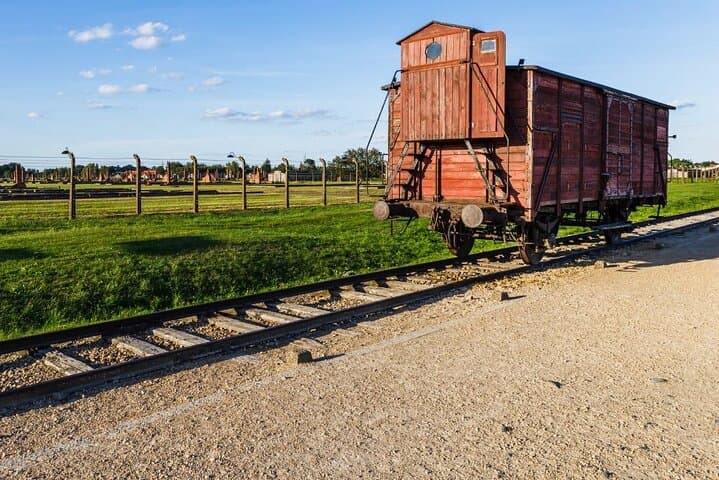


A long, quiet road stretches from Brno across rolling Moravian plains, and the bus eases toward the low, flat fields of southern Poland where Auschwitz-Birkenau sits like a scar on the landscape.
A long, quiet road stretches from Brno across rolling Moravian plains, and the bus eases toward the low, flat fields of southern Poland where Auschwitz-Birkenau sits like a scar on the landscape.
Arriving is deliberately unglamorous: barracks, brick chimneys, and the railway gateway that ushers memory into the present. The site resists spectacle; it asks for attention. This private tour moves deliberately—three to four hours of guided interpretation at Auschwitz I and Birkenau, framed by the broader history of Nazi occupation, forced labor systems, and the industrialized mechanisms of mass murder between 1940 and 1945.
Geologically the area is part of the Vistula basin—open fields, clay soils, and sparse woodlots that once left few places to hide. Culturally, Oświęcim and the surrounding region carry layers of Polish, Jewish, and Central European histories that the museum and local institutions continue to document and preserve.
Practical guidance is straightforward: allow a full day—this offering includes hotel pick-up in Brno and air-conditioned transport (about three hours each way). Museum entrance and a guided tour are included; expect solemn pacing, interior museum exhibits, and outdoor walks across exposed grounds where wind pushes across rail tracks and watchtowers.
Travelers should bring valid ID, comfortable shoes, weather-appropriate layers, and readiness for quiet reflection. Photography is allowed in many outdoor areas but follow the guide and posted rules. Because the subject matter is heavy, plan post-visit time to process—many visitors use the return trip for thoughtful silence.