THE ADVENTURE COLLECTIVE® · Independent discovery and booking for outdoor travel

Escape Marrakech for a day and trade riad courtyards for mountain air. This private tour to Imlil pairs short village walks and a Berber family visit with panoramic High Atlas views and a traditional lunch.
Escape Marrakech for a day and trade riad courtyards for mountain air. This private tour to Imlil pairs short village walks and a Berber family visit with panoramic High Atlas views and a traditional lunch.
The road out of Marrakech tightens into switchbacks and the city’s heat gives way to a thin, cooler air as the High Atlas rises ahead.
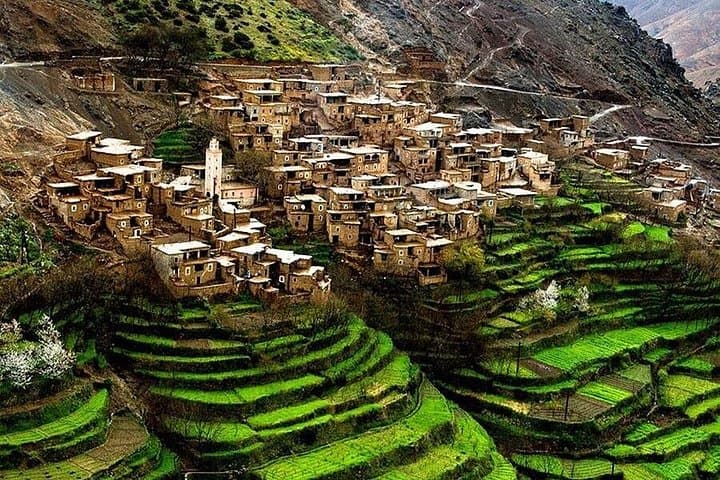
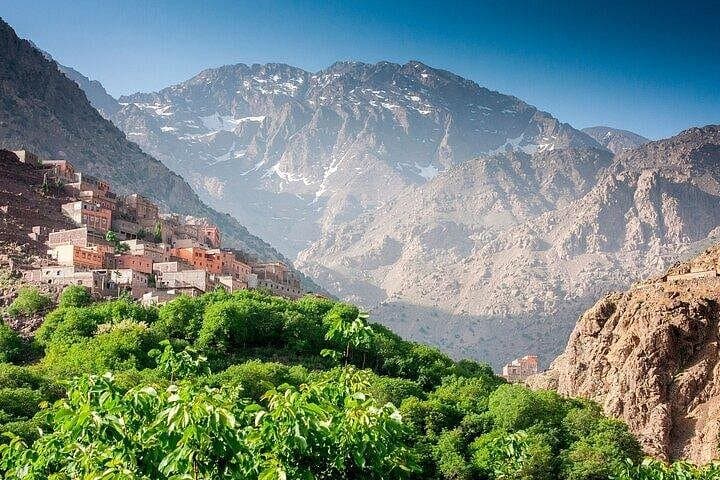
By mid‑morning you’re in Imlil, a cluster of stone houses and terraced fields clinging to a valley, the river below daring you to follow its course. Peaks of dark schist and lighter limestone frame the scene; the land looks worked and weathered, the geology writing a long story of African and Eurasian plates colliding.
The villages here are inhabited by Amazigh (Berber) communities whose traditions have long adapted to altitude and sparse water—bread baked in communal ovens, and tea poured with a practiced flourish. The tour’s cultural heart is a family visit: learn to shape flatbread, sip mint tea, and taste a lunch centered on local olive oil, preserved lemons, and slow‑cooked tagine.
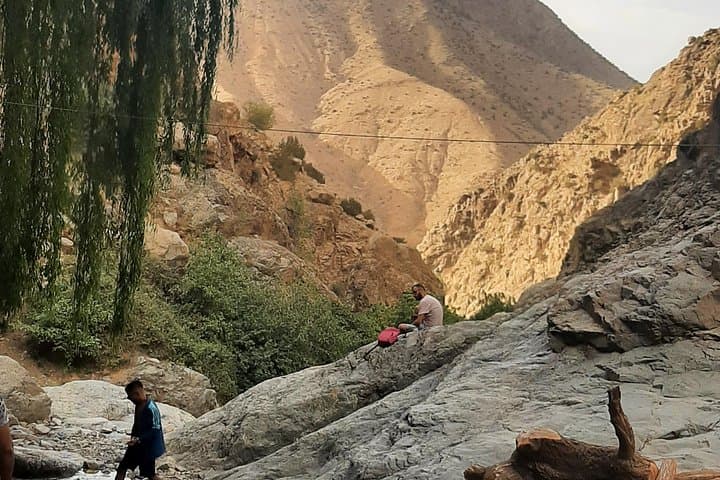
Practical facts: expect a 6–8 hour outing with about 60–75 km of roundtrip driving and roughly 1–1.5 hours each way from central Marrakech. Imlil sits near 1,700–1,800 m elevation (Marrakech ~466 m), so you’ll feel a light climb in the air even without strenuous hiking. Terrain in the village is uneven—stone paths and short, sometimes steep trails—so comfortable footwear is essential.
Timing your visit for morning light keeps temperatures pleasant and photography sharp. Carry cash for small purchases, bring a reusable water bottle, and dress in layers: mountain weather can flip from sun to wind in minutes. The day balances easy cultural exchange and short walks with genuine mountain scenery—accessible, grounded, and distinctly Moroccan.
Verified experiences and guided adventures in the surrounding area.
Operated by Les Sources Berberes · Imlil, Marrakech-Safi
The road out of Marrakech tightens into switchbacks and the city’s heat gives way to a thin, cooler air as the High Atlas rises ahead.
By mid‑morning you’re in Imlil, a cluster of stone houses and terraced fields clinging to a valley, the river below daring you to follow its course. Peaks of dark schist and lighter limestone frame the scene; the land looks worked and weathered, the geology writing a long story of African and Eurasian plates colliding.
The villages here are inhabited by Amazigh (Berber) communities whose traditions have long adapted to altitude and sparse water—bread baked in communal ovens, and tea poured with a practiced flourish. The tour’s cultural heart is a family visit: learn to shape flatbread, sip mint tea, and taste a lunch centered on local olive oil, preserved lemons, and slow‑cooked tagine.
Practical facts: expect a 6–8 hour outing with about 60–75 km of roundtrip driving and roughly 1–1.5 hours each way from central Marrakech. Imlil sits near 1,700–1,800 m elevation (Marrakech ~466 m), so you’ll feel a light climb in the air even without strenuous hiking. Terrain in the village is uneven—stone paths and short, sometimes steep trails—so comfortable footwear is essential.
Timing your visit for morning light keeps temperatures pleasant and photography sharp. Carry cash for small purchases, bring a reusable water bottle, and dress in layers: mountain weather can flip from sun to wind in minutes. The day balances easy cultural exchange and short walks with genuine mountain scenery—accessible, grounded, and distinctly Moroccan.
easy.
6–8 hours.
Suitable for people in average fitness — expects short walks on uneven ground and light uphill approaches.
Typical travel time is 1–1.5 hours each way depending on traffic and road conditions — plan for roughly 60–75 km roundtrip.
Short walks are family‑friendly, but the operator notes it’s not recommended for children under 7 and those with limited mobility.
No — guides will usually speak English and/or French; basic Arabic or Tamazight phrases are appreciated but not required.
Yes — bottled water and a local lunch are included, and you’ll sample homemade bread and tea during the family visit.
The High Atlas has long been home to Amazigh (Berber) communities; terraces and stone architecture reflect centuries of mountain agriculture and trade routes.
Water is scarce and trails can erode; stick to paths, limit single‑use plastics, and support local guides and family enterprises to keep tourism sustainable.
Les Sources Berberes operates guided outdoor trips and adventures with an emphasis on safety, stewardship, and memorable experiences.
The road out of Marrakech tightens into switchbacks and the city’s heat gives way to a thin, cooler air as the High Atlas rises ahead.
By mid‑morning you’re in Imlil, a cluster of stone houses and terraced fields clinging to a valley, the river below daring you to follow its course. Peaks of dark schist and lighter limestone frame the scene; the land looks worked and weathered, the geology writing a long story of African and Eurasian plates colliding.
The villages here are inhabited by Amazigh (Berber) communities whose traditions have long adapted to altitude and sparse water—bread baked in communal ovens, and tea poured with a practiced flourish. The tour’s cultural heart is a family visit: learn to shape flatbread, sip mint tea, and taste a lunch centered on local olive oil, preserved lemons, and slow‑cooked tagine.
Practical facts: expect a 6–8 hour outing with about 60–75 km of roundtrip driving and roughly 1–1.5 hours each way from central Marrakech. Imlil sits near 1,700–1,800 m elevation (Marrakech ~466 m), so you’ll feel a light climb in the air even without strenuous hiking. Terrain in the village is uneven—stone paths and short, sometimes steep trails—so comfortable footwear is essential.
Timing your visit for morning light keeps temperatures pleasant and photography sharp. Carry cash for small purchases, bring a reusable water bottle, and dress in layers: mountain weather can flip from sun to wind in minutes. The day balances easy cultural exchange and short walks with genuine mountain scenery—accessible, grounded, and distinctly Moroccan.
The road out of Marrakech tightens into switchbacks and the city’s heat gives way to a thin, cooler air as the High Atlas rises ahead.
By mid‑morning you’re in Imlil, a cluster of stone houses and terraced fields clinging to a valley, the river below daring you to follow its course. Peaks of dark schist and lighter limestone frame the scene; the land looks worked and weathered, the geology writing a long story of African and Eurasian plates colliding.
The villages here are inhabited by Amazigh (Berber) communities whose traditions have long adapted to altitude and sparse water—bread baked in communal ovens, and tea poured with a practiced flourish. The tour’s cultural heart is a family visit: learn to shape flatbread, sip mint tea, and taste a lunch centered on local olive oil, preserved lemons, and slow‑cooked tagine.
Practical facts: expect a 6–8 hour outing with about 60–75 km of roundtrip driving and roughly 1–1.5 hours each way from central Marrakech. Imlil sits near 1,700–1,800 m elevation (Marrakech ~466 m), so you’ll feel a light climb in the air even without strenuous hiking. Terrain in the village is uneven—stone paths and short, sometimes steep trails—so comfortable footwear is essential.
Timing your visit for morning light keeps temperatures pleasant and photography sharp. Carry cash for small purchases, bring a reusable water bottle, and dress in layers: mountain weather can flip from sun to wind in minutes. The day balances easy cultural exchange and short walks with genuine mountain scenery—accessible, grounded, and distinctly Moroccan.