THE ADVENTURE COLLECTIVE® · Independent discovery and booking for outdoor travel

Walk and ride through Atlanta's layered past on a private three-hour tour that links a Civil War site, mill neighborhoods, Victorian districts and the Martin Luther King Jr. National Historical Park. Expect a mix of pavement, short uphill stretches, and rich local stories.
Walk and ride through Atlanta's layered past on a private three-hour tour that links a Civil War site, mill neighborhoods, Victorian districts and the Martin Luther King Jr. National Historical Park. Expect a mix of pavement, short uphill stretches, and rich local stories.
You step out of the van into a neighborhood where brick streets and iron fences still argue with the city's newest glass. Narrow rows of Victorian and Craftsman homes watch as guides move the group from a Civil War battlefield marker to a rebuilt cotton mill and onward to a serene garden cemetery where stories are written in stone.
Verified experiences and guided adventures in the surrounding area.
Operated by DTours · Atlanta, Georgia
You step out of the van into a neighborhood where brick streets and iron fences still argue with the city's newest glass. Narrow rows of Victorian and Craftsman homes watch as guides move the group from a Civil War battlefield marker to a rebuilt cotton mill and onward to a serene garden cemetery where stories are written in stone.
The route threads through Atlanta's layered history: battle lines and wartime logistics shaped the city's growth in the 1860s, late-19th-century mill neighborhoods like Cabbagetown housed workers and factories that fueled industrial expansion, and the mid-20th-century Civil Rights movement centered on the streets and institutions found at the tour's final stop—the birthplace, church and memorial sites associated with Dr. Martin Luther King Jr. Geologically the area is the rolling piedmont—red clay hills eroded into gentle slopes—so the streets incline and level in a way that keeps walking honest.
Culturally the tour illuminates local entrepreneurs, authors and community activists whose lives are anchored in these neighborhoods: expect notes on restored shotgun houses, the role of public parks, and civic memory preserved in cemeteries and churches.
Practical guidance: this private, three-hour walking-and-driving tour includes bottled water and private transport; wear comfortable walking shoes and allow time for short uphill blocks and some curbside parking transitions. Start and end at the National Park Service parking lot next to the library (free parking). Bring a camera, a charged phone, and a readiness to listen—this is a door-through-time experience that pairs urban terrain with deep historical context.
moderate.
3 hours.
Moderate fitness for walking short distances and standing during site visits; some uphill sidewalks.
The tour starts and ends at the National Park Service parking lot next to the library; there is free parking at that lot.
Children are welcome but must be accompanied by a paid adult; the itinerary involves walking and short car transfers, so families should be prepared for that pace.
There is a minimum two-guest requirement per booking for this private tour.
For a full refund cancel at least 24 hours before the scheduled departure time; cancellations within 24 hours are non-refundable.
The tour traces Atlanta’s 19th-century wartime geography through neighborhoods that grew around mills and rail, then follows the 20th-century arc of the Civil Rights movement centered on the Auburn Avenue corridor.
Urban historic sites are vulnerable to wear from heavy foot traffic—stay on paths, avoid touching fragile monuments, and support local preservation efforts by following site rules.
DTours operates guided outdoor trips and adventures with an emphasis on safety, stewardship, and memorable experiences.



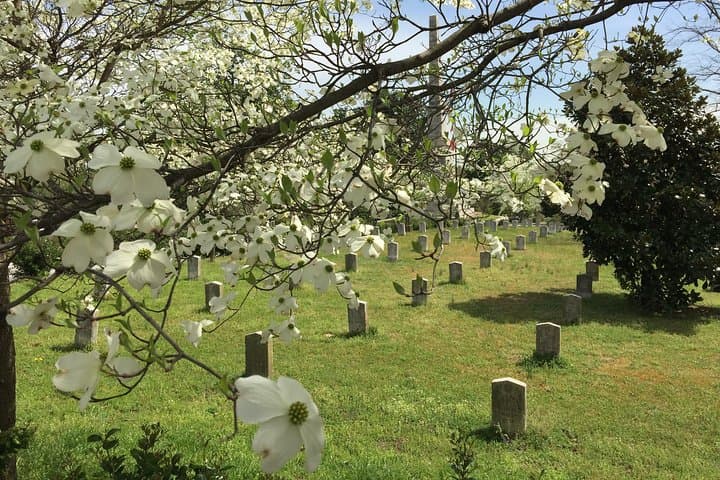
You step out of the van into a neighborhood where brick streets and iron fences still argue with the city's newest glass. Narrow rows of Victorian and Craftsman homes watch as guides move the group from a Civil War battlefield marker to a rebuilt cotton mill and onward to a serene garden cemetery where stories are written in stone.
You step out of the van into a neighborhood where brick streets and iron fences still argue with the city's newest glass. Narrow rows of Victorian and Craftsman homes watch as guides move the group from a Civil War battlefield marker to a rebuilt cotton mill and onward to a serene garden cemetery where stories are written in stone.
The route threads through Atlanta's layered history: battle lines and wartime logistics shaped the city's growth in the 1860s, late-19th-century mill neighborhoods like Cabbagetown housed workers and factories that fueled industrial expansion, and the mid-20th-century Civil Rights movement centered on the streets and institutions found at the tour's final stop—the birthplace, church and memorial sites associated with Dr. Martin Luther King Jr. Geologically the area is the rolling piedmont—red clay hills eroded into gentle slopes—so the streets incline and level in a way that keeps walking honest.
Culturally the tour illuminates local entrepreneurs, authors and community activists whose lives are anchored in these neighborhoods: expect notes on restored shotgun houses, the role of public parks, and civic memory preserved in cemeteries and churches.
Practical guidance: this private, three-hour walking-and-driving tour includes bottled water and private transport; wear comfortable walking shoes and allow time for short uphill blocks and some curbside parking transitions. Start and end at the National Park Service parking lot next to the library (free parking). Bring a camera, a charged phone, and a readiness to listen—this is a door-through-time experience that pairs urban terrain with deep historical context.