THE ADVENTURE COLLECTIVE® · Independent discovery and booking for outdoor travel

Cross the Nile to Philae’s relocated temple, then meet Nubian families in a colorful riverside village. This private boat tour blends Egypt’s ancient monuments with living culture—ideal for travelers seeking easy, immersive exploration.
Cross the Nile to Philae’s relocated temple, then meet Nubian families in a colorful riverside village. This private boat tour blends Egypt’s ancient monuments with living culture—ideal for travelers seeking easy, immersive exploration.
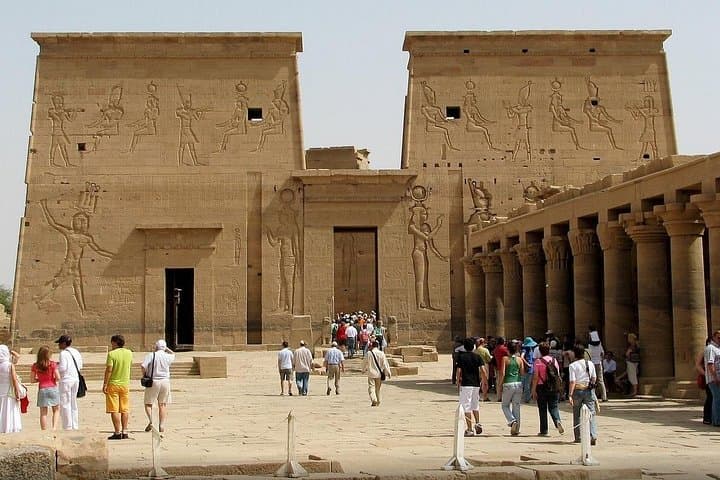
You step off an air-conditioned vehicle at the Aswan quay and the Nile opens up—papyrus fringing the bank, feluccas nodding in the distance and a motorboat waiting to cut a pale wake toward Philae. Your guide ushers you aboard; the city slips into a band of light and palm as the short crossing brings the temple into view: classical columns and carved reliefs rising from the island.
Verified experiences and guided adventures in the surrounding area.
Operated by Egypt Best Day Tours · Aswan, Aswan Governorate
You step off an air-conditioned vehicle at the Aswan quay and the Nile opens up—papyrus fringing the bank, feluccas nodding in the distance and a motorboat waiting to cut a pale wake toward Philae. Your guide ushers you aboard; the city slips into a band of light and palm as the short crossing brings the temple into view: classical columns and carved reliefs rising from the island.
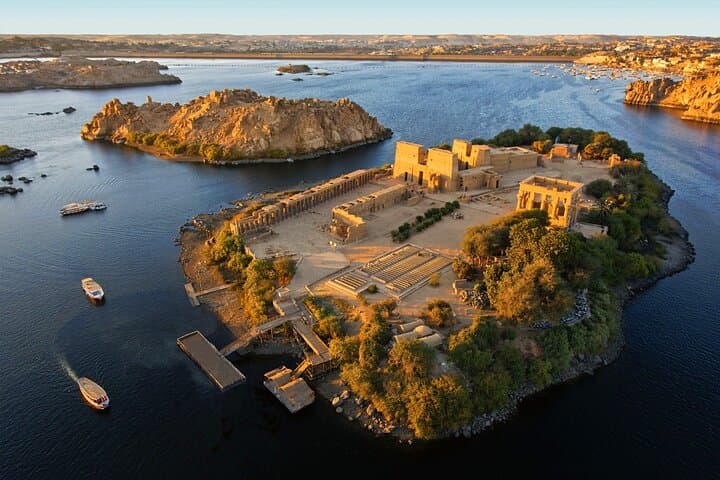
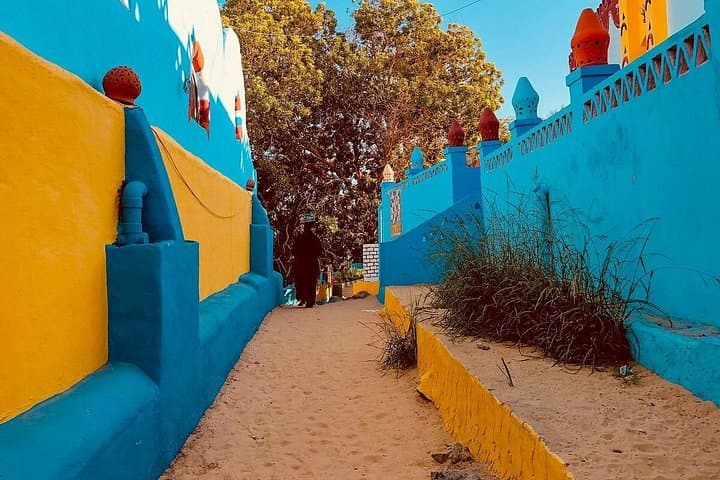
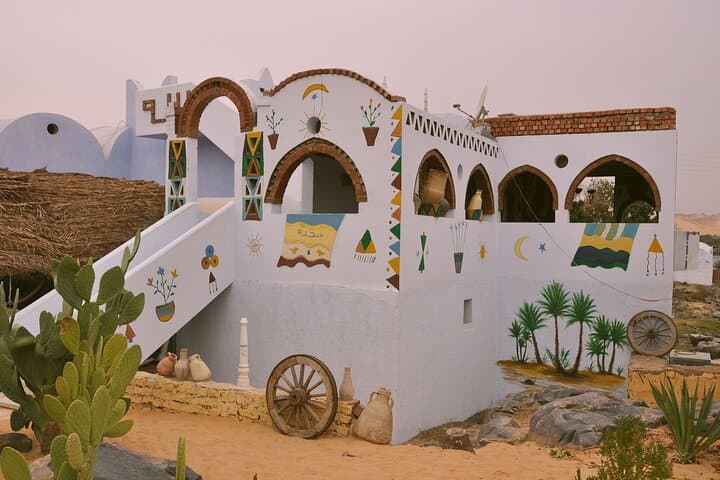
Philae today sits on Agilkia Island after a UNESCO-led rescue moved it stone-by-stone in the 1960s to avoid the rising waters behind the Aswan High Dam. The complex—chiefly devoted to Isis—reveals a mix of Pharaonic and Greco-Roman motifs etched in granite. Later the boat continues to a Nubian village opposite Soheil Island: low houses painted in bright pigments under dense palms, narrow sandy paths, and workshops where pottery and textiles are still made by hand. The Nile’s daily rhythms—fishing, small-scale farming, and boat traffic—drive village life.
Practicalities matter: the tour lasts about five hours with roughly two hours at Philae and three for the village and return. Expect uneven stone steps, short walks and shaded palms; sturdy shoes and sun protection are essential. Tours include hotel pickup and admissions, but bring small cash for souvenirs and tips. Photograph respectfully, ask before shooting people, and dress modestly when entering homes. For cooler temperatures and softer light choose morning or late-afternoon departures. Hydrate, leave no trace, and let the river’s pace set the rhythm of the day.
easy.
4–5 hours.
Suitable for most fitness levels; you should be comfortable walking short distances and climbing short stone steps.
Yes—this private tour includes hotel pickup and drop-off within Aswan; confirm your exact pickup point when booking.
Yes—admission to the Temple of Philae and the Nubian village visit are included in the tour price.
The tour is described as easy, but Philae and village paths have uneven stone surfaces and steps; travelers with limited mobility should check specifics with the operator beforehand.
Yes—Nubian villages offer pottery, textiles and jewelry; bring cash in small denominations and be prepared to negotiate politely.
Philae was dismantled and relocated to Agilkia Island during the 1960s UNESCO rescue project when the Aswan High Dam threatened to flood the original site.
Tourism supports local economies but increases pressure on river banks—pack out waste, avoid single-use plastics, and follow guides’ instructions to protect fragile Nile habitats.
Egypt Best Day Tours operates guided outdoor trips and adventures with an emphasis on safety, stewardship, and memorable experiences.
You step off an air-conditioned vehicle at the Aswan quay and the Nile opens up—papyrus fringing the bank, feluccas nodding in the distance and a motorboat waiting to cut a pale wake toward Philae. Your guide ushers you aboard; the city slips into a band of light and palm as the short crossing brings the temple into view: classical columns and carved reliefs rising from the island.
You step off an air-conditioned vehicle at the Aswan quay and the Nile opens up—papyrus fringing the bank, feluccas nodding in the distance and a motorboat waiting to cut a pale wake toward Philae. Your guide ushers you aboard; the city slips into a band of light and palm as the short crossing brings the temple into view: classical columns and carved reliefs rising from the island.
Philae today sits on Agilkia Island after a UNESCO-led rescue moved it stone-by-stone in the 1960s to avoid the rising waters behind the Aswan High Dam. The complex—chiefly devoted to Isis—reveals a mix of Pharaonic and Greco-Roman motifs etched in granite. Later the boat continues to a Nubian village opposite Soheil Island: low houses painted in bright pigments under dense palms, narrow sandy paths, and workshops where pottery and textiles are still made by hand. The Nile’s daily rhythms—fishing, small-scale farming, and boat traffic—drive village life.
Practicalities matter: the tour lasts about five hours with roughly two hours at Philae and three for the village and return. Expect uneven stone steps, short walks and shaded palms; sturdy shoes and sun protection are essential. Tours include hotel pickup and admissions, but bring small cash for souvenirs and tips. Photograph respectfully, ask before shooting people, and dress modestly when entering homes. For cooler temperatures and softer light choose morning or late-afternoon departures. Hydrate, leave no trace, and let the river’s pace set the rhythm of the day.