THE ADVENTURE COLLECTIVE® · Independent discovery and booking for outdoor travel

Explore Victor Horta’s Art Nouveau landmarks across Brussels and Antwerp on a private half-day tour that mixes intimate townhouses with grand civic sites. Perfect for architecture fans wanting close-up detail and guided context.
Explore Victor Horta’s Art Nouveau landmarks across Brussels and Antwerp on a private half-day tour that mixes intimate townhouses with grand civic sites. Perfect for architecture fans wanting close-up detail and guided context.
You step from an air-conditioned minivan onto a street where sinuous ironwork frames shopfronts and carved stone seems almost to breathe.
Verified experiences and guided adventures in the surrounding area.
Operated by YS BELGIUM LIMOUSINE · Brussels, Brussels-Capital Region
You step from an air-conditioned minivan onto a street where sinuous ironwork frames shopfronts and carved stone seems almost to breathe.
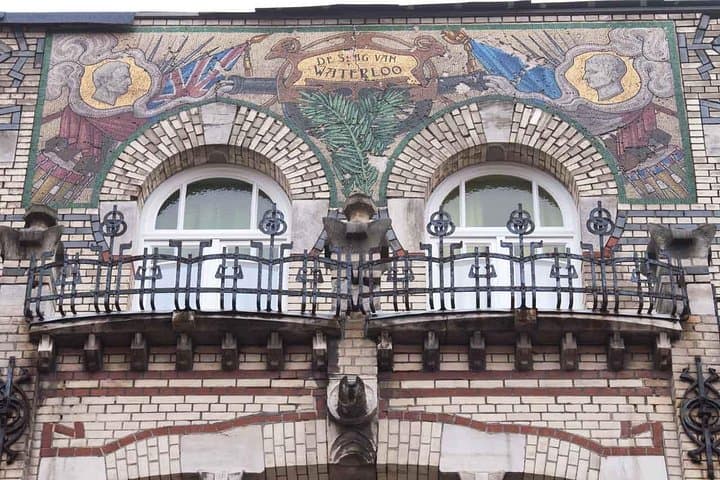
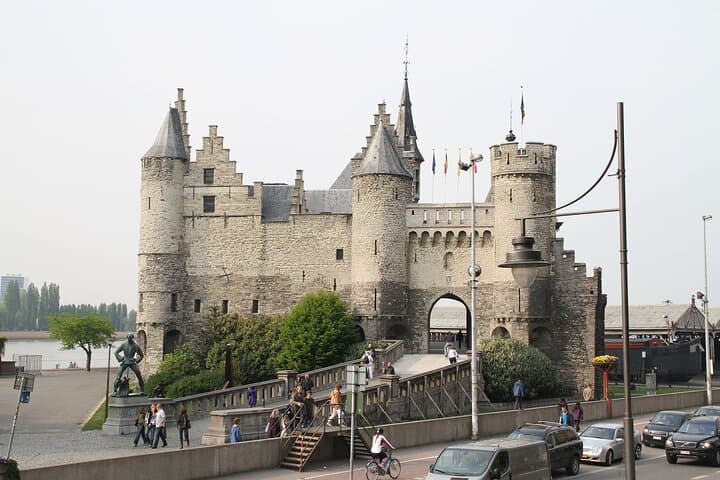
This half-day private tour moves between Brussels and Antwerp to trace Victor Horta’s imprint: intimate townhouses, the rhythm of facade lines, and neighborhoods where Art Nouveau retooled domestic life. The route typically includes Horta’s own house (subject to visiting hours), the Autrique House, and emblematic districts such as Square Ambiorix and Ixelles’ pond and Trinité quarters. Antwerp stops add civic contrasts—grand railway architecture, the Grote Markt, and the Cathedral of Our Lady—helping situate Horta’s decorative modernism within Belgium’s broader 19th–20th-century urban fabric.
Geology and urban growth dovetail here: Brussels’ compact clay soils made low-rise, dense neighborhoods practical, encouraging the close-up decorative experiments of Art Nouveau, while Antwerp’s river-sculpted port shaped bolder civic statements. Culturally, the style reflects Belgium’s industrial confidence and a push for aesthetic reform after 1880.
Practicalities: expect about five hours with hotel pickup and drop-off in Brussels, light walking on cobbles, and timed entry restrictions (Horta’s house open afternoons and specific days). Bring comfortable shoes, a city map or phone, and a camera; timed museum access and local traffic mean the guide’s pacing is essential. If you’re after close observation of detail—stained glass, hand-forged railings, and built-in furniture—ask your guide to linger at façades and interiors where permitted.
easy.
5 hours.
Suitable for most fitness levels; requires moderate walking over cobblestones and short staircases.
Entry depends on opening hours and availability; confirm at booking—as noted, the house is usually open afternoons and closed Mondays.
Most tours are arranged with hotel pickup in Brussels, but private tours can often be adjusted—ask the operator when booking.
The tour notes accessibility for many surfaces and vehicles, but some historic interiors may have limited access—check specific site access in advance.
Yes, children can join but must be accompanied by an adult; infant seats are available in the minivan.
Art Nouveau in Belgium emerged in the late 19th century as architects like Horta rejected historical pastiche and pursued new forms tied to industry and craft.
Many Art Nouveau buildings are protected monuments; visitors should respect interior rules and avoid touching fragile finishes to help preserve details.
YS BELGIUM LIMOUSINE operates guided outdoor trips and adventures with an emphasis on safety, stewardship, and memorable experiences.


You step from an air-conditioned minivan onto a street where sinuous ironwork frames shopfronts and carved stone seems almost to breathe.
You step from an air-conditioned minivan onto a street where sinuous ironwork frames shopfronts and carved stone seems almost to breathe.
This half-day private tour moves between Brussels and Antwerp to trace Victor Horta’s imprint: intimate townhouses, the rhythm of facade lines, and neighborhoods where Art Nouveau retooled domestic life. The route typically includes Horta’s own house (subject to visiting hours), the Autrique House, and emblematic districts such as Square Ambiorix and Ixelles’ pond and Trinité quarters. Antwerp stops add civic contrasts—grand railway architecture, the Grote Markt, and the Cathedral of Our Lady—helping situate Horta’s decorative modernism within Belgium’s broader 19th–20th-century urban fabric.
Geology and urban growth dovetail here: Brussels’ compact clay soils made low-rise, dense neighborhoods practical, encouraging the close-up decorative experiments of Art Nouveau, while Antwerp’s river-sculpted port shaped bolder civic statements. Culturally, the style reflects Belgium’s industrial confidence and a push for aesthetic reform after 1880.
Practicalities: expect about five hours with hotel pickup and drop-off in Brussels, light walking on cobbles, and timed entry restrictions (Horta’s house open afternoons and specific days). Bring comfortable shoes, a city map or phone, and a camera; timed museum access and local traffic mean the guide’s pacing is essential. If you’re after close observation of detail—stained glass, hand-forged railings, and built-in furniture—ask your guide to linger at façades and interiors where permitted.