THE ADVENTURE COLLECTIVE® · Independent discovery and booking for outdoor travel

Drive the Antelope Island causeway and spend four hours tracking bison, pronghorn, and shorebirds against the shimmering Great Salt Lake. This private, guided tour blends wildlife viewing, photography stops, and local ecology delivered by a Utah native and former safari guide.
Drive the Antelope Island causeway and spend four hours tracking bison, pronghorn, and shorebirds against the shimmering Great Salt Lake. This private, guided tour blends wildlife viewing, photography stops, and local ecology delivered by a Utah native and former safari guide.
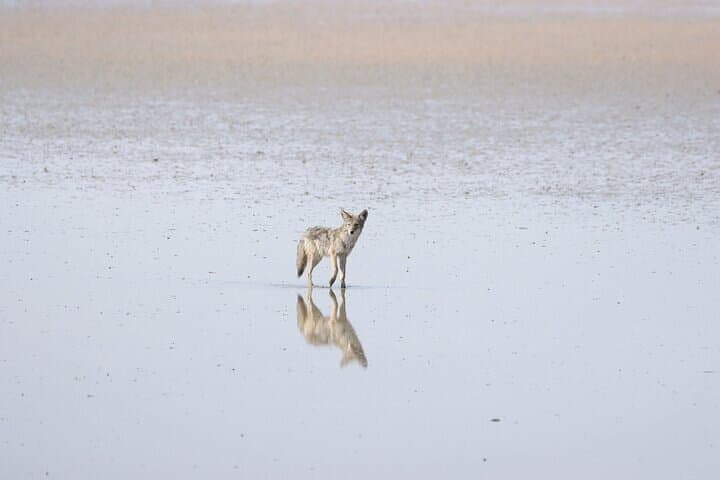
The tour begins where the causeway meets the horizon: a thin ribbon of pavement thrusting into a scoured mirror of salt and sky. Wind pushes across the Great Salt Lake and the island answers with scrubby sage, low cliffs, and the slow, deliberate grazing of bison—animals that move through the landscape like living weather, reshaping sightlines with each lift of their heads.
Verified experiences and guided adventures in the surrounding area.
Operated by Safari Utah · Syracuse, Utah
The tour begins where the causeway meets the horizon: a thin ribbon of pavement thrusting into a scoured mirror of salt and sky. Wind pushes across the Great Salt Lake and the island answers with scrubby sage, low cliffs, and the slow, deliberate grazing of bison—animals that move through the landscape like living weather, reshaping sightlines with each lift of their heads.
On a four-hour private tour led by a Utah native and former African safari guide, Antelope Island unfolds as a study in contrasts. The guide drives and walks with an eye trained on behavior and light. You learn to read tracks in the soft alkali soils, to catch the subtle twitch that signals pronghorn on alert, and to watch gulls argue over fish cast in the lake’s saline shallows. Conversation drifts between natural history and human history: this is a remnant of Pleistocene Lake Bonneville, a place where rising and falling water levels sculpted salt flats and islands, and where the Fielding Garr Ranch marks the island’s 19th‑century ranching chapter.
Geology here is blunt and readable—salt crusts glaze the flats; wind-scoured ridges hold clumps of sagebrush. Culturally, Antelope Island is a crossroad: indigenous peoples used its resources for millennia, settlers farmed its fringes, and modern conservationists now balance recreation with fragile habitats. The guide’s experience—part local storyteller, part safari tracker—makes the island feel immediate and accessible without diluting its wild edges.
Practical details are part of the rhythm. The tour covers scenic driving along the causeway and stops for short walks and photo ops; expect minimal elevation change but dusty, uneven terrain at viewpoints. Wildlife viewing is best in the cool hours: mornings for active bison and birds, late afternoon for dramatic light on the Wasatch range across the lake. Bring binoculars, a camera with a mid- to long-range lens, and layers—the wind on the lake can turn warm sun into chilly gusts in minutes.
Small-group, private format means the guide tailors the route to your interests: birding, photography, or simply a slow exploration of salt flat edges and ranch history. Respect distance—bison are large and unpredictable—and follow Leave No Trace: stay on designated roads and trails, pack out trash, and avoid disturbing nesting birds.
By the time you return to the parking lot, the island has shifted—light, textures, and animal positions rearranged by time and weather. What began as a half-day outing becomes a compact field course in Great Salt Lake ecology: a place where geology, wind, and wildlife keep the story moving, and where a good guide makes you notice the small things that define a large, saline landscape.
easy.
4 hours.
Suitable for general fitness; ability to walk short, uneven stretches is helpful
The private tour is four hours and includes scenic driving on the causeway, short walks, wildlife viewing, panoramic stops, and interpretive commentary from an experienced guide; entrance fees are included.
Meet at the designated Liberty Park meeting point in Salt Lake City; hotel and airport pickup can be arranged on request for an additional fee.
Yes—small groups and a vehicle-based itinerary make it suitable for families and most seniors, though participants should be able to step in and out of the vehicle and walk short distances.
Pets are not allowed on guided tours and are restricted in many areas of the park to protect wildlife—check park rules before bringing animals.
Common sightings include American bison, pronghorn, mule deer, and a variety of shorebirds and raptors; sightings are never guaranteed but morning and late‑afternoon tours improve chances.
Frary Peak is a strenuous 6–8 hour hike and isn’t included in the four-hour private tour, but the guide can point out viewpoints and discuss routes for independent hikes later.
Antelope Island is a remnant of Pleistocene Lake Bonneville; the island’s Fielding Garr Ranch preserves 19th‑century ranching history tied to early Mormon settlement.
The island’s fragile salt-flat and shoreline habitats are sensitive—stay on roads/trails, don’t feed wildlife, and pack out all trash to minimize human impact.
Safari Utah operates guided outdoor trips and adventures with an emphasis on safety, stewardship, and memorable experiences.
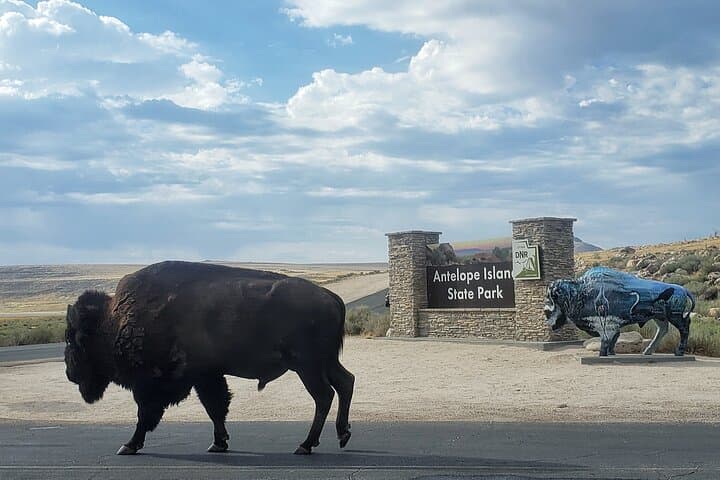
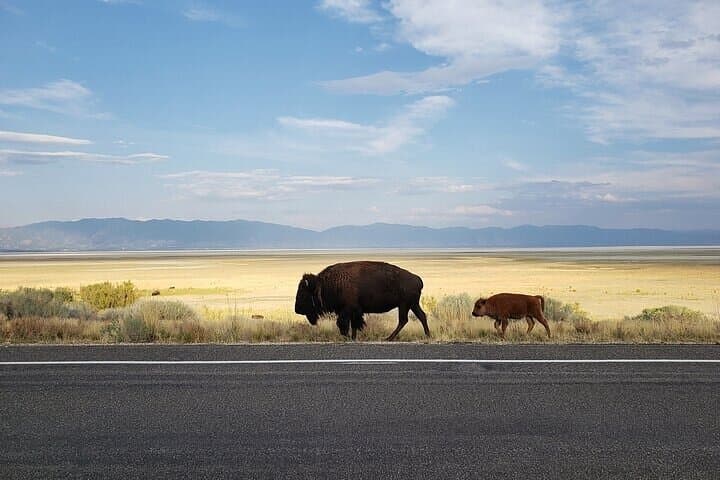
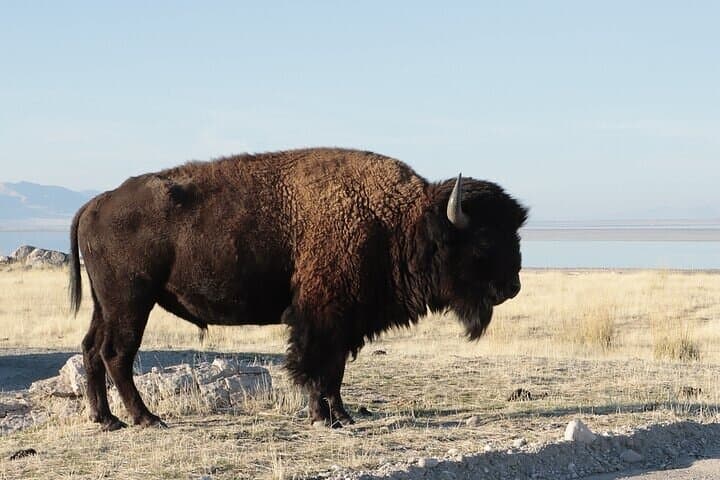
The tour begins where the causeway meets the horizon: a thin ribbon of pavement thrusting into a scoured mirror of salt and sky. Wind pushes across the Great Salt Lake and the island answers with scrubby sage, low cliffs, and the slow, deliberate grazing of bison—animals that move through the landscape like living weather, reshaping sightlines with each lift of their heads.
The tour begins where the causeway meets the horizon: a thin ribbon of pavement thrusting into a scoured mirror of salt and sky. Wind pushes across the Great Salt Lake and the island answers with scrubby sage, low cliffs, and the slow, deliberate grazing of bison—animals that move through the landscape like living weather, reshaping sightlines with each lift of their heads.
On a four-hour private tour led by a Utah native and former African safari guide, Antelope Island unfolds as a study in contrasts. The guide drives and walks with an eye trained on behavior and light. You learn to read tracks in the soft alkali soils, to catch the subtle twitch that signals pronghorn on alert, and to watch gulls argue over fish cast in the lake’s saline shallows. Conversation drifts between natural history and human history: this is a remnant of Pleistocene Lake Bonneville, a place where rising and falling water levels sculpted salt flats and islands, and where the Fielding Garr Ranch marks the island’s 19th‑century ranching chapter.
Geology here is blunt and readable—salt crusts glaze the flats; wind-scoured ridges hold clumps of sagebrush. Culturally, Antelope Island is a crossroad: indigenous peoples used its resources for millennia, settlers farmed its fringes, and modern conservationists now balance recreation with fragile habitats. The guide’s experience—part local storyteller, part safari tracker—makes the island feel immediate and accessible without diluting its wild edges.
Practical details are part of the rhythm. The tour covers scenic driving along the causeway and stops for short walks and photo ops; expect minimal elevation change but dusty, uneven terrain at viewpoints. Wildlife viewing is best in the cool hours: mornings for active bison and birds, late afternoon for dramatic light on the Wasatch range across the lake. Bring binoculars, a camera with a mid- to long-range lens, and layers—the wind on the lake can turn warm sun into chilly gusts in minutes.
Small-group, private format means the guide tailors the route to your interests: birding, photography, or simply a slow exploration of salt flat edges and ranch history. Respect distance—bison are large and unpredictable—and follow Leave No Trace: stay on designated roads and trails, pack out trash, and avoid disturbing nesting birds.
By the time you return to the parking lot, the island has shifted—light, textures, and animal positions rearranged by time and weather. What began as a half-day outing becomes a compact field course in Great Salt Lake ecology: a place where geology, wind, and wildlife keep the story moving, and where a good guide makes you notice the small things that define a large, saline landscape.