THE ADVENTURE COLLECTIVE® · Independent discovery and booking for outdoor travel

Spend a private day exploring Angkor Wat, Angkor Thom, Bayon and Ta Prohm with an English-speaking local guide. This full‑day tour covers the major monuments and offers historical context, practical pacing, and on‑site tips for first-time visitors.
Spend a private day exploring Angkor Wat, Angkor Thom, Bayon and Ta Prohm with an English-speaking local guide. This full‑day tour covers the major monuments and offers historical context, practical pacing, and on‑site tips for first-time visitors.
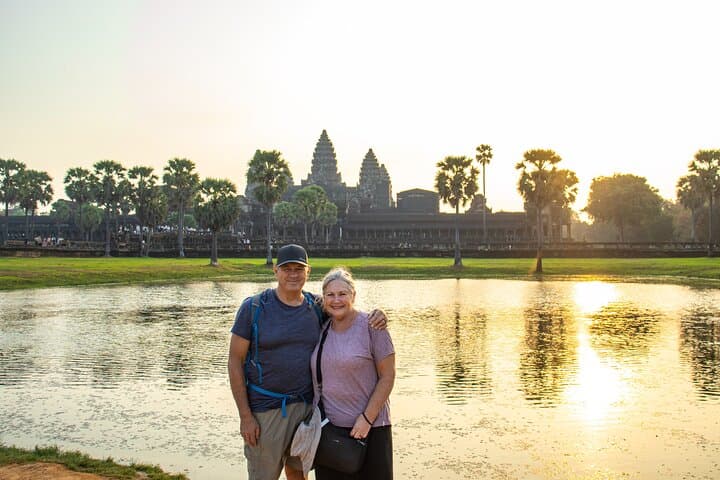
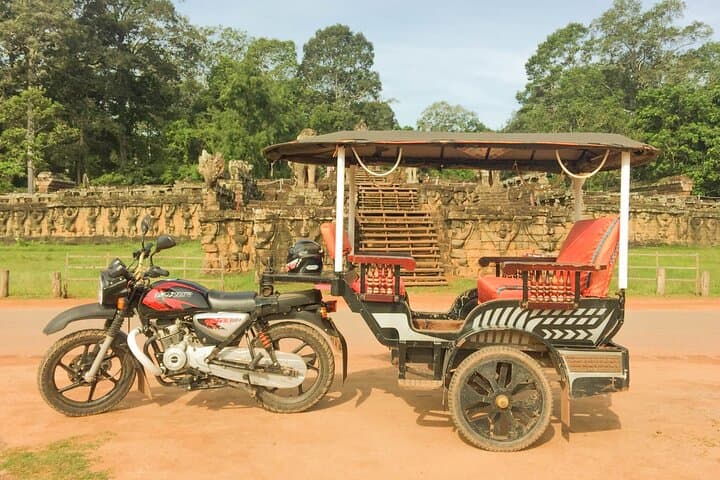
Humidity hangs off the trees as your tuk‑tuk eases onto the wide causeway toward Angkor Wat — limestone blocks and laterite walls ageing into patina under a tropical sky. Walk past devatas and bas‑reliefs, and the scale of the temple draws you inward: stone corridors that once held court ritual now hum with the quiet of visitors and birds.
Verified experiences and guided adventures in the surrounding area.
Operated by Pineapple Cambodia Tours · Siem Reap, Siem Reap Province
Humidity hangs off the trees as your tuk‑tuk eases onto the wide causeway toward Angkor Wat — limestone blocks and laterite walls ageing into patina under a tropical sky. Walk past devatas and bas‑reliefs, and the scale of the temple draws you inward: stone corridors that once held court ritual now hum with the quiet of visitors and birds.
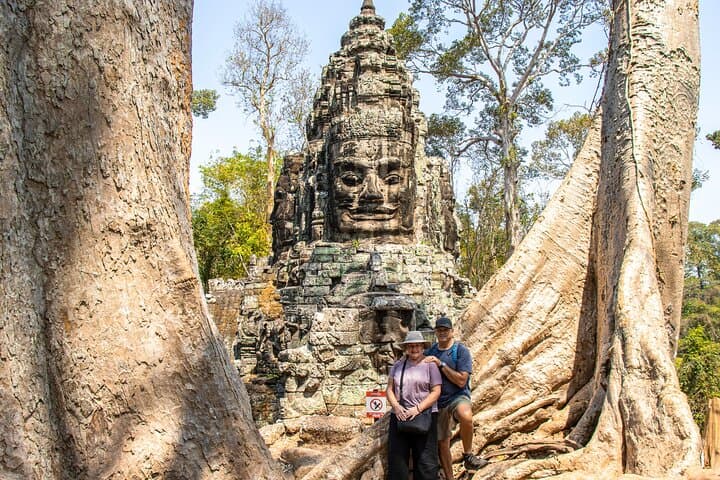
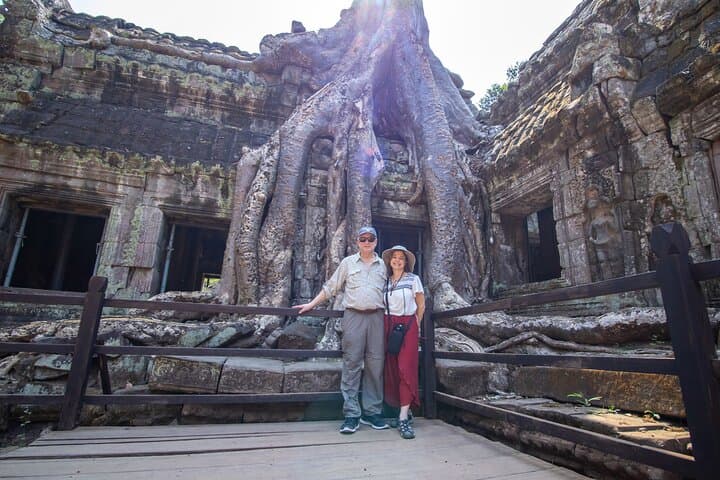
This private, full‑day tour visits Angkor Wat, the walled city of Angkor Thom and its Bayon, plus Ta Prohm’s tree‑entangled ruins. Built between the 9th and 13th centuries, these Khmer monuments reflect a shift from Hindu to Buddhist patronage and a mastery of sandstone carving and hydraulic engineering; nearby reservoirs like Srah Srang reveal the ingenuity of ancient water management. Local guides add cultural context — royal rituals, epigraphic clues, and the modern revival of Khmer stonecraft.
Expect uneven stone steps, shaded forest trails at Ta Prohm, and open plaza walking in Angkor Thom. Because park admission is sold at the ticket center, bring your passport for the pass and plan for long stretches between shaded rest stops. Carry water, sun protection, and comfortable, grippy footwear; timing matters—early morning or late afternoon light improves photos and reduces heat.
Practical tips: confirm pickup details, pace your walk through Bayon’s faces, and allow lunch near Srah Srang to rest and recharge. Respect temple rules — shoulders and knees covered — and leave no trace in this archaeological landscape that remains both fragile and compelling.
moderate.
7–8 hours.
Light to moderate fitness; able to walk on uneven stone surfaces for several hours and climb short staircases.
No; Angkor Park admission is purchased separately at the official ticket center — bring your passport to obtain a pass.
The tour runs about 7–8 hours and includes several hours of walking across uneven surfaces with short climbs and stairs.
Yes — the tour is family‑friendly; infant seating and stroller access are noted, but expect many steps and stretches of uneven ground.
Lunch is typically provided at a scheduled stop near Srah Srang or a local restaurant, but verify specifics with the operator when booking.
Angkor was the political and religious center of the Khmer Empire from the 9th to 15th centuries; many temples record transitions from Hinduism to Mahayana and Theravada Buddhism.
Visitor numbers and natural overgrowth stress the sandstone and sandstone-lime mortar — stick to marked paths, avoid touching sculptures, and follow guide directions to reduce wear.
Pineapple Cambodia Tours operates guided outdoor trips and adventures with an emphasis on safety, stewardship, and memorable experiences.
Humidity hangs off the trees as your tuk‑tuk eases onto the wide causeway toward Angkor Wat — limestone blocks and laterite walls ageing into patina under a tropical sky. Walk past devatas and bas‑reliefs, and the scale of the temple draws you inward: stone corridors that once held court ritual now hum with the quiet of visitors and birds.
Humidity hangs off the trees as your tuk‑tuk eases onto the wide causeway toward Angkor Wat — limestone blocks and laterite walls ageing into patina under a tropical sky. Walk past devatas and bas‑reliefs, and the scale of the temple draws you inward: stone corridors that once held court ritual now hum with the quiet of visitors and birds.
This private, full‑day tour visits Angkor Wat, the walled city of Angkor Thom and its Bayon, plus Ta Prohm’s tree‑entangled ruins. Built between the 9th and 13th centuries, these Khmer monuments reflect a shift from Hindu to Buddhist patronage and a mastery of sandstone carving and hydraulic engineering; nearby reservoirs like Srah Srang reveal the ingenuity of ancient water management. Local guides add cultural context — royal rituals, epigraphic clues, and the modern revival of Khmer stonecraft.
Expect uneven stone steps, shaded forest trails at Ta Prohm, and open plaza walking in Angkor Thom. Because park admission is sold at the ticket center, bring your passport for the pass and plan for long stretches between shaded rest stops. Carry water, sun protection, and comfortable, grippy footwear; timing matters—early morning or late afternoon light improves photos and reduces heat.
Practical tips: confirm pickup details, pace your walk through Bayon’s faces, and allow lunch near Srah Srang to rest and recharge. Respect temple rules — shoulders and knees covered — and leave no trace in this archaeological landscape that remains both fragile and compelling.