THE ADVENTURE COLLECTIVE® · Independent discovery and booking for outdoor travel

Catch Angkor Wat at first light and motor between five major temple complexes on a private, guide-led motorbike route that avoids the crowds. Ideal for travelers who want close-up history, dramatic photo moments, and flexible pacing.
Catch Angkor Wat at first light and motor between five major temple complexes on a private, guide-led motorbike route that avoids the crowds. Ideal for travelers who want close-up history, dramatic photo moments, and flexible pacing.
The day begins in the pre-dawn hush, when your motorbike driver eases through palm-shaded lanes toward Angkor Wat and the first thin light sketches the temple towers. You stand at the moat as mist lifts and bas-reliefs start to read like a map of a long-ago capital—an intimate start before buses arrive.
Verified experiences and guided adventures in the surrounding area.
Operated by Naga Angkor Tour · Siem Reap, Siem Reap Province
The day begins in the pre-dawn hush, when your motorbike driver eases through palm-shaded lanes toward Angkor Wat and the first thin light sketches the temple towers. You stand at the moat as mist lifts and bas-reliefs start to read like a map of a long-ago capital—an intimate start before buses arrive.
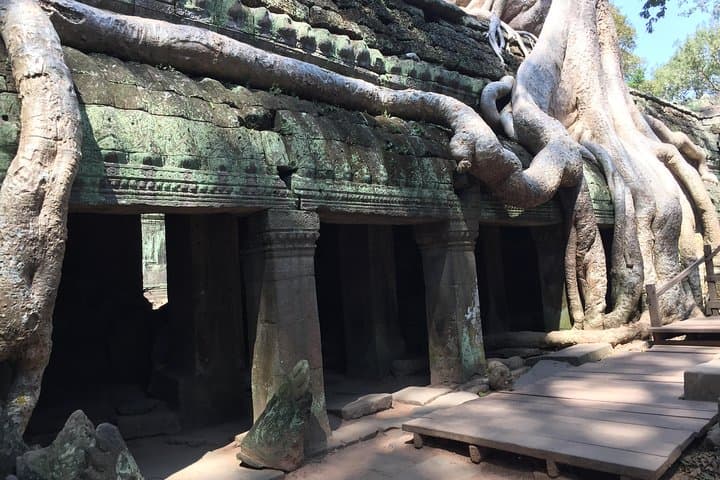
Angkor was the heart of the Khmer Empire from the 9th to the 15th centuries; Angkor Wat itself was raised in the early 12th century as a Hindu state temple and later became a Buddhist complex. Geology here is shallow laterite and sandstone that builders carved and stacked into galleries, towers and vast causeways. Bayon’s many-faced towers and Ta Prohm’s trees-turned-pillars reveal towns where stone and jungle contend.
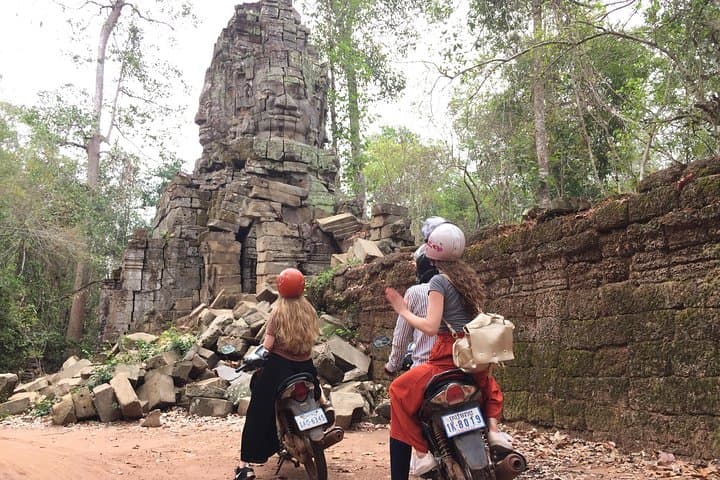
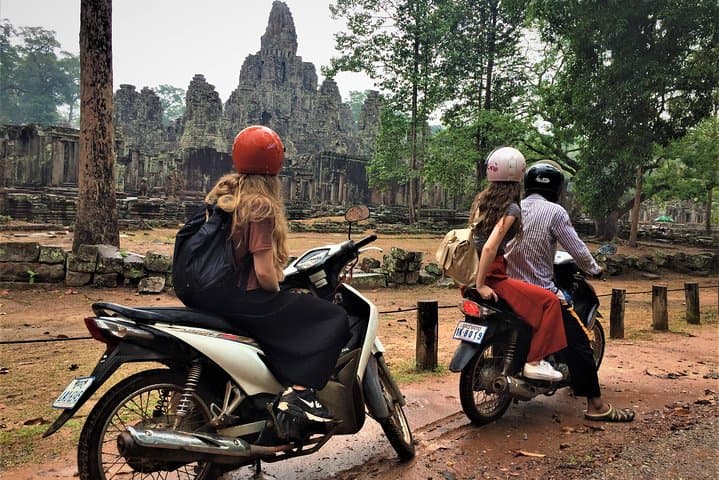
This private motorbike route stitches quieter monuments—Ta Nei and Baphuon—into a single day with hotel pickup, a guide, cold towels and water. Expect mounting and dismounting frequently, short hikes up steep temple stairs, and stretches riding on quiet dirt tracks away from bus circuits.
Practicalities: bring a Cambodian Angkor pass (sold at the ticket center), wear respectful, lightweight clothing that covers shoulders and knees, and carry sunscreen, insect repellent and a small first-aid kit. Temperatures spike mid-morning; plan sunrise at Angkor Wat then rest for breakfast before resuming. The private motorbike format keeps you nimble and photo-ready, but follow your guide’s instructions for safety around narrow stairways and fragile carvings.
moderate.
6–8 hours.
You should be comfortable riding as a passenger, standing and climbing short steep stairways; moderate stamina needed for long day and heat.
Yes—entry to Angkor Archaeological Park requires a ticket sold at the official ticket center; guides normally remind you but carry your passport copy for ticketing.
Tours use a driver-operated motorbike with one passenger; notify the operator of ages and weights at booking—infants must sit on laps and may not be suitable for everyone.
This private tour does not include Angkor pass fees—admission is handled at the ticket office by each visitor.
Wear clothing that covers shoulders and knees; avoid hats inside sanctuaries and remove shoes where signs require it.
Angkor’s monuments were built by successive Khmer kings between the 9th and 13th centuries; Angkor Wat was commissioned by King Suryavarman II in the early 12th century and later became a Buddhist site.
High visitor numbers strain fragile sandstone and laterite; stick to designated paths, avoid touching carvings, and follow guides’ instructions to minimize impact.
Naga Angkor Tour operates guided outdoor trips and adventures with an emphasis on safety, stewardship, and memorable experiences.
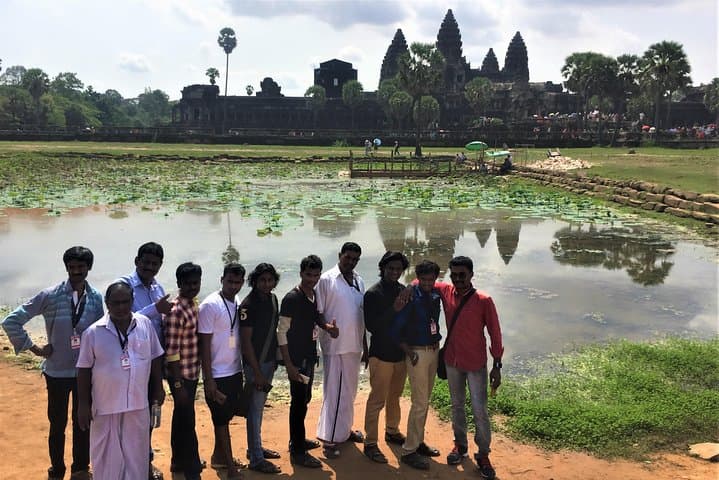
The day begins in the pre-dawn hush, when your motorbike driver eases through palm-shaded lanes toward Angkor Wat and the first thin light sketches the temple towers. You stand at the moat as mist lifts and bas-reliefs start to read like a map of a long-ago capital—an intimate start before buses arrive.
The day begins in the pre-dawn hush, when your motorbike driver eases through palm-shaded lanes toward Angkor Wat and the first thin light sketches the temple towers. You stand at the moat as mist lifts and bas-reliefs start to read like a map of a long-ago capital—an intimate start before buses arrive.
Angkor was the heart of the Khmer Empire from the 9th to the 15th centuries; Angkor Wat itself was raised in the early 12th century as a Hindu state temple and later became a Buddhist complex. Geology here is shallow laterite and sandstone that builders carved and stacked into galleries, towers and vast causeways. Bayon’s many-faced towers and Ta Prohm’s trees-turned-pillars reveal towns where stone and jungle contend.
This private motorbike route stitches quieter monuments—Ta Nei and Baphuon—into a single day with hotel pickup, a guide, cold towels and water. Expect mounting and dismounting frequently, short hikes up steep temple stairs, and stretches riding on quiet dirt tracks away from bus circuits.
Practicalities: bring a Cambodian Angkor pass (sold at the ticket center), wear respectful, lightweight clothing that covers shoulders and knees, and carry sunscreen, insect repellent and a small first-aid kit. Temperatures spike mid-morning; plan sunrise at Angkor Wat then rest for breakfast before resuming. The private motorbike format keeps you nimble and photo-ready, but follow your guide’s instructions for safety around narrow stairways and fragile carvings.