THE ADVENTURE COLLECTIVE® · Independent discovery and booking for outdoor travel

Avoid the crowds and explore Angkor’s major temples with a private tuk‑tuk guide. This full‑day route focuses on Angkor Wat, Angkor Thom’s south gate, and the atmospheric Ta Prohm with cultural insight and practical guidance.
Avoid the crowds and explore Angkor’s major temples with a private tuk‑tuk guide. This full‑day route focuses on Angkor Wat, Angkor Thom’s south gate, and the atmospheric Ta Prohm with cultural insight and practical guidance.
The day begins with a tuk‑tuk cutting across the mirror-still moat as Angkor Wat’s silhouette sharpens against the morning sky. Stones cool beneath your palms; carved apsaras and bas‑reliefs hold stories that guides here repeat with practiced reverence. The private format lets the tempo slow—more time at relief panels, quieter corners of the galleries, and a longer pause where strangler figs push through temple walls at Ta Prohm.
Verified experiences and guided adventures in the surrounding area.
Operated by Withlocals · Siem Reap, Siem Reap Province
The day begins with a tuk‑tuk cutting across the mirror-still moat as Angkor Wat’s silhouette sharpens against the morning sky. Stones cool beneath your palms; carved apsaras and bas‑reliefs hold stories that guides here repeat with practiced reverence. The private format lets the tempo slow—more time at relief panels, quieter corners of the galleries, and a longer pause where strangler figs push through temple walls at Ta Prohm.
Built in the 12th century under King Suryavarman II, Angkor Wat is an expansive sandstone complex raised on laterite foundations; its galleries and bas‑reliefs document religion, warfare and daily life from the Khmer Empire. Nearby, Angkor Thom’s southern causeway is lined by 54 paired stone figures, a dramatic prelude to the Bayon’s many faces. Ta Prohm’s roots and ruins offer a chance to observe nature reclaiming architecture.
Practically: this private tour runs about seven hours and uses a local tuk‑tuk for transfers between sites. Visitors should have an Angkor Pass (sold at the main ticket office), wear modest clothing (shoulders and knees covered), and be prepared for uneven steps and loose stone underfoot. Bring a refillable water bottle, sun protection and comfortable walking shoes; expect significant walking mixed with seated tuk‑tuk rides.
Timing matters—sunrise brings reflections at Angkor Wat, late afternoon reduces heat and crowds. Respect conservation rules: do not climb unstable structures or touch carved reliefs. A knowledgeable local guide will enrich each stop with cultural context and practical navigation of the complex.
moderate.
7 hours.
Moderate fitness: able to walk several kilometers over uneven terrain with occasional stairs.
Yes—entry to Angkor Archaeological Park requires an Angkor Pass, purchased at the official ticket center; the guide/tuk‑tuk will meet you after you have the pass.
Admissions are not included by default; travelers must buy Angkor Passes separately unless the operator specifies otherwise in booking details.
Expect several kilometers of walking broken into short segments around each temple, interspersed with tuk‑tuk transfers to reduce fatigue.
Sunrise is possible but may require an earlier start; check with the provider when booking if you want sunrise specifically, as it alters the day’s routing.
Angkor Wat was constructed in the early 12th century by Suryavarman II as a state temple and mausoleum and later became a Hindu then Buddhist pilgrimage site, reflecting shifts in the Khmer Empire.
High visitation stresses fragile stonework and ecosystems; stick to marked paths, avoid touching reliefs, and hire local guides who practice low‑impact touring.
Withlocals operates guided outdoor trips and adventures with an emphasis on safety, stewardship, and memorable experiences.
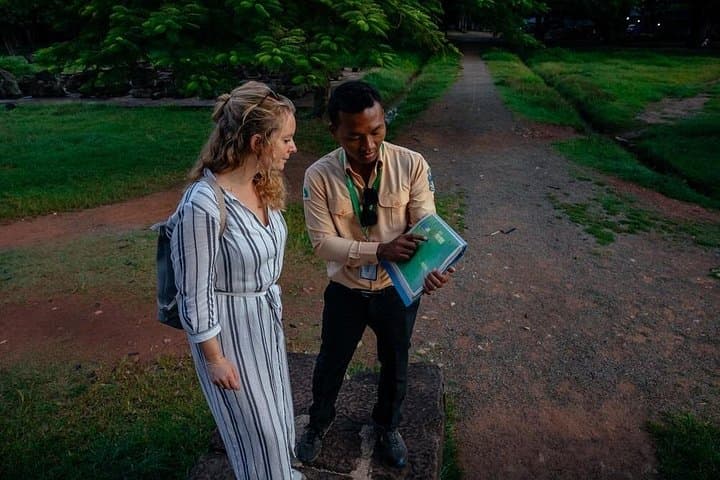
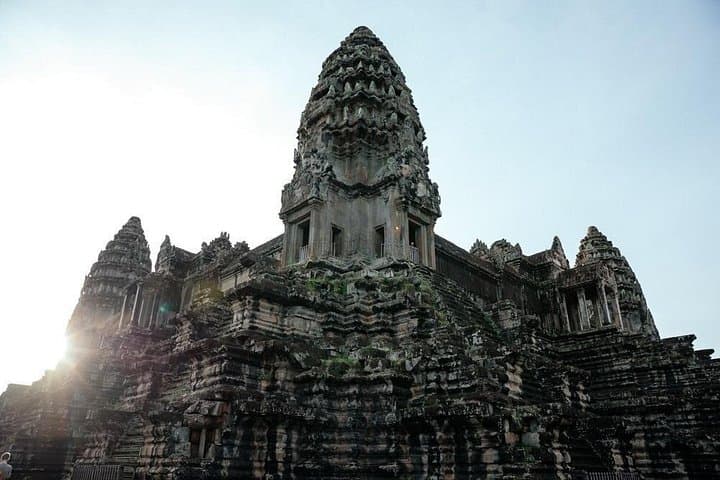
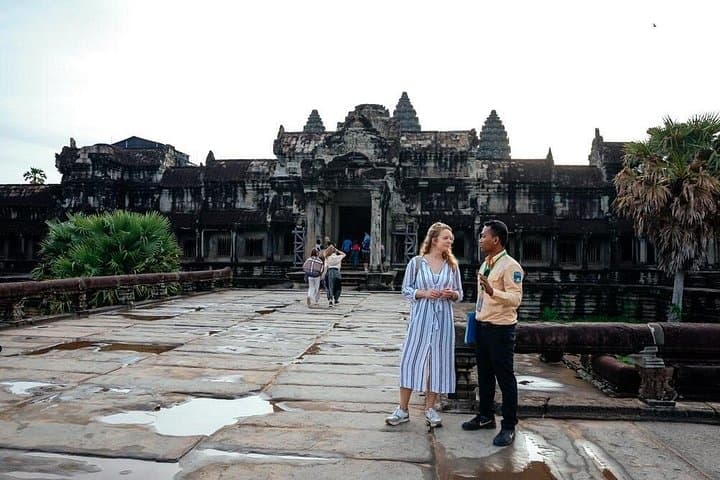
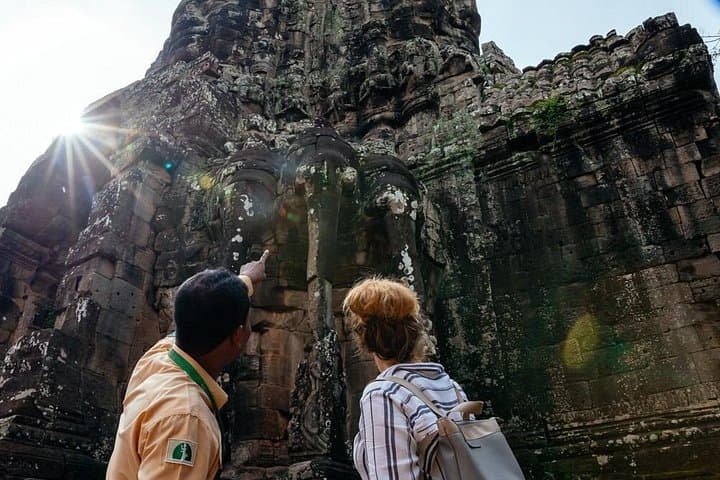
The day begins with a tuk‑tuk cutting across the mirror-still moat as Angkor Wat’s silhouette sharpens against the morning sky. Stones cool beneath your palms; carved apsaras and bas‑reliefs hold stories that guides here repeat with practiced reverence. The private format lets the tempo slow—more time at relief panels, quieter corners of the galleries, and a longer pause where strangler figs push through temple walls at Ta Prohm.
The day begins with a tuk‑tuk cutting across the mirror-still moat as Angkor Wat’s silhouette sharpens against the morning sky. Stones cool beneath your palms; carved apsaras and bas‑reliefs hold stories that guides here repeat with practiced reverence. The private format lets the tempo slow—more time at relief panels, quieter corners of the galleries, and a longer pause where strangler figs push through temple walls at Ta Prohm.
Built in the 12th century under King Suryavarman II, Angkor Wat is an expansive sandstone complex raised on laterite foundations; its galleries and bas‑reliefs document religion, warfare and daily life from the Khmer Empire. Nearby, Angkor Thom’s southern causeway is lined by 54 paired stone figures, a dramatic prelude to the Bayon’s many faces. Ta Prohm’s roots and ruins offer a chance to observe nature reclaiming architecture.
Practically: this private tour runs about seven hours and uses a local tuk‑tuk for transfers between sites. Visitors should have an Angkor Pass (sold at the main ticket office), wear modest clothing (shoulders and knees covered), and be prepared for uneven steps and loose stone underfoot. Bring a refillable water bottle, sun protection and comfortable walking shoes; expect significant walking mixed with seated tuk‑tuk rides.
Timing matters—sunrise brings reflections at Angkor Wat, late afternoon reduces heat and crowds. Respect conservation rules: do not climb unstable structures or touch carved reliefs. A knowledgeable local guide will enrich each stop with cultural context and practical navigation of the complex.