THE ADVENTURE COLLECTIVE® · Independent discovery and booking for outdoor travel

Spend a private day exploring Angkor’s major ruins—Angkor Thom, Ta Prohm and Banteay Kdei—before watching sunset at Angkor Wat. This full-day tour pairs expert local interpretation with hotel transfers and on-route hydration.
Spend a private day exploring Angkor’s major ruins—Angkor Thom, Ta Prohm and Banteay Kdei—before watching sunset at Angkor Wat. This full-day tour pairs expert local interpretation with hotel transfers and on-route hydration.
Late afternoon light slices across the reflecting moat as the tour vehicle eases through the palm-shadowed approach to Angkor Wat. The stone faces and carved galleries change mood with every step; roots weave around fallen lintels while the setting sun gilds the central towers. On a private day tour, the city’s frenetic market fades behind you and the temples begin to speak more plainly.
Verified experiences and guided adventures in the surrounding area.
Operated by Cambodia Transport Service · Siem Reap, Siem Reap Province
Late afternoon light slices across the reflecting moat as the tour vehicle eases through the palm-shadowed approach to Angkor Wat. The stone faces and carved galleries change mood with every step; roots weave around fallen lintels while the setting sun gilds the central towers. On a private day tour, the city’s frenetic market fades behind you and the temples begin to speak more plainly.
Angkor Wat was raised in the early 12th century by King Suryavarman II as a monumental Hindu state temple before evolving into a Buddhist center. The complex sits on flat alluvial plains carved by the seasonal rhythms of the Tonle Sap—its laterite foundations and sandstone reliefs reveal the Khmer Empire’s precision in stonework and water management.
Culturally, a guide frames the temples’ iconography and royal rituals, and the guides’ anecdotes bring otherwise silent bas-reliefs to life. The jungle nearby is not passive; figs and silk-cotton trees press against walls, and waterbirds patrol the moats like watchful couriers.
Practically, this private eight-hour itinerary covers Angkor Thom (Bayon, Baphuon, royal terraces), Ta Prohm’s tree-embraced ruins, Banteay Kdei, and finishes at Angkor Wat for sunset. Temperatures are high—expect dusty paths, sun-exposed steps and short, uneven climbs between galleries. Visitors should carry sun protection, steady footwear, and permit the guide’s cadence: frequent stops, measured walking and time at viewpoints to avoid the worst heat. Hotel pickup and bottled water are commonly included; temple admission (Angkor Pass) is separate. For an immersive day that combines history, geology and a sunset that frames centuries of stone, this private tour balances contemplative exploration with practical pacing.
moderate.
8 hours.
Able to walk on uneven stone steps and dirt paths for several hours in hot, humid conditions; basic stamina for a full-day outing.
No. The Angkor archaeological park requires a separate entrance pass (one-day, three-day or seven-day options); buy at the ticket center or arrange pre-purchase.
This specific itinerary is designed for sunset at Angkor Wat; sunrise tours are available but typically require earlier start times and different permits.
Many temple areas have uneven steps and narrow platforms; some sections are accessible but mobility issues may limit what you can comfortably visit—check with the operator about vehicle access and shorter routes.
Tipping is customary for good service in Cambodia; small cash tips for guides and drivers at the end of the day are appreciated but not mandatory.
Angkor Wat was commissioned by King Suryavarman II in the early 12th century as a Hindu temple complex later adapted for Buddhism, reflecting shifts in faith and royal power across the Khmer Empire.
Angkor is a UNESCO World Heritage Site; visitor fees support ongoing conservation, so follow marked paths, avoid climbing on unstable structures and respect onsite restrictions to minimize impact.
Cambodia Transport Service operates guided outdoor trips and adventures with an emphasis on safety, stewardship, and memorable experiences.
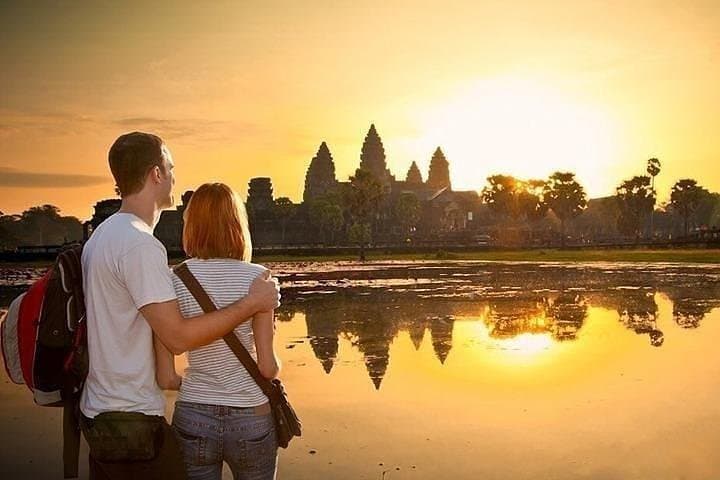
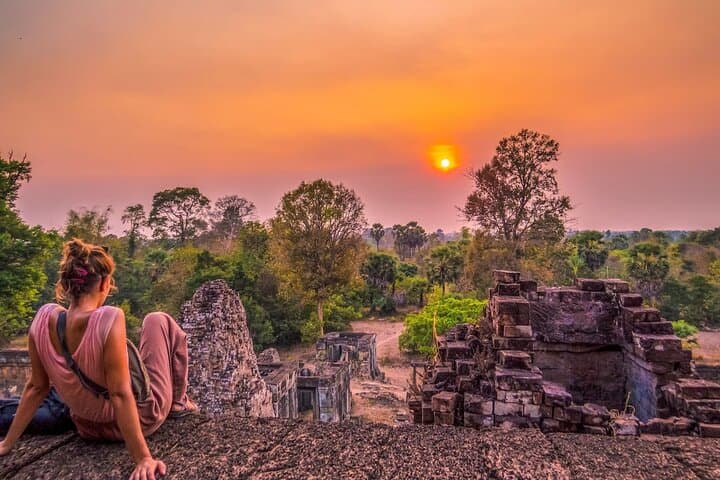
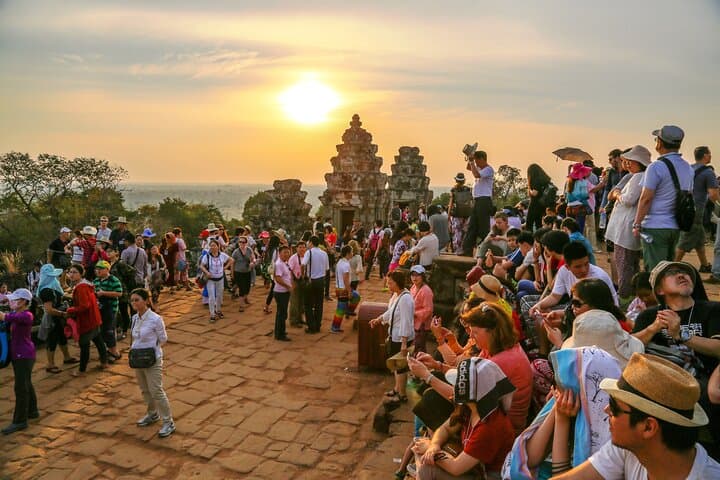
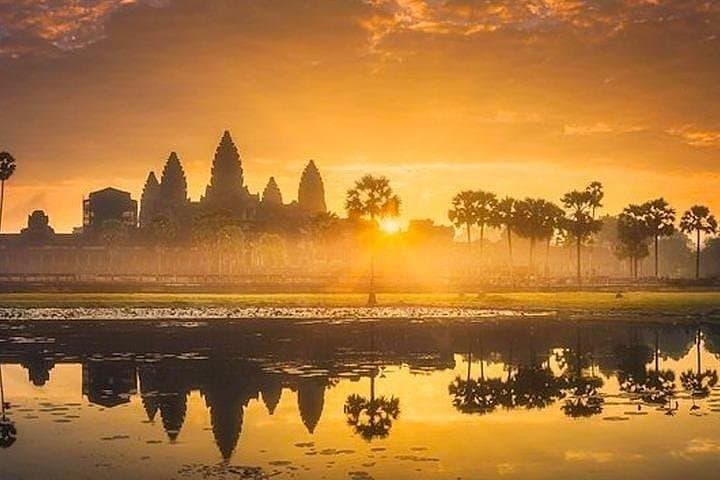
Late afternoon light slices across the reflecting moat as the tour vehicle eases through the palm-shadowed approach to Angkor Wat. The stone faces and carved galleries change mood with every step; roots weave around fallen lintels while the setting sun gilds the central towers. On a private day tour, the city’s frenetic market fades behind you and the temples begin to speak more plainly.
Late afternoon light slices across the reflecting moat as the tour vehicle eases through the palm-shadowed approach to Angkor Wat. The stone faces and carved galleries change mood with every step; roots weave around fallen lintels while the setting sun gilds the central towers. On a private day tour, the city’s frenetic market fades behind you and the temples begin to speak more plainly.
Angkor Wat was raised in the early 12th century by King Suryavarman II as a monumental Hindu state temple before evolving into a Buddhist center. The complex sits on flat alluvial plains carved by the seasonal rhythms of the Tonle Sap—its laterite foundations and sandstone reliefs reveal the Khmer Empire’s precision in stonework and water management.
Culturally, a guide frames the temples’ iconography and royal rituals, and the guides’ anecdotes bring otherwise silent bas-reliefs to life. The jungle nearby is not passive; figs and silk-cotton trees press against walls, and waterbirds patrol the moats like watchful couriers.
Practically, this private eight-hour itinerary covers Angkor Thom (Bayon, Baphuon, royal terraces), Ta Prohm’s tree-embraced ruins, Banteay Kdei, and finishes at Angkor Wat for sunset. Temperatures are high—expect dusty paths, sun-exposed steps and short, uneven climbs between galleries. Visitors should carry sun protection, steady footwear, and permit the guide’s cadence: frequent stops, measured walking and time at viewpoints to avoid the worst heat. Hotel pickup and bottled water are commonly included; temple admission (Angkor Pass) is separate. For an immersive day that combines history, geology and a sunset that frames centuries of stone, this private tour balances contemplative exploration with practical pacing.