THE ADVENTURE COLLECTIVE® · Independent discovery and booking for outdoor travel

Spend a private day exploring Angkor’s greatest temples by tuk‑tuk or minivan. This full‑day tour covers Angkor Wat, Angkor Thom, the Bayon and Ta Prohm with hotel pickup and an experienced English guide—entrance pass not included.
Spend a private day exploring Angkor’s greatest temples by tuk‑tuk or minivan. This full‑day tour covers Angkor Wat, Angkor Thom, the Bayon and Ta Prohm with hotel pickup and an experienced English guide—entrance pass not included.
You step through a humid Siem Reap morning as the minivan or tuk‑tuk threads the road toward a rising stone silhouette—the central towers of Angkor Wat cutting into the sky like the ribs of an ancient ship.
Verified experiences and guided adventures in the surrounding area.
Operated by Angkor Wat Tour Services · Siem Reap, Siem Reap Province
You step through a humid Siem Reap morning as the minivan or tuk‑tuk threads the road toward a rising stone silhouette—the central towers of Angkor Wat cutting into the sky like the ribs of an ancient ship.
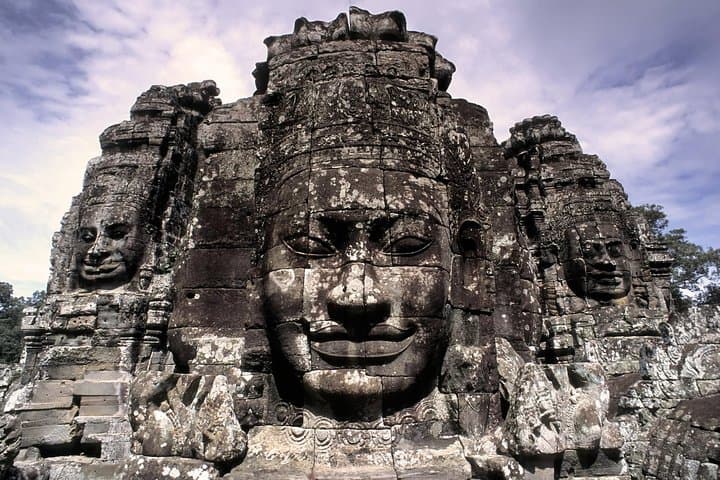
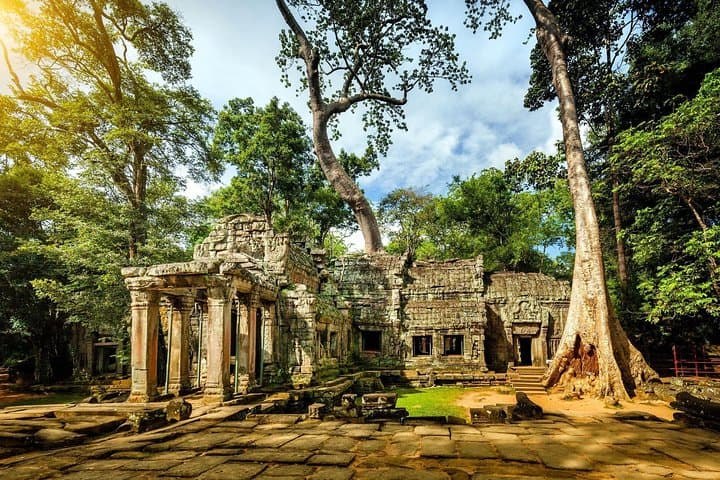
The day moves at a deliberate pace: a two‑hour circuit through Angkor Wat’s galleries and bas‑reliefs, then across to the fortified sweep of Angkor Thom and the inscrutable faces of the Bayon. Ta Prohm arrives last, roots and masonry wrestling for primacy while shafts of light pick out fallen lintels.
This landscape is the result of human ambition and tropical time. Angkor Wat, raised in the early 12th century for King Suryavarman II, blends Hindu cosmology and Khmer engineering; Angkor Thom and the Bayon reflect Jayavarman VII’s 12th‑century Buddhist reimagining. The complex sits on an alluvial plain once engineered with reservoirs (barays) that fed rice kingdoms and supported huge populations.
Practicalities shape the experience: entrance passes are purchased at the park gates (not included), travel between sites is by tuk‑tuk or air‑con minivan, and you should budget five to seven hours for a relaxed visit. Wear breathable clothing that covers shoulders and knees, good walking shoes for uneven laterite and steep steps, and a hat for intense sun. Start early to avoid heat and crowds and carry cash for lunch and tips.
Respectful behavior preserves fragile carvings and the living community around them—follow signed paths, avoid touching reliefs, and leave time to listen to the site: wind through galleries, water lapping moats, and the patient chatter of temple monkeys.
moderate.
5–7 hours.
Moderate aerobic fitness—comfortable walking for several hours with some stairs and uneven surfaces.
No. Entrance tickets to Angkor Archaeological Park are purchased separately at the official ticket center; your driver or guide can advise on queues and hours.
Yes. Expect several hours on foot across uneven stone, steps and narrow passages—comfortable shoes and a moderate fitness level are recommended.
Angkor Wat is popular at sunrise and opens early, but some inner galleries may restrict early access; arrive before dawn if you want the classic sunrise view.
Children can join but note uneven terrain and heat; the tour provider advises against it for pregnant travelers due to physical demands and sun exposure.
The temples were built by Khmer kings between the 9th and 13th centuries; Angkor Wat (early 12th c.) for Suryavarman II and Angkor Thom/Bayon (late 12th c.) under Jayavarman VII.
The Angkor Archaeological Park is managed to balance tourism and preservation—stick to marked paths, avoid touching bas‑reliefs, and use local services that support community stewardship.
Angkor Wat Tour Services operates guided outdoor trips and adventures with an emphasis on safety, stewardship, and memorable experiences.
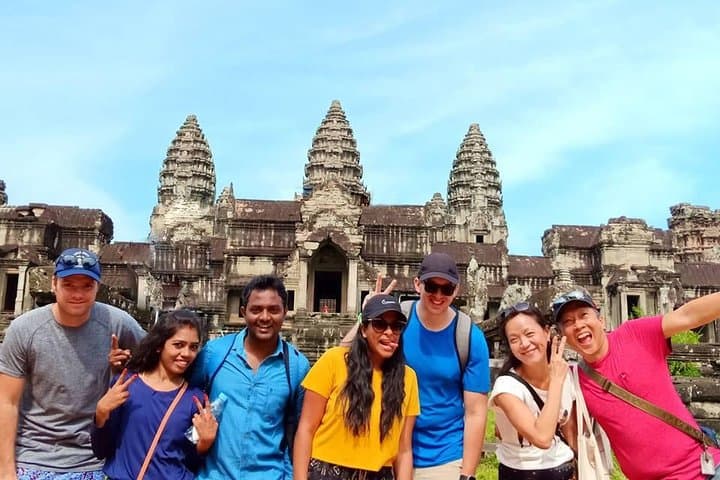
You step through a humid Siem Reap morning as the minivan or tuk‑tuk threads the road toward a rising stone silhouette—the central towers of Angkor Wat cutting into the sky like the ribs of an ancient ship.
You step through a humid Siem Reap morning as the minivan or tuk‑tuk threads the road toward a rising stone silhouette—the central towers of Angkor Wat cutting into the sky like the ribs of an ancient ship.
The day moves at a deliberate pace: a two‑hour circuit through Angkor Wat’s galleries and bas‑reliefs, then across to the fortified sweep of Angkor Thom and the inscrutable faces of the Bayon. Ta Prohm arrives last, roots and masonry wrestling for primacy while shafts of light pick out fallen lintels.
This landscape is the result of human ambition and tropical time. Angkor Wat, raised in the early 12th century for King Suryavarman II, blends Hindu cosmology and Khmer engineering; Angkor Thom and the Bayon reflect Jayavarman VII’s 12th‑century Buddhist reimagining. The complex sits on an alluvial plain once engineered with reservoirs (barays) that fed rice kingdoms and supported huge populations.
Practicalities shape the experience: entrance passes are purchased at the park gates (not included), travel between sites is by tuk‑tuk or air‑con minivan, and you should budget five to seven hours for a relaxed visit. Wear breathable clothing that covers shoulders and knees, good walking shoes for uneven laterite and steep steps, and a hat for intense sun. Start early to avoid heat and crowds and carry cash for lunch and tips.
Respectful behavior preserves fragile carvings and the living community around them—follow signed paths, avoid touching reliefs, and leave time to listen to the site: wind through galleries, water lapping moats, and the patient chatter of temple monkeys.