THE ADVENTURE COLLECTIVE® · Independent discovery and booking for outdoor travel

Spend a private day exploring Angkor Thom, Ta Prohm and Angkor Wat with a local guide. This itinerary blends historical context, quiet photo moments among tree-rooted ruins, and practical tips for a full 6–7 hour cultural exploration.
Spend a private day exploring Angkor Thom, Ta Prohm and Angkor Wat with a local guide. This itinerary blends historical context, quiet photo moments among tree-rooted ruins, and practical tips for a full 6–7 hour cultural exploration.
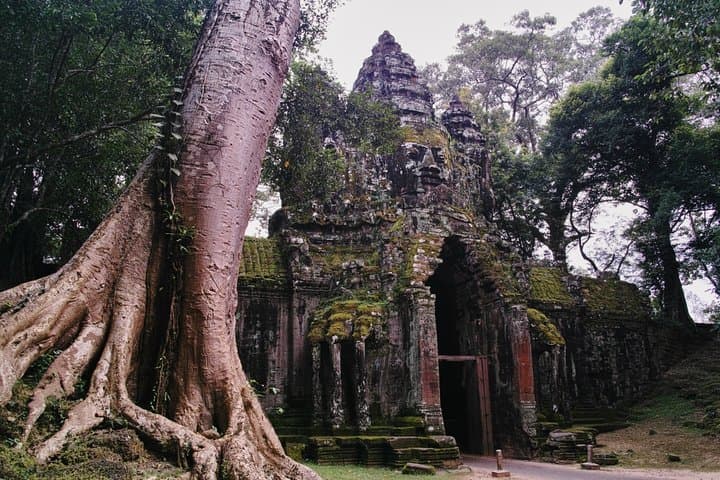
Dawn light slices through the jungle as an air-conditioned minivan drops travelers at Angkor Thom’s South Gate. Stone faces in the Bayon watch the procession of visitors; roots of Spung trees braid over Ta Prohm’s lintels, daring you to find a quiet corner for a photograph. By late morning the terraces and galleries hum with the steady thump of reverent footsteps.
Verified experiences and guided adventures in the surrounding area.
Operated by Tour Guide-Siem Reap · Siem Reap, Siem Reap Province
Dawn light slices through the jungle as an air-conditioned minivan drops travelers at Angkor Thom’s South Gate. Stone faces in the Bayon watch the procession of visitors; roots of Spung trees braid over Ta Prohm’s lintels, daring you to find a quiet corner for a photograph. By late morning the terraces and galleries hum with the steady thump of reverent footsteps.
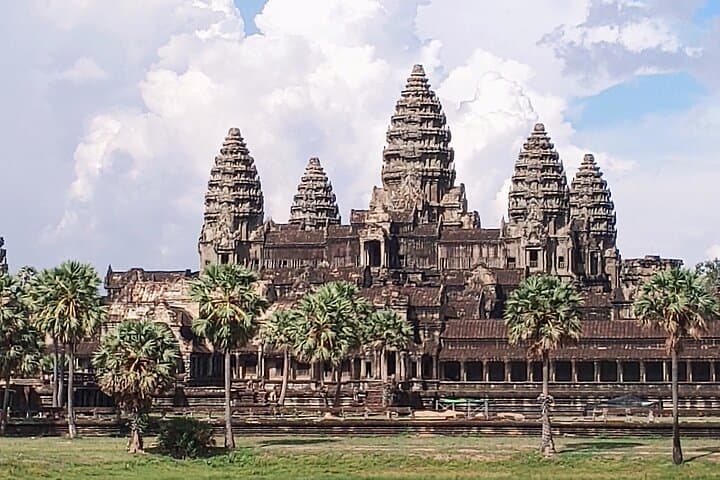
This private day tour threads three principal layers of Angkor’s story: Angkor Thom’s 12th-century political heart, Ta Prohm’s romantic-savage union of tree and temple, and Angkor Wat, Suryavarman II’s monumental Vishnu temple that later became a Buddhist sanctuary. The monuments are cut from sandstone and laterite, their bas-reliefs holding historical narratives of war, procession, and daily life—raw records of the Khmer Empire’s engineering and cosmology.
Local culture is present in small ways: guides point out contemporary ritual offerings, nearby markets sell lacquered souvenirs, and village life frames the temple complex beyond its walls. Conservation is visible—boarded paths, rope lines, and polite reminders to avoid climbing fragile carvings.
Practical guidance: dress modestly (shoulders and knees covered), bring sun protection and a refillable water bottle, and wear grippy shoes for uneven stones and steep steps. Expect a 6–7 hour day with multiple short walks and steep stair climbs; a private guide paces the itinerary and prioritizes skip-the-queue timing where possible. If sunrise is a priority, plan for an earlier start and secure your Angkor Pass in advance. With the right preparation, this private trip mixes deep cultural context with hands-on exploration of some of Southeast Asia’s most iconic ruins.
easy.
6–7 hours.
Suitable for most fitness levels; involves multiple short walks, uneven stone surfaces and some steep steps—basic mobility helpful.
No; the Angkor Pass is typically not included. Visitors should buy a 1-day, 3-day, or 7-day pass at the official ticket center before entering the park.
Yes; professional guides usually point out the best photo spots, explain bas-reliefs, and advise on framing to avoid heavy crowds.
Many transport and some paths are accessible, but temple terrain includes steps and uneven stones—complete accessibility varies by site; notify at booking for arrangements.
Bottled water is typically provided; lunch is often included or available depending on the operator—confirm dietary needs when booking.
Angkor Wat was built in the early 12th century by King Suryavarman II as a state temple to Vishnu and later became a continuous Buddhist center; its architecture marks the apex of classical Khmer design.
Visitor management focuses on staying on designated paths and restricting climbing to protect fragile carvings; bring reusable items to reduce plastic waste.
Tour Guide-Siem Reap operates guided outdoor trips and adventures with an emphasis on safety, stewardship, and memorable experiences.


Dawn light slices through the jungle as an air-conditioned minivan drops travelers at Angkor Thom’s South Gate. Stone faces in the Bayon watch the procession of visitors; roots of Spung trees braid over Ta Prohm’s lintels, daring you to find a quiet corner for a photograph. By late morning the terraces and galleries hum with the steady thump of reverent footsteps.
Dawn light slices through the jungle as an air-conditioned minivan drops travelers at Angkor Thom’s South Gate. Stone faces in the Bayon watch the procession of visitors; roots of Spung trees braid over Ta Prohm’s lintels, daring you to find a quiet corner for a photograph. By late morning the terraces and galleries hum with the steady thump of reverent footsteps.
This private day tour threads three principal layers of Angkor’s story: Angkor Thom’s 12th-century political heart, Ta Prohm’s romantic-savage union of tree and temple, and Angkor Wat, Suryavarman II’s monumental Vishnu temple that later became a Buddhist sanctuary. The monuments are cut from sandstone and laterite, their bas-reliefs holding historical narratives of war, procession, and daily life—raw records of the Khmer Empire’s engineering and cosmology.
Local culture is present in small ways: guides point out contemporary ritual offerings, nearby markets sell lacquered souvenirs, and village life frames the temple complex beyond its walls. Conservation is visible—boarded paths, rope lines, and polite reminders to avoid climbing fragile carvings.
Practical guidance: dress modestly (shoulders and knees covered), bring sun protection and a refillable water bottle, and wear grippy shoes for uneven stones and steep steps. Expect a 6–7 hour day with multiple short walks and steep stair climbs; a private guide paces the itinerary and prioritizes skip-the-queue timing where possible. If sunrise is a priority, plan for an earlier start and secure your Angkor Pass in advance. With the right preparation, this private trip mixes deep cultural context with hands-on exploration of some of Southeast Asia’s most iconic ruins.