THE ADVENTURE COLLECTIVE® · Independent discovery and booking for outdoor travel

Spend a full day guided through Angkor Wat, the root-entwined galleries of Ta Prohm, and the finely carved Banteay Srei. This private tour combines big-history temple visits with local village stops and practical logistics like hotel pickup.
Spend a full day guided through Angkor Wat, the root-entwined galleries of Ta Prohm, and the finely carved Banteay Srei. This private tour combines big-history temple visits with local village stops and practical logistics like hotel pickup.
You step from the minivan into morning heat and the slow, echoing hush of stone — Angkor Wat’s outer moat mirrors the sky while columns and galleries wait with centuries of stories carved into sandstone.
Verified experiences and guided adventures in the surrounding area.
Operated by Pitt Angkor Tour · Siem Reap, Siem Reap Province
You step from the minivan into morning heat and the slow, echoing hush of stone — Angkor Wat’s outer moat mirrors the sky while columns and galleries wait with centuries of stories carved into sandstone.
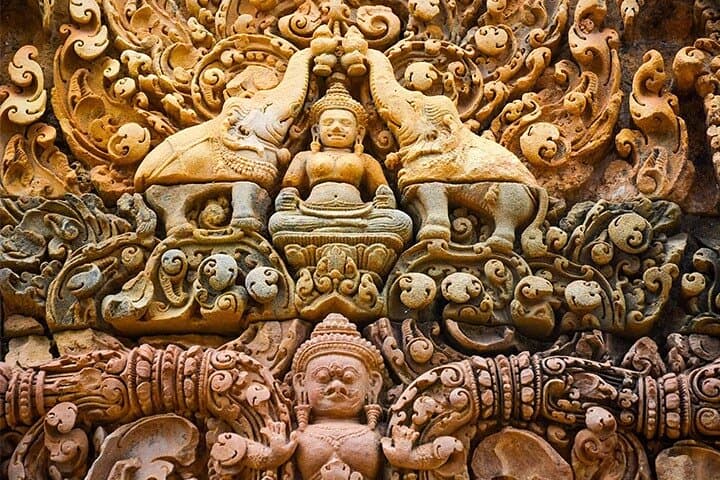
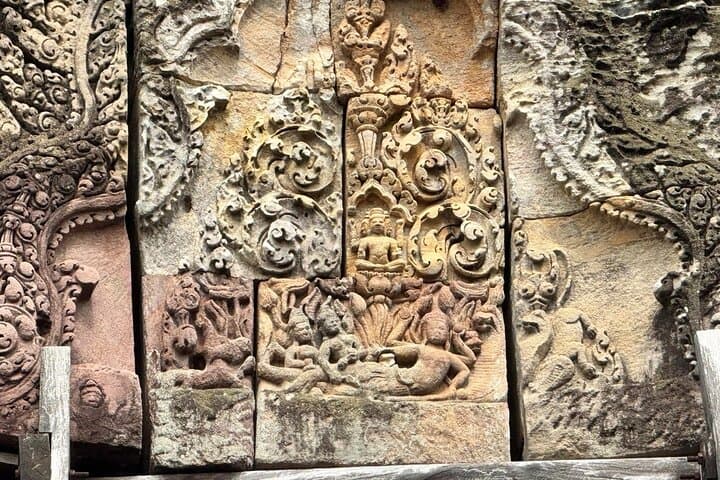
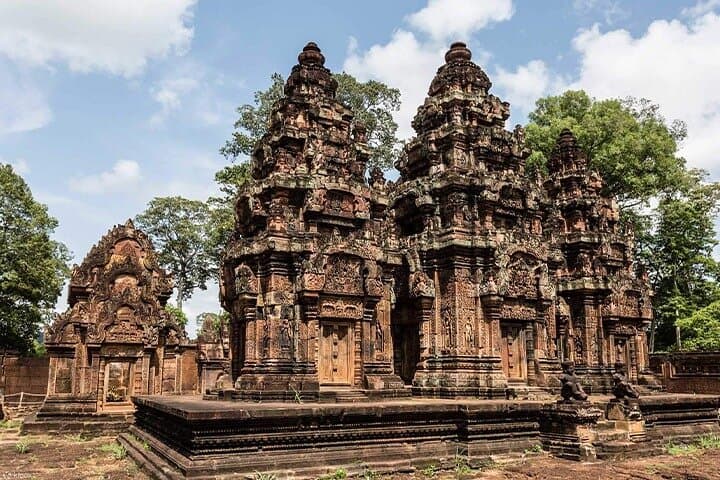
The day moves with rhythm: first Angkor Wat’s vast bas-reliefs and central towers, then the root-wrapped corridors of Ta Prohm where ficus and silk-cotton trees dare the ruins. After a local lunch, the drive widens into rural Cambodia toward Banteay Srei, where red sandstone reliefs retain a finesse that reads like a manuscript in stone.
Geology and history are visible in the materials and scale: laterite foundations, soft sandstone for sculpted panels, and Khmer engineering that centered water management as much as worship. Culturally, temples were civic centers—libraries, schools, and ritual spaces—reflecting the Angkorian empire’s administrative reach.
Local insights arrive in small things: a palm-sugar village that still presses jaggery by hand, a butterfly center showcasing regional species, and roadside markets where Khmer noodles steam under tarps. Guides decode the motifs — apsaras, churning of the ocean, and toothy naga — making the symbolism legible.
Practical guidance: expect 9–10 hours with hotel pickup, easy walking mixed with uneven stone steps and shaded paths. Carry sunscreen, a refillable water bottle, and modest clothing for temple entry. Pace yourself for the heat; mornings are best for Angkor Wat and Ta Prohm before Banteay Srei’s sculpted detail is best seen in afternoon light. Respect restricted areas and follow your guide’s directions to preserve fragile carvings.
easy.
9–10 hours.
Suitable for most fitness levels; expect several hours of walking over uneven stone and short stair sections.
Angkor Park tickets are not always included—confirm with the operator; many tours advise guests to purchase the pass on arrival or in advance.
Yes; this private tour lists stroller and wheelchair accessibility for transport and many temple areas, though some ruins have steps and uneven ground.
An English-speaking guide is provided; confirm if you need another language or specific accessibility accommodations.
A local restaurant lunch with cold drinks is included as described, but specialty dietary needs should be requested at booking.
Angkor was the heart of the Khmer Empire (9th–15th centuries); temples functioned as religious, administrative and hydraulic centers of a sophisticated civilization.
Visitor numbers and weathering strain the sandstone; stick to paths, avoid touching reliefs, and support local conservation initiatives and entrance fees that fund preservation.
Pitt Angkor Tour operates guided outdoor trips and adventures with an emphasis on safety, stewardship, and memorable experiences.

You step from the minivan into morning heat and the slow, echoing hush of stone — Angkor Wat’s outer moat mirrors the sky while columns and galleries wait with centuries of stories carved into sandstone.
You step from the minivan into morning heat and the slow, echoing hush of stone — Angkor Wat’s outer moat mirrors the sky while columns and galleries wait with centuries of stories carved into sandstone.
The day moves with rhythm: first Angkor Wat’s vast bas-reliefs and central towers, then the root-wrapped corridors of Ta Prohm where ficus and silk-cotton trees dare the ruins. After a local lunch, the drive widens into rural Cambodia toward Banteay Srei, where red sandstone reliefs retain a finesse that reads like a manuscript in stone.
Geology and history are visible in the materials and scale: laterite foundations, soft sandstone for sculpted panels, and Khmer engineering that centered water management as much as worship. Culturally, temples were civic centers—libraries, schools, and ritual spaces—reflecting the Angkorian empire’s administrative reach.
Local insights arrive in small things: a palm-sugar village that still presses jaggery by hand, a butterfly center showcasing regional species, and roadside markets where Khmer noodles steam under tarps. Guides decode the motifs — apsaras, churning of the ocean, and toothy naga — making the symbolism legible.
Practical guidance: expect 9–10 hours with hotel pickup, easy walking mixed with uneven stone steps and shaded paths. Carry sunscreen, a refillable water bottle, and modest clothing for temple entry. Pace yourself for the heat; mornings are best for Angkor Wat and Ta Prohm before Banteay Srei’s sculpted detail is best seen in afternoon light. Respect restricted areas and follow your guide’s directions to preserve fragile carvings.