THE ADVENTURE COLLECTIVE® · Independent discovery and booking for outdoor travel

Watch Angkor Wat awaken at sunrise and move through Bayon and Ta Prohm with a private, English‑speaking guide. This full‑day private tour pairs historical context with practical logistics—ideal for first‑time visitors seeking paced exploration.
Watch Angkor Wat awaken at sunrise and move through Bayon and Ta Prohm with a private, English‑speaking guide. This full‑day private tour pairs historical context with practical logistics—ideal for first‑time visitors seeking paced exploration.
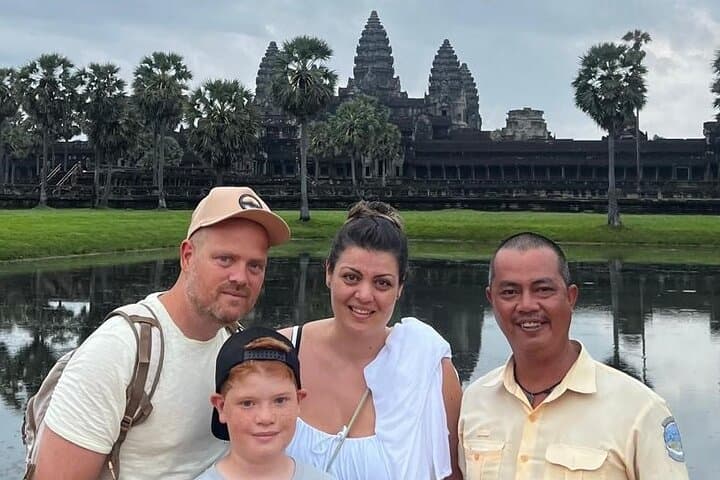
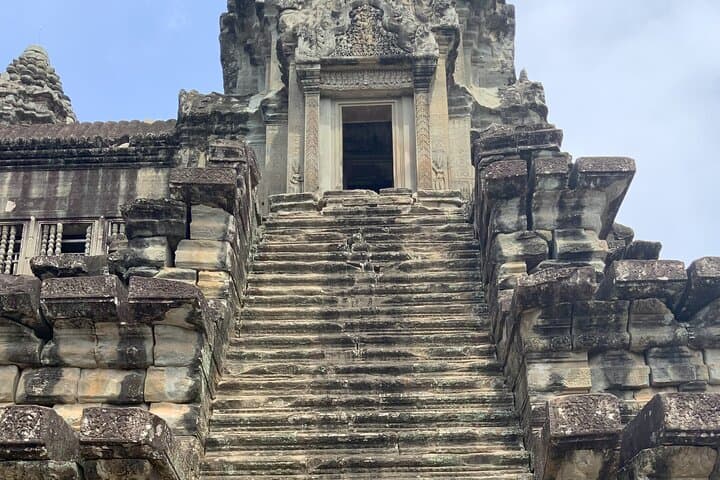
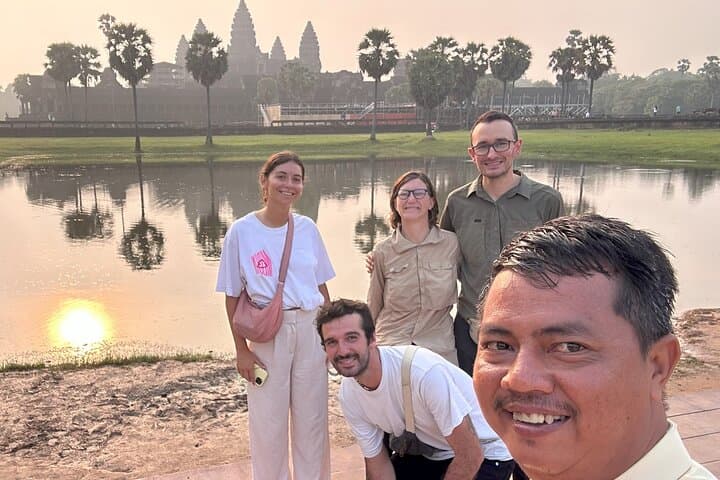
Dawn arrives in a slow ribbon of gold across the moat, and the first silhouette of Angkor Wat emerges like a memory waking. Visitors step from the shaded van into thick, warm air; stone steps still hold last night’s cool while birds call from the enclosing trees. An expert guide sets the pace—pointing out carved apsaras, explaining bas‑reliefs, and threading stories of kings, priests, and the labor that raised these monuments.
Verified experiences and guided adventures in the surrounding area.
Operated by Guide Chauffeur Cambodge · Siem Reap, Siem Reap Province
Dawn arrives in a slow ribbon of gold across the moat, and the first silhouette of Angkor Wat emerges like a memory waking. Visitors step from the shaded van into thick, warm air; stone steps still hold last night’s cool while birds call from the enclosing trees. An expert guide sets the pace—pointing out carved apsaras, explaining bas‑reliefs, and threading stories of kings, priests, and the labor that raised these monuments.
The Angkor complex was the heart of the Khmer Empire from the 9th to 15th centuries, its temples built largely of sandstone and laterite and oriented to cosmology—Angkor Wat embodies Mount Meru in stone while Bayon’s many smiling faces reflect late‑12th‑century religious shifts. Ta Prohm shows the other half of the story: tropical trees pushing through galleries, their roots rewriting the architecture.
Practically, expect a full day on varied surfaces—paved causeways, compacted dirt, and uneven temple stones. Most stops are a short walk from parking; your private van allows rest between sites. Carry water, sun protection, and a lightweight layer for early morning breezes. Photography at sunrise and mid‑afternoon light at Bayon offer very different moods, so plan timing with your guide.
Respect temple etiquette: cover shoulders and knees, speak softly inside sacred spaces, and follow signposted routes to reduce wear on fragile carvings. With local guidance, the day becomes more than sightseeing; it’s a paced translation of stone into history, myth, and the living landscape surrounding Siem Reap.
easy.
5–6 hours.
Suitable for most fitness levels; requires standing and short walks on uneven ground throughout the day.
Angkor Park tickets are not included by default; confirm with the operator whether entry fees are handled in advance or paid on arrival.
Sunrise offers the iconic silhouette and softer light; late afternoon can be less crowded at some temples—coordinate with your guide for the best schedule.
Most major temples have uneven ground and steps; accessibility is limited—contact the operator in advance to discuss vehicle drop‑off points and tailored support.
Plan 20–60 minutes per major temple depending on interest—your private guide will adjust timing to match your pace and photography needs.
The Angkor monuments were constructed and modified across centuries by Khmer kings; they reflect shifts between Hinduism and Buddhism and served as political and ritual centers.
Visitor numbers and environmental factors stress fragile sandstone carvings; the APSARA Authority manages conservation, and visitors can help by staying on paths and avoiding touching reliefs.
Guide Chauffeur Cambodge operates guided outdoor trips and adventures with an emphasis on safety, stewardship, and memorable experiences.

Dawn arrives in a slow ribbon of gold across the moat, and the first silhouette of Angkor Wat emerges like a memory waking. Visitors step from the shaded van into thick, warm air; stone steps still hold last night’s cool while birds call from the enclosing trees. An expert guide sets the pace—pointing out carved apsaras, explaining bas‑reliefs, and threading stories of kings, priests, and the labor that raised these monuments.
Dawn arrives in a slow ribbon of gold across the moat, and the first silhouette of Angkor Wat emerges like a memory waking. Visitors step from the shaded van into thick, warm air; stone steps still hold last night’s cool while birds call from the enclosing trees. An expert guide sets the pace—pointing out carved apsaras, explaining bas‑reliefs, and threading stories of kings, priests, and the labor that raised these monuments.
The Angkor complex was the heart of the Khmer Empire from the 9th to 15th centuries, its temples built largely of sandstone and laterite and oriented to cosmology—Angkor Wat embodies Mount Meru in stone while Bayon’s many smiling faces reflect late‑12th‑century religious shifts. Ta Prohm shows the other half of the story: tropical trees pushing through galleries, their roots rewriting the architecture.
Practically, expect a full day on varied surfaces—paved causeways, compacted dirt, and uneven temple stones. Most stops are a short walk from parking; your private van allows rest between sites. Carry water, sun protection, and a lightweight layer for early morning breezes. Photography at sunrise and mid‑afternoon light at Bayon offer very different moods, so plan timing with your guide.
Respect temple etiquette: cover shoulders and knees, speak softly inside sacred spaces, and follow signposted routes to reduce wear on fragile carvings. With local guidance, the day becomes more than sightseeing; it’s a paced translation of stone into history, myth, and the living landscape surrounding Siem Reap.