THE ADVENTURE COLLECTIVE® · Independent discovery and booking for outdoor travel

Experience the iconic Angkor Wat sunrise without the stress of logistics. This private full-day tour pairs early-morning light at Angkor Wat with curated visits to Angkor Thom, Ta Prohm and Banteay Kdei.
Experience the iconic Angkor Wat sunrise without the stress of logistics. This private full-day tour pairs early-morning light at Angkor Wat with curated visits to Angkor Thom, Ta Prohm and Banteay Kdei.
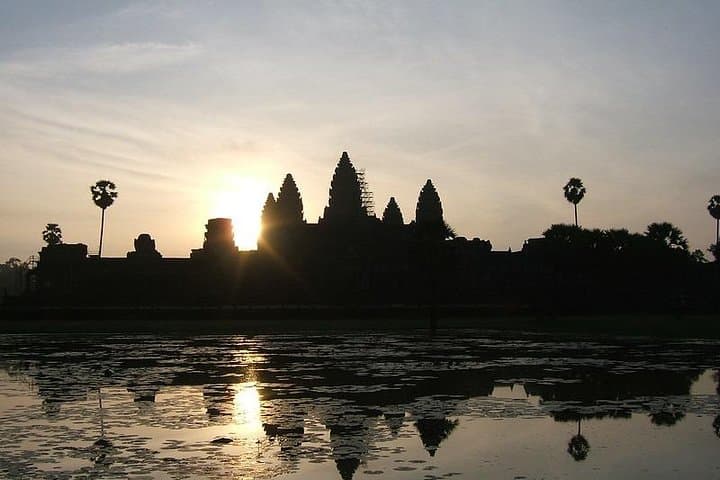
Before the sun clears the horizon, the causeway to Angkor Wat reads like a line of silhouettes: tourists, monks, and the temple’s towers cut into the cold blue of pre-dawn. The first light slides across the reflection pool and the temple shifts from shadow to carved sandstone, a moment that makes the early hour worthwhile.
Verified experiences and guided adventures in the surrounding area.
Operated by Bravo Indochina Tours · Siem Reap, Siem Reap Province
Before the sun clears the horizon, the causeway to Angkor Wat reads like a line of silhouettes: tourists, monks, and the temple’s towers cut into the cold blue of pre-dawn. The first light slides across the reflection pool and the temple shifts from shadow to carved sandstone, a moment that makes the early hour worthwhile.
The Angkor complex grew from the Khmer Empire between the 9th and 15th centuries, with Angkor Wat itself designed as a state-temple and mausoleum for Suryavarman II. The stones are Permian to Triassic-age sandstone, quarried from nearby ridges and set into patterns that echo both Hindu cosmology and later Buddhist practice. King Jayavarman VII’s 12th-century building campaign left signatures across Angkor Thom and Ta Prohm — the latter left partly reclaimed by fig roots that seem to be holding history together.
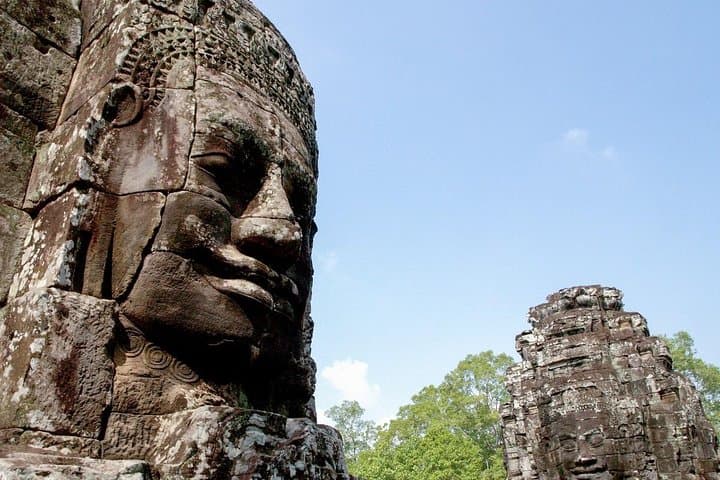
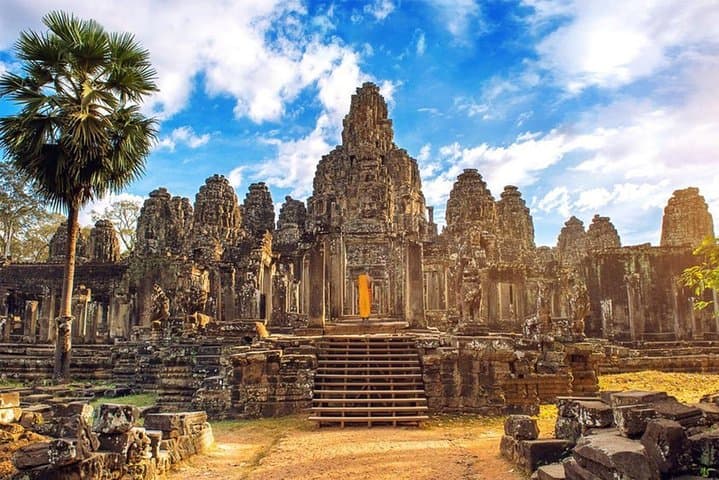
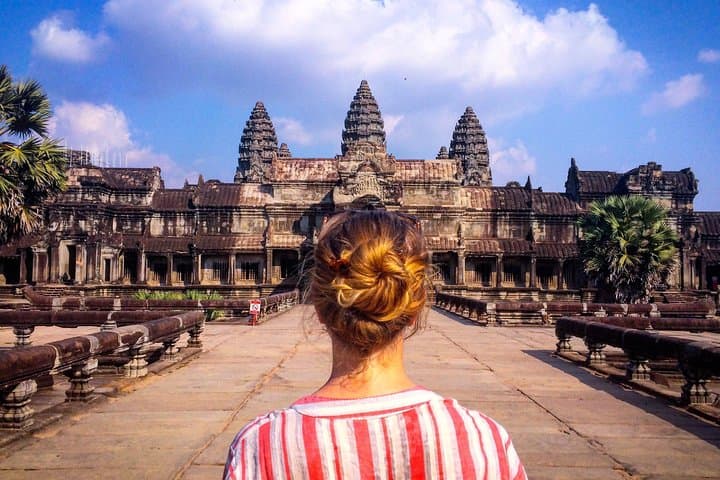
Your private tour threads these sites with practical ease: sunrise at Angkor Wat, the carved faces of Bayon in Angkor Thom, the root-embraced galleries of Ta Prohm, and quieter corners like Banteay Kdei. Local guides explain inscriptions, ritual use, and conservation efforts while navigating temple steps and uneven causeways.
Practical guidance: arrive pre-dawn to avoid crowds, bring a refillable water bottle and a lightweight headlamp for the walk from the car park, and wear shoes with good grip for slick stone. Temple passes are required; carry ID and respect signage — no climbing on fragile reliefs. Plan for six to eight hours on a private vehicle with hotel pickup and flexible pacing to match light and weather.
easy.
8 hours.
Suitable for most fitness levels; requires standing, short climbs of uneven stone and walking between sites
Angkor Passes are required to enter the park and are purchased separately at the ticket center; confirm whether your tour provider helps with the pass.
Some areas allow short climbs but many stairways and reliefs are fragile—follow signage and your guide’s instructions to avoid restricted areas.
The tour lists wheelchair and stroller accessibility for transport and flat surfaces, but many temple interiors and steps remain inaccessible; check specifics with the operator.
Sunrise is iconic for reflective shots; early morning light and the quietest crowds occur immediately after first light—arrive at the causeway before dawn.
Angkor was the political and religious heart of the Khmer Empire; Jayavarman VII’s 12th-century projects, including Bayon and Ta Prohm, marked a Buddhist shift and state expansion.
Angkor is a UNESCO World Heritage site with active conservation programs; visitors should avoid touching bas-reliefs, use marked paths and minimize single-use plastics to reduce site wear.
Bravo Indochina Tours operates guided outdoor trips and adventures with an emphasis on safety, stewardship, and memorable experiences.
Before the sun clears the horizon, the causeway to Angkor Wat reads like a line of silhouettes: tourists, monks, and the temple’s towers cut into the cold blue of pre-dawn. The first light slides across the reflection pool and the temple shifts from shadow to carved sandstone, a moment that makes the early hour worthwhile.
Before the sun clears the horizon, the causeway to Angkor Wat reads like a line of silhouettes: tourists, monks, and the temple’s towers cut into the cold blue of pre-dawn. The first light slides across the reflection pool and the temple shifts from shadow to carved sandstone, a moment that makes the early hour worthwhile.
The Angkor complex grew from the Khmer Empire between the 9th and 15th centuries, with Angkor Wat itself designed as a state-temple and mausoleum for Suryavarman II. The stones are Permian to Triassic-age sandstone, quarried from nearby ridges and set into patterns that echo both Hindu cosmology and later Buddhist practice. King Jayavarman VII’s 12th-century building campaign left signatures across Angkor Thom and Ta Prohm — the latter left partly reclaimed by fig roots that seem to be holding history together.
Your private tour threads these sites with practical ease: sunrise at Angkor Wat, the carved faces of Bayon in Angkor Thom, the root-embraced galleries of Ta Prohm, and quieter corners like Banteay Kdei. Local guides explain inscriptions, ritual use, and conservation efforts while navigating temple steps and uneven causeways.
Practical guidance: arrive pre-dawn to avoid crowds, bring a refillable water bottle and a lightweight headlamp for the walk from the car park, and wear shoes with good grip for slick stone. Temple passes are required; carry ID and respect signage — no climbing on fragile reliefs. Plan for six to eight hours on a private vehicle with hotel pickup and flexible pacing to match light and weather.