THE ADVENTURE COLLECTIVE® · Independent discovery and booking for outdoor travel

Spend a private day tracing Greek, Hellenistic and Roman history across Didyma, Priene and Miletus. This guided tour from Bodrum combines sweeping coastal views, monumental ruins and practical logistics—perfect for history-minded travelers seeking an efficient, immersive archaeology experience.
Spend a private day tracing Greek, Hellenistic and Roman history across Didyma, Priene and Miletus. This guided tour from Bodrum combines sweeping coastal views, monumental ruins and practical logistics—perfect for history-minded travelers seeking an efficient, immersive archaeology experience.
You arrive before the heat builds, the minibus easing onto a road that opens to stone and sky. Columns rise like invitations as the Aegean light strips the marble of shadow; gulls wheel above where sailors once threaded these shores. This private, full-day route stitches three classical sites into a single arc—Didyma’s ruined Temple of Apollo, Priene’s terraced city clinging to a slope, and the layered remains of Miletus, where thinkers once walked.
Verified experiences and guided adventures in the surrounding area.
Operated by Opatrip.com Turkey · Bodrum, Muğla
You arrive before the heat builds, the minibus easing onto a road that opens to stone and sky. Columns rise like invitations as the Aegean light strips the marble of shadow; gulls wheel above where sailors once threaded these shores. This private, full-day route stitches three classical sites into a single arc—Didyma’s ruined Temple of Apollo, Priene’s terraced city clinging to a slope, and the layered remains of Miletus, where thinkers once walked.
These places record centuries: Didyma’s oracle drew pilgrims in the Hellenistic age, Priene follows the geometric planning credited to Hippodamus, and Miletus spanned Greek, Roman and Byzantine periods and birthed pre-Socratic thinkers. Geologically, the sites sit on low limestone and alluvial plains where coastlines have shifted and harbors silted, leaving ports inland and stones exposed to salt air and sun.
Culture here is tactile—graffiti from travelers millennia old, sheepmen tending scrub fields, local cafes serving strong tea. Expect archaeological grids, terraces with sweeping sea views, and theater steps that still slope toward a stage of wind.
Practicalities: the day is long—plan for seven hours with walking on uneven stone, steps, and loose scree. Bring sun protection, plenty of water, and comfortable shoes with good grip. Your guide handles entrances and timing; pacing is flexible on a private tour. Aim for morning starts to avoid midday heat and bring a light layer for coastal breezes. Photography is generous but follow site rules; stay on marked paths and respect fragile masonry. This itinerary rewards curiosity: read a primer on the oracle at Didyma and scan horizon lines for the ancient harbor traces—you’ll leave with both context and a clear map of antiquity’s footprints.
easy.
7 hours.
Suitable for most fitness levels; requires steady mobility for walking on uneven ground and climbing steps.
Yes—round-trip transportation between Bodrum and the sites is included in the private tour.
All listed entrance fees are included, as noted in the tour inclusions.
The tour is described as suitable for all fitness levels, but expect uneven surfaces and steps; notify the operator of mobility concerns when booking.
Lunch and restroom stops are included; the itinerary typically schedules a midday meal at a local restaurant between sites.
Didyma, Priene and Miletus each played distinct roles in the ancient Greek world: Didyma hosted a major oracle, Priene is noted for its Hippodamian grid plan, and Miletus was an intellectual center that produced early philosophers.
Sites are managed by Turkish archaeological authorities; visitors should stay on paths, avoid touching carved surfaces and carry out waste to minimize impact.
Opatrip.com Turkey operates guided outdoor trips and adventures with an emphasis on safety, stewardship, and memorable experiences.
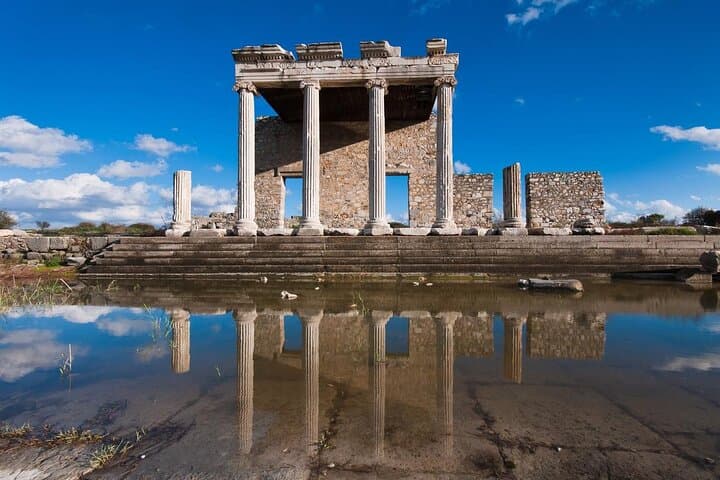

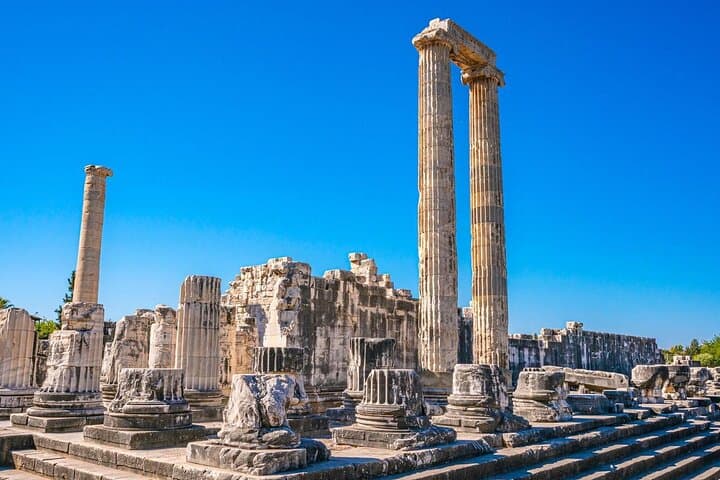
You arrive before the heat builds, the minibus easing onto a road that opens to stone and sky. Columns rise like invitations as the Aegean light strips the marble of shadow; gulls wheel above where sailors once threaded these shores. This private, full-day route stitches three classical sites into a single arc—Didyma’s ruined Temple of Apollo, Priene’s terraced city clinging to a slope, and the layered remains of Miletus, where thinkers once walked.
You arrive before the heat builds, the minibus easing onto a road that opens to stone and sky. Columns rise like invitations as the Aegean light strips the marble of shadow; gulls wheel above where sailors once threaded these shores. This private, full-day route stitches three classical sites into a single arc—Didyma’s ruined Temple of Apollo, Priene’s terraced city clinging to a slope, and the layered remains of Miletus, where thinkers once walked.
These places record centuries: Didyma’s oracle drew pilgrims in the Hellenistic age, Priene follows the geometric planning credited to Hippodamus, and Miletus spanned Greek, Roman and Byzantine periods and birthed pre-Socratic thinkers. Geologically, the sites sit on low limestone and alluvial plains where coastlines have shifted and harbors silted, leaving ports inland and stones exposed to salt air and sun.
Culture here is tactile—graffiti from travelers millennia old, sheepmen tending scrub fields, local cafes serving strong tea. Expect archaeological grids, terraces with sweeping sea views, and theater steps that still slope toward a stage of wind.
Practicalities: the day is long—plan for seven hours with walking on uneven stone, steps, and loose scree. Bring sun protection, plenty of water, and comfortable shoes with good grip. Your guide handles entrances and timing; pacing is flexible on a private tour. Aim for morning starts to avoid midday heat and bring a light layer for coastal breezes. Photography is generous but follow site rules; stay on marked paths and respect fragile masonry. This itinerary rewards curiosity: read a primer on the oracle at Didyma and scan horizon lines for the ancient harbor traces—you’ll leave with both context and a clear map of antiquity’s footprints.