THE ADVENTURE COLLECTIVE® · Independent discovery and booking for outdoor travel

Explore a less-restored, more authentic stretch of the Great Wall near Badaling on a private day trip with an English guide. Expect rugged stone, quiet ridgelines, and practical guidance for a true historical hike away from the crowds.
Explore a less-restored, more authentic stretch of the Great Wall near Badaling on a private day trip with an English guide. Expect rugged stone, quiet ridgelines, and practical guidance for a true historical hike away from the crowds.
You step off the bus into thin mountain air and the stone underfoot feels older than the city you left behind. Here, at the Ancient Badaling section, the Wall doesn’t gleam with fresh mortar — it wears weathered stones and collapsed towers like proof of survival. Fewer visitors move along these ridgelines, so wind and birds become the day’s companions.
Verified experiences and guided adventures in the surrounding area.
Operated by Yida Travel · Beijing, Beijing
You step off the bus into thin mountain air and the stone underfoot feels older than the city you left behind. Here, at the Ancient Badaling section, the Wall doesn’t gleam with fresh mortar — it wears weathered stones and collapsed towers like proof of survival. Fewer visitors move along these ridgelines, so wind and birds become the day’s companions.
The wall here dates to the Ming-era fortifications that threaded strategic passes north of Beijing; watchtowers and parapets trace defensive lines carved into granitic ridges. Geology is plain to see: exposed bedrock and shallow soils make the slopes steep and stony, while terraces and switchbacks reveal the labor of centuries. Local culture still honors the Wall as a living monument, and nearby villages retain quieter rhythms than city neighborhoods.
Practically, expect 3–6 km of walking on uneven stone, short steep pitches and loose rubble — cumulative elevation change of roughly 200–300 m across the section — paired with a full-day schedule (including transport) of about 6–8 hours. Bring sturdy shoes, layered clothing and at least 1–2 liters of water; food options on-site are limited and many vendors don’t accept foreign cards. The private tour structure gives you flexibility on pace and photo stops, while an English guide provides historical context and route choices. Move deliberately on the unrestored steps, watch for loose stones, and give yourself time at high points — the views across ridgelines are the reward for the climb.
moderate.
6–8 hours.
Moderate fitness — comfortable walking for several hours with short steep climbs; stair climbing and uneven terrain expected.
Expect roughly 3–6 km of on-Wall walking depending on the chosen route, with intermittent steep pitches and uneven stone underfoot.
The private format allows pacing for older guests and families, but uneven steps and steep sections can be challenging — plan for frequent rests.
Card acceptance is inconsistent in the scenic area; bring some cash (Chinese yuan) or set up mobile payment if possible.
Options vary by booking; the tour offers round-trip bus transport and entrance tickets as selectable inclusions — check your reservation details.
This stretch reflects Ming-dynasty frontier engineering built to guard strategic passes north of Beijing; its unrestored stones show original construction and centuries of weathering.
Erosion and trampling are ongoing concerns on unrestored sections — stay on established paths, pack out trash, and avoid climbing fragile ruins to minimize impact.
Yida Travel operates guided outdoor trips and adventures with an emphasis on safety, stewardship, and memorable experiences.


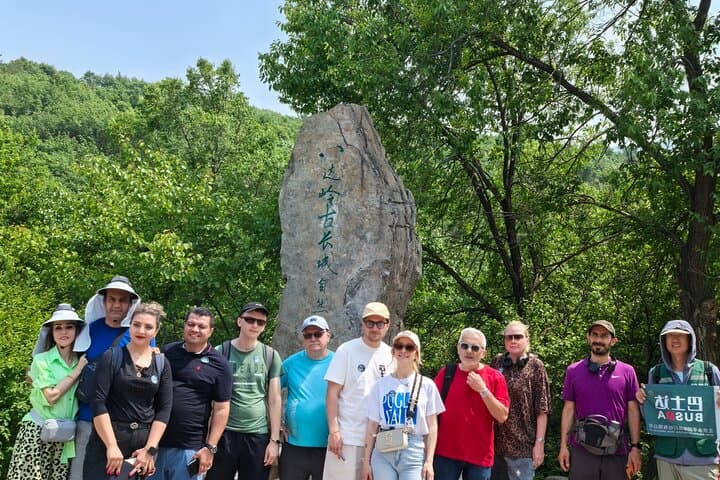

You step off the bus into thin mountain air and the stone underfoot feels older than the city you left behind. Here, at the Ancient Badaling section, the Wall doesn’t gleam with fresh mortar — it wears weathered stones and collapsed towers like proof of survival. Fewer visitors move along these ridgelines, so wind and birds become the day’s companions.
You step off the bus into thin mountain air and the stone underfoot feels older than the city you left behind. Here, at the Ancient Badaling section, the Wall doesn’t gleam with fresh mortar — it wears weathered stones and collapsed towers like proof of survival. Fewer visitors move along these ridgelines, so wind and birds become the day’s companions.
The wall here dates to the Ming-era fortifications that threaded strategic passes north of Beijing; watchtowers and parapets trace defensive lines carved into granitic ridges. Geology is plain to see: exposed bedrock and shallow soils make the slopes steep and stony, while terraces and switchbacks reveal the labor of centuries. Local culture still honors the Wall as a living monument, and nearby villages retain quieter rhythms than city neighborhoods.
Practically, expect 3–6 km of walking on uneven stone, short steep pitches and loose rubble — cumulative elevation change of roughly 200–300 m across the section — paired with a full-day schedule (including transport) of about 6–8 hours. Bring sturdy shoes, layered clothing and at least 1–2 liters of water; food options on-site are limited and many vendors don’t accept foreign cards. The private tour structure gives you flexibility on pace and photo stops, while an English guide provides historical context and route choices. Move deliberately on the unrestored steps, watch for loose stones, and give yourself time at high points — the views across ridgelines are the reward for the climb.