THE ADVENTURE COLLECTIVE® · Independent discovery and booking for outdoor travel

Experience Waitomo’s glowworms away from the crowds on a private, after-dark walk through forest and cave entrances. Tailored pacing, local stories, and thousands of tiny lights make this a rare, hands-on wildlife viewing trip.
Experience Waitomo’s glowworms away from the crowds on a private, after-dark walk through forest and cave entrances. Tailored pacing, local stories, and thousands of tiny lights make this a rare, hands-on wildlife viewing trip.
You step off the van into a hush that feels deliberate—the forest inhales and the cliffs begin to glow. On this private after-dark walk outside Waitomo, thousands of Arachnocampa luminosa light up mossy overhangs, cave mouths and canopy gaps, turning the shadowed limestone into a slow-moving, living sky.
Verified experiences and guided adventures in the surrounding area.
Operated by Down to Earth - Waitomo Eco Cave Tours · Waitomo Village, Waikato
You step off the van into a hush that feels deliberate—the forest inhales and the cliffs begin to glow. On this private after-dark walk outside Waitomo, thousands of Arachnocampa luminosa light up mossy overhangs, cave mouths and canopy gaps, turning the shadowed limestone into a slow-moving, living sky.
The caves and cliffs here are carved from karst limestone laid down millions of years ago and honed by acidic water. Māori named the area Waitomo — “water passing through a hole” — and local guides often weave geology with iwi stories as you move between open cave entrances and forest tracks. Glowworms are unique to New Zealand; their light is a lure, small bioluminescent beacons that pull flying insects toward silk threads.
Expect a mix of easy bush track walking, occasional stream crossings and low-light cave fringes rather than long subterranean crawls. The private format lets you pause for photos, listen to the guide’s natural-history notes, or simply stand beneath a ceiling of tiny lights. Guides supply helmets, boots, warm layers and lights; the tour finishes with hot drinks and snacks.
Practical: wear grippy boots, bring a compact camera with low-light capability and a small daypack. Keep voices low and avoid flash photography to protect the glowworms’ delicate hunting behavior. Book an after-dark slot when the moon is low for maximum spectacle, and plan for a roughly five-hour outing with moderate fitness required.
moderate.
5 hours.
Moderately fit — able to walk uneven bush tracks, negotiate short stream crossings and stand quietly for extended viewing
Yes — this private tour focuses on open-air displays on cliffs, canopy edges and cave mouths, not just deep cave boat rides.
No — flash and bright white lights disrupt glowworm behavior; guides enforce low-light etiquette and provide alternative lighting.
Moderate — you should be comfortable walking uneven bush tracks and crossing small streams; the pace can be adjusted for your group.
Yes — the operator supplies boots, helmets, lights and warm layers, but many travelers prefer to bring their own properly fitting footwear and a small daypack.
Waitomo’s karst landscape has been important to Māori for centuries; the caves were used for shelter and burials, and local iwi names and stories remain central to guided interpretation.
Tours operate with strict low-light and low-impact rules to protect glowworm feeding cycles and fragile cave ecosystems; stay on paths and follow guides to minimize disturbance.
Down to Earth - Waitomo Eco Cave Tours operates guided outdoor trips and adventures with an emphasis on safety, stewardship, and memorable experiences.
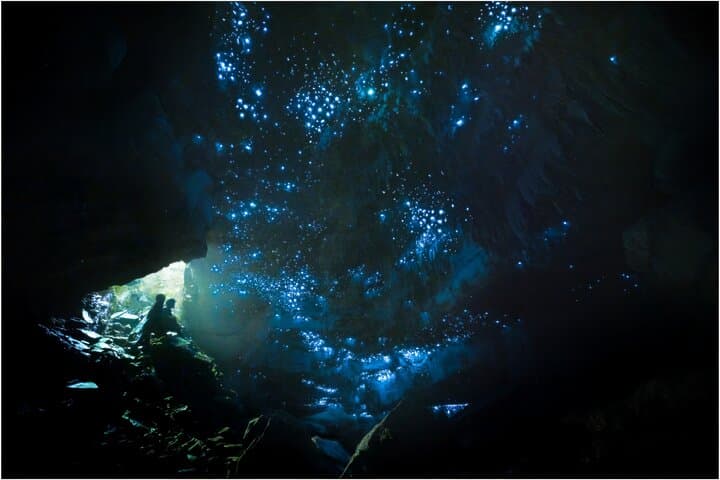
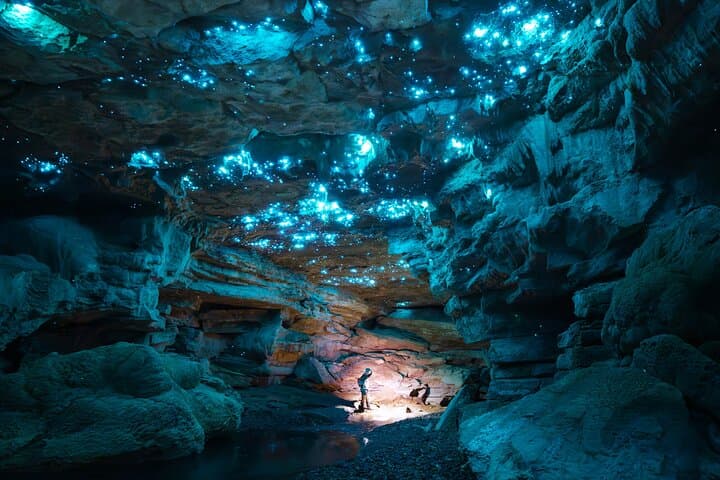
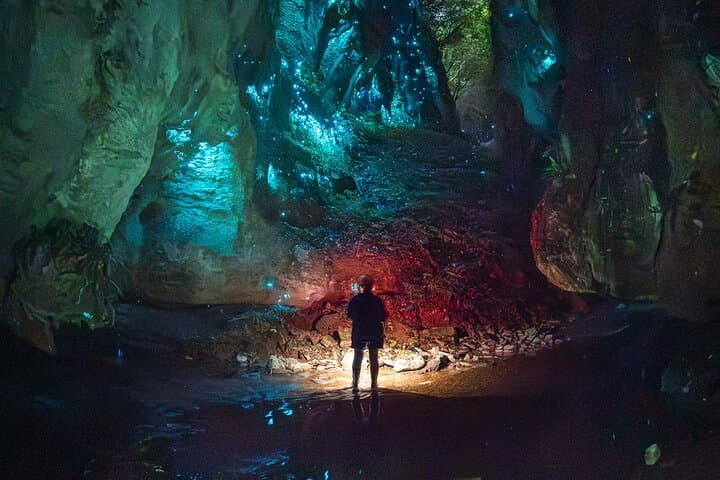
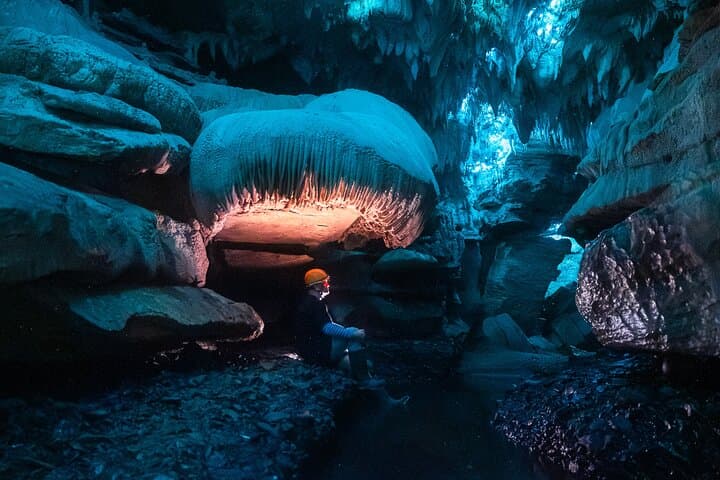
You step off the van into a hush that feels deliberate—the forest inhales and the cliffs begin to glow. On this private after-dark walk outside Waitomo, thousands of Arachnocampa luminosa light up mossy overhangs, cave mouths and canopy gaps, turning the shadowed limestone into a slow-moving, living sky.
You step off the van into a hush that feels deliberate—the forest inhales and the cliffs begin to glow. On this private after-dark walk outside Waitomo, thousands of Arachnocampa luminosa light up mossy overhangs, cave mouths and canopy gaps, turning the shadowed limestone into a slow-moving, living sky.
The caves and cliffs here are carved from karst limestone laid down millions of years ago and honed by acidic water. Māori named the area Waitomo — “water passing through a hole” — and local guides often weave geology with iwi stories as you move between open cave entrances and forest tracks. Glowworms are unique to New Zealand; their light is a lure, small bioluminescent beacons that pull flying insects toward silk threads.
Expect a mix of easy bush track walking, occasional stream crossings and low-light cave fringes rather than long subterranean crawls. The private format lets you pause for photos, listen to the guide’s natural-history notes, or simply stand beneath a ceiling of tiny lights. Guides supply helmets, boots, warm layers and lights; the tour finishes with hot drinks and snacks.
Practical: wear grippy boots, bring a compact camera with low-light capability and a small daypack. Keep voices low and avoid flash photography to protect the glowworms’ delicate hunting behavior. Book an after-dark slot when the moon is low for maximum spectacle, and plan for a roughly five-hour outing with moderate fitness required.