THE ADVENTURE COLLECTIVE® · Independent discovery and booking for outdoor travel

Drive south from Aswan for a private day visit to Abu Simbel and stand before the colossal statues of Ramses II and the intimate Temple of Nefertari. This guided trip pairs comfortable transfers with on-site history and close-up views of Egypt’s relocated rock-cut masterpieces.
Drive south from Aswan for a private day visit to Abu Simbel and stand before the colossal statues of Ramses II and the intimate Temple of Nefertari. This guided trip pairs comfortable transfers with on-site history and close-up views of Egypt’s relocated rock-cut masterpieces.
A low, ochre sun climbs over the ribbon of asphalt as your private car pushes south from Aswan toward the broad mirror of Lake Nasser. The road narrows, sand drifts hush the engine, and then the cliffs part to reveal four colossal seated figures—Ramesses II watching the desert like an old ruler reclaiming the horizon.
Verified experiences and guided adventures in the surrounding area.
Operated by Egipto Excursiones · Abu Simbel, Aswan Governorate
A low, ochre sun climbs over the ribbon of asphalt as your private car pushes south from Aswan toward the broad mirror of Lake Nasser. The road narrows, sand drifts hush the engine, and then the cliffs part to reveal four colossal seated figures—Ramesses II watching the desert like an old ruler reclaiming the horizon.
The two rock-cut temples at Abu Simbel were carved in the 13th century BCE and moved stone-by-stone in the 1960s when rising waters from the creation of Lake Nasser threatened to drown them. Geology here is simple and stark: Nubian sandstone and ancient river terraces sculpted by the Nile’s former moods. Culturally, the site projects Ramesses’ imperial theology—temple façades aligned to the sun, reliefs celebrating victory and divine lineage, and the smaller Temple of Nefertari honoring the queen’s role in royal propaganda.
Expect guided interpretation of hieroglyphs, close-up views of the seated colossi, and the chance to walk into the cool, dim sanctuaries where statues still greet the light. The pace is deliberate: quiet observation, short walks on compacted sand, and time for photographs from defined viewpoints.
Practical guidance: bring sun protection and at least one liter of water, plan for an early start from Aswan (roughly a three-hour drive each way), and reserve admission in advance—entrance fees may be separate from your transfer. Wear sturdy shoes for uneven ground and be prepared to follow site rules—no touching reliefs, and be respectful during any conservation or ritual activities. With a private vehicle and a good guide, this day trip condenses Egypt’s New Kingdom grandeur into one unforgettable stretch of road.
easy.
9 hours.
Light fitness required — mostly seated transfers with short walks on flat, uneven ground at the site.
Expect roughly three hours each way by private, air-conditioned vehicle depending on traffic and stops.
Entrance fees are often not included in base transfer-only tours—confirm at booking and carry cash or card for tickets.
The site has uneven ground and steps; short-distance walking is required, so it may be challenging for those with severe mobility limitations.
Photography is generally allowed in exterior areas and some interiors; follow your guide’s instructions and avoid flash where prohibited to protect pigments.
Constructed under Ramesses II in the 13th century BCE and relocated in 1964–1968 during an international UNESCO salvage to save them from Lake Nasser’s rising waters.
The site is actively managed by Egyptian antiquities authorities; visitors should avoid touching reliefs, adhere to pathways, and support local conservation by using authorized guides.
Egipto Excursiones operates guided outdoor trips and adventures with an emphasis on safety, stewardship, and memorable experiences.


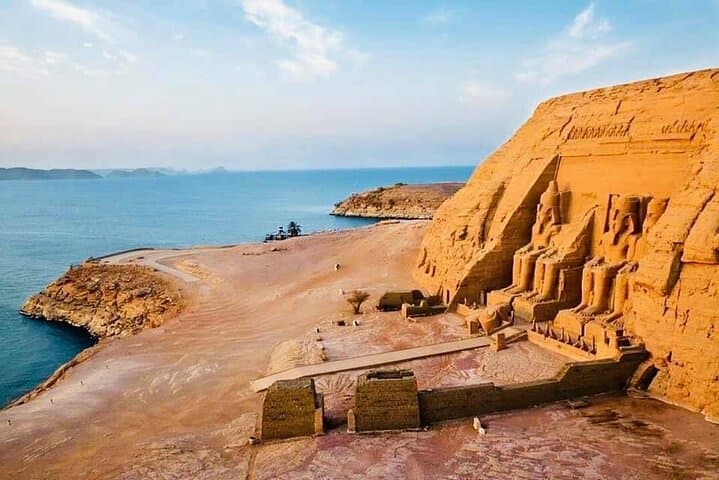
A low, ochre sun climbs over the ribbon of asphalt as your private car pushes south from Aswan toward the broad mirror of Lake Nasser. The road narrows, sand drifts hush the engine, and then the cliffs part to reveal four colossal seated figures—Ramesses II watching the desert like an old ruler reclaiming the horizon.
A low, ochre sun climbs over the ribbon of asphalt as your private car pushes south from Aswan toward the broad mirror of Lake Nasser. The road narrows, sand drifts hush the engine, and then the cliffs part to reveal four colossal seated figures—Ramesses II watching the desert like an old ruler reclaiming the horizon.
The two rock-cut temples at Abu Simbel were carved in the 13th century BCE and moved stone-by-stone in the 1960s when rising waters from the creation of Lake Nasser threatened to drown them. Geology here is simple and stark: Nubian sandstone and ancient river terraces sculpted by the Nile’s former moods. Culturally, the site projects Ramesses’ imperial theology—temple façades aligned to the sun, reliefs celebrating victory and divine lineage, and the smaller Temple of Nefertari honoring the queen’s role in royal propaganda.
Expect guided interpretation of hieroglyphs, close-up views of the seated colossi, and the chance to walk into the cool, dim sanctuaries where statues still greet the light. The pace is deliberate: quiet observation, short walks on compacted sand, and time for photographs from defined viewpoints.
Practical guidance: bring sun protection and at least one liter of water, plan for an early start from Aswan (roughly a three-hour drive each way), and reserve admission in advance—entrance fees may be separate from your transfer. Wear sturdy shoes for uneven ground and be prepared to follow site rules—no touching reliefs, and be respectful during any conservation or ritual activities. With a private vehicle and a good guide, this day trip condenses Egypt’s New Kingdom grandeur into one unforgettable stretch of road.