THE ADVENTURE COLLECTIVE® · Independent discovery and booking for outdoor travel

Fly from Aswan for a private, full-day visit to Abu Simbel: giant rock-cut temples, storied reliefs, and the rare chance to stand where Ramses II chose to be immortalized. This guided trip pairs convenience—hotel pickup and return flights—with time to explore the Great Temple and Nefertari’s shrine.
Fly from Aswan for a private, full-day visit to Abu Simbel: giant rock-cut temples, storied reliefs, and the rare chance to stand where Ramses II chose to be immortalized. This guided trip pairs convenience—hotel pickup and return flights—with time to explore the Great Temple and Nefertari’s shrine.
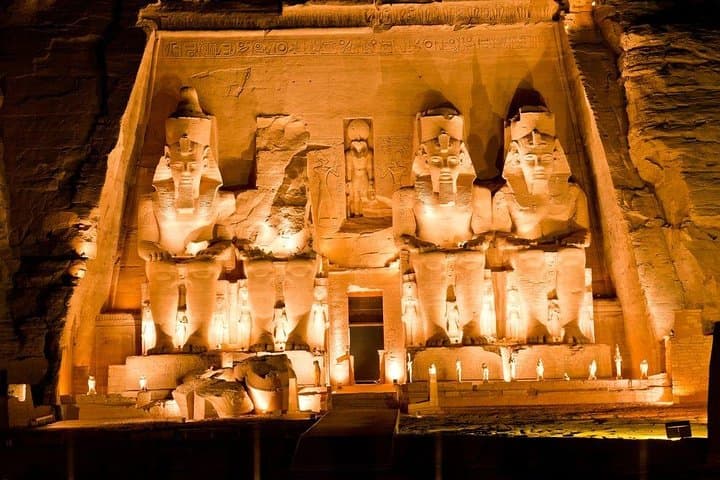
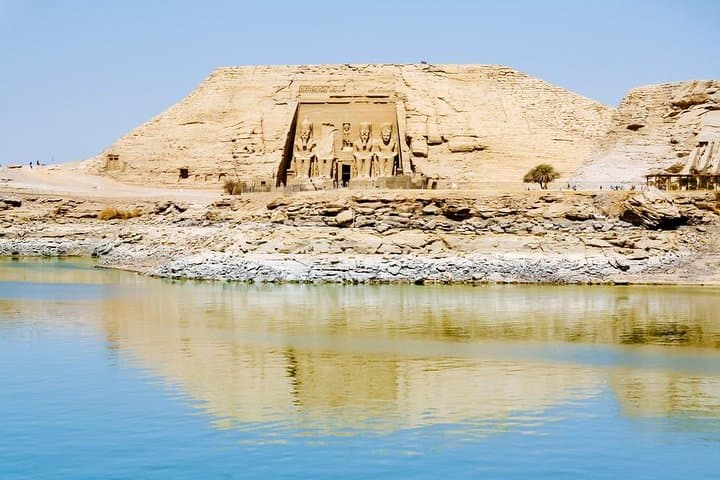
Dawn over Lake Nasser feels like the world taking a slow breath: the plane lifts from Aswan, the desert below flattening into the bright curve of the reservoir, and the hulking silhouette of Abu Simbel grows until its four seated Ramses II figures fill the window.
Verified experiences and guided adventures in the surrounding area.
Operated by Egypt Lovely Tours · Abu Simbel, Aswan Governorate
Dawn over Lake Nasser feels like the world taking a slow breath: the plane lifts from Aswan, the desert below flattening into the bright curve of the reservoir, and the hulking silhouette of Abu Simbel grows until its four seated Ramses II figures fill the window.
Carved directly into Nubian sandstone in the 13th century BCE and reassembled stone-by-stone in the 1960s to avoid the rising waters of the Aswan High Dam, Abu Simbel is both an archaeological anchor and an example of modern engineering. The Great Temple honors Ramses II and records the Battle of Kadesh in relief; a smaller temple celebrates Nefertari and royal devotion. Geologically the complex sits in eroded sandstone cliffs that take and hold crisp chisel marks, which is why the carvings survive so clearly.
Local guides often weave Nubian cultural context into the visit: Lake Nasser’s fishing communities, the relocation of villages during the dam project, and the seasonal light alignment that illuminates the sanctuary’s innermost statues twice a year in late February and October.
Practicalities matter: this private day trip begins with hotel pickup in Aswan, a short flight to Abu Simbel, approximately three to four hours on-site, then the return flight. Expect uneven stone floors, stair sections inside the temples, and open sun on the façades. Bottled water and an Egyptologist guide are usually included; bring sun protection, comfortable walking shoes, and your passport. Security checks are routine and photography is allowed in most outdoor areas but restricted in some inner chambers. Aim for an early departure to avoid midday heat and get the best light on the carved faces.
easy.
8–12 hours.
Suitable for travelers of average fitness—requires standing, walking on uneven stone, and climbing short flights of stairs.
The flight is short—typically around 30–40 minutes each way—though total trip time includes transfers and the guided visit on site.
Photography is generally permitted in outdoor areas; some inner chambers may restrict flash or any photography—follow the guide and signage.
The site has uneven terrain and steps; limited accessible routes exist and assistance may be needed. Contact the operator in advance to arrange accommodations.
Late fall through early spring offers the most comfortable temperatures; summer can be extremely hot, so plan early departures.
Abu Simbel was commissioned by Ramses II in the 13th century BCE and was famously relocated piece-by-piece in the 1960s to prevent submersion after the creation of Lake Nasser.
The relocation project is an early example of large-scale heritage conservation; ongoing visitor management and controlled access help protect fragile stone reliefs.
Egypt Lovely Tours operates guided outdoor trips and adventures with an emphasis on safety, stewardship, and memorable experiences.
Dawn over Lake Nasser feels like the world taking a slow breath: the plane lifts from Aswan, the desert below flattening into the bright curve of the reservoir, and the hulking silhouette of Abu Simbel grows until its four seated Ramses II figures fill the window.
Dawn over Lake Nasser feels like the world taking a slow breath: the plane lifts from Aswan, the desert below flattening into the bright curve of the reservoir, and the hulking silhouette of Abu Simbel grows until its four seated Ramses II figures fill the window.
Carved directly into Nubian sandstone in the 13th century BCE and reassembled stone-by-stone in the 1960s to avoid the rising waters of the Aswan High Dam, Abu Simbel is both an archaeological anchor and an example of modern engineering. The Great Temple honors Ramses II and records the Battle of Kadesh in relief; a smaller temple celebrates Nefertari and royal devotion. Geologically the complex sits in eroded sandstone cliffs that take and hold crisp chisel marks, which is why the carvings survive so clearly.
Local guides often weave Nubian cultural context into the visit: Lake Nasser’s fishing communities, the relocation of villages during the dam project, and the seasonal light alignment that illuminates the sanctuary’s innermost statues twice a year in late February and October.
Practicalities matter: this private day trip begins with hotel pickup in Aswan, a short flight to Abu Simbel, approximately three to four hours on-site, then the return flight. Expect uneven stone floors, stair sections inside the temples, and open sun on the façades. Bottled water and an Egyptologist guide are usually included; bring sun protection, comfortable walking shoes, and your passport. Security checks are routine and photography is allowed in most outdoor areas but restricted in some inner chambers. Aim for an early departure to avoid midday heat and get the best light on the carved faces.