THE ADVENTURE COLLECTIVE® · Independent discovery and booking for outdoor travel

Drive across the desert and into one of Egypt’s most dramatic archaeological sites on a private day tour from Aswan. Enjoy personalized commentary at the relocated Abu Simbel temples and plan for a long, sun-forward day of history and photography.
Drive across the desert and into one of Egypt’s most dramatic archaeological sites on a private day tour from Aswan. Enjoy personalized commentary at the relocated Abu Simbel temples and plan for a long, sun-forward day of history and photography.
You arrive before the heat builds, the road folding out of Aswan into sun-baked desert and the slow sweep of Lake Nasser to your left. The sandstone cliff that holds Abu Simbel appears like a carved amphitheater at the horizon; colossal seated figures of Ramses II greet you with an ancient, immovable stare.
Verified experiences and guided adventures in the surrounding area.
Operated by Hello Egypt Tours · Abu Simbel, Aswan Governorate
You arrive before the heat builds, the road folding out of Aswan into sun-baked desert and the slow sweep of Lake Nasser to your left. The sandstone cliff that holds Abu Simbel appears like a carved amphitheater at the horizon; colossal seated figures of Ramses II greet you with an ancient, immovable stare.
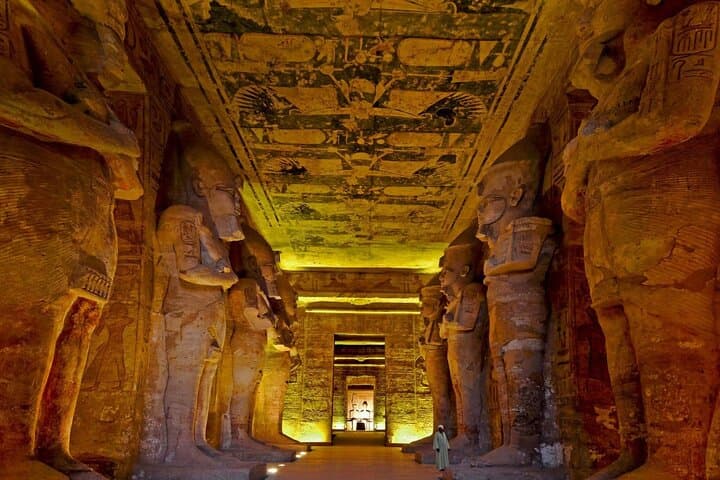
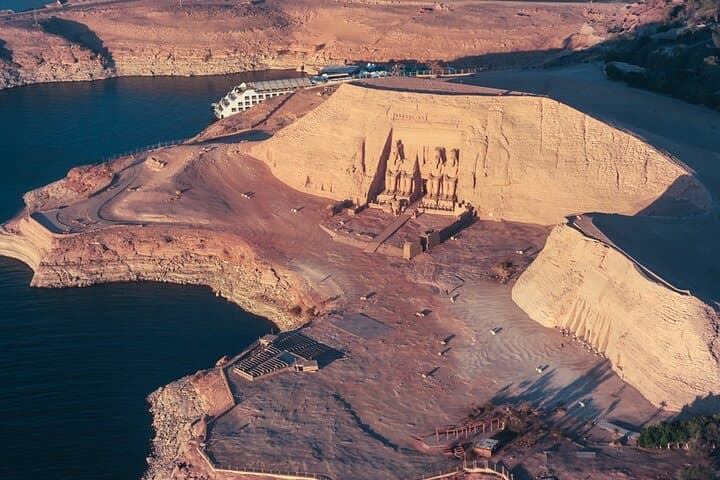
Carved in the 13th century BCE and relocated in the 1960s to escape the rising waters of Lake Nasser, the temples are geological and engineering statements—soft sandstone façades re-cut and reassembled on higher ground during a landmark UNESCO campaign. Inside the Great Temple the axis famously admits slanting light on key statues twice a year; the Small Temple honors Queen Nefertari with finely preserved reliefs that reveal imperial ritual and family imagery.
Culturally, the site is a living classroom: hieroglyphic panels, battle scenes and votive niches speak to Ramesside power and Nubian-Egyptian frontier dynamics. The drive itself is part of the experience—three to four hours each way across open desert that seems to dare you to keep your window down and your camera ready.
Practical guidance: this private day trip runs about nine hours total including roughly three hours on-site. Start early to avoid peak heat, carry a passport (often checked), bring sun protection and at least 2 L of water, and confirm entrance fees with your operator. Footing is uneven in temple interiors—comfortable, closed-toe shoes make the visit smoother. A private guide speeds access and deepens context, turning monumental stone into narrated history rather than a photo stop.
easy.
9 hours.
Suitable for most fitness levels; involves short walks and standing inside temple chambers but no technical exertion.
Expect roughly 3–4 hours each way by car depending on traffic and stops—plan the day as a long round trip.
Not always—policies vary by operator. Confirm whether the ticket is included when you book and have local currency ready if needed.
There are paved approaches and short ramps in places, but temple interiors include steps and uneven floors; speak with the operator about specific assistance or vehicle drop-off options.
Photography is generally allowed but respect posted rules; flash may be discouraged and tripods sometimes restricted—follow your guide’s instructions.
The temples were carved during the reign of Ramses II and were relocated in 1964–1968 in a multinational UNESCO operation to prevent submersion by Lake Nasser after the Aswan High Dam's construction.
Visitor impact is managed through controlled pathways and restricted access to sensitive interiors; support local conservation by following guidance, avoiding touching reliefs, and using licensed guides.
Hello Egypt Tours operates guided outdoor trips and adventures with an emphasis on safety, stewardship, and memorable experiences.
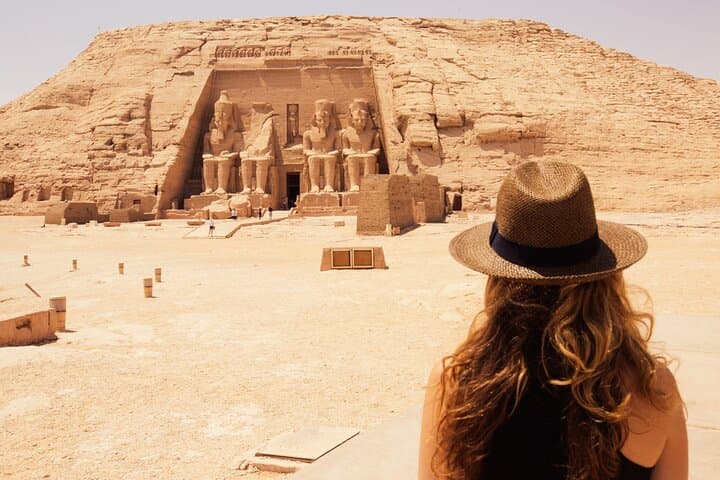
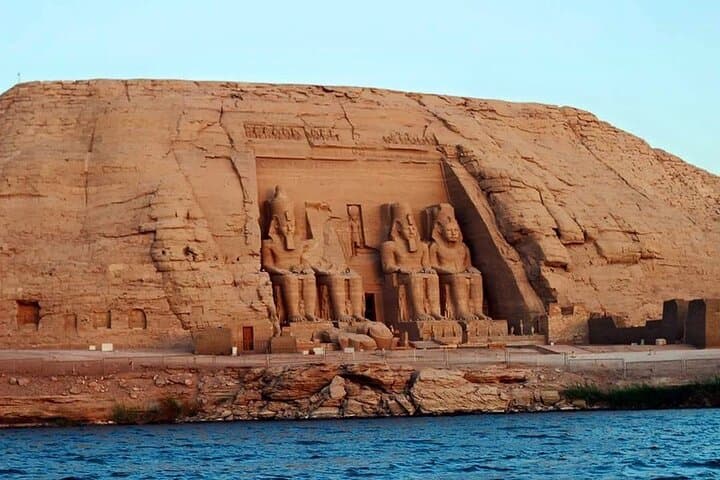
You arrive before the heat builds, the road folding out of Aswan into sun-baked desert and the slow sweep of Lake Nasser to your left. The sandstone cliff that holds Abu Simbel appears like a carved amphitheater at the horizon; colossal seated figures of Ramses II greet you with an ancient, immovable stare.
You arrive before the heat builds, the road folding out of Aswan into sun-baked desert and the slow sweep of Lake Nasser to your left. The sandstone cliff that holds Abu Simbel appears like a carved amphitheater at the horizon; colossal seated figures of Ramses II greet you with an ancient, immovable stare.
Carved in the 13th century BCE and relocated in the 1960s to escape the rising waters of Lake Nasser, the temples are geological and engineering statements—soft sandstone façades re-cut and reassembled on higher ground during a landmark UNESCO campaign. Inside the Great Temple the axis famously admits slanting light on key statues twice a year; the Small Temple honors Queen Nefertari with finely preserved reliefs that reveal imperial ritual and family imagery.
Culturally, the site is a living classroom: hieroglyphic panels, battle scenes and votive niches speak to Ramesside power and Nubian-Egyptian frontier dynamics. The drive itself is part of the experience—three to four hours each way across open desert that seems to dare you to keep your window down and your camera ready.
Practical guidance: this private day trip runs about nine hours total including roughly three hours on-site. Start early to avoid peak heat, carry a passport (often checked), bring sun protection and at least 2 L of water, and confirm entrance fees with your operator. Footing is uneven in temple interiors—comfortable, closed-toe shoes make the visit smoother. A private guide speeds access and deepens context, turning monumental stone into narrated history rather than a photo stop.