THE ADVENTURE COLLECTIVE® · Independent discovery and booking for outdoor travel

A private day trip from Aswan delivers one of Egypt’s most dramatic archaeological experiences: the relocated rock-cut temples of Ramses II at Abu Simbel. This guide explains what to expect on the road, onsite, and how to plan a comfortable, well-paced visit.
A private day trip from Aswan delivers one of Egypt’s most dramatic archaeological experiences: the relocated rock-cut temples of Ramses II at Abu Simbel. This guide explains what to expect on the road, onsite, and how to plan a comfortable, well-paced visit.
You arrive before the palms thin out, the desert flattening to a pale, wind-polished plain. The road from Aswan unfurls for roughly 280 km — about three hours each way — and the soundscape changes from Nile traffic to long, steady hum of tires and the occasional desert hawk. When the rock face appears, the colossal statues of Ramses II loom like an engineered sunrise, their shadows slicing across the sand.
Verified experiences and guided adventures in the surrounding area.
Operated by Eyes of Egypt · Abu Simbel, Aswan Governorate
You arrive before the palms thin out, the desert flattening to a pale, wind-polished plain. The road from Aswan unfurls for roughly 280 km — about three hours each way — and the soundscape changes from Nile traffic to long, steady hum of tires and the occasional desert hawk. When the rock face appears, the colossal statues of Ramses II loom like an engineered sunrise, their shadows slicing across the sand.
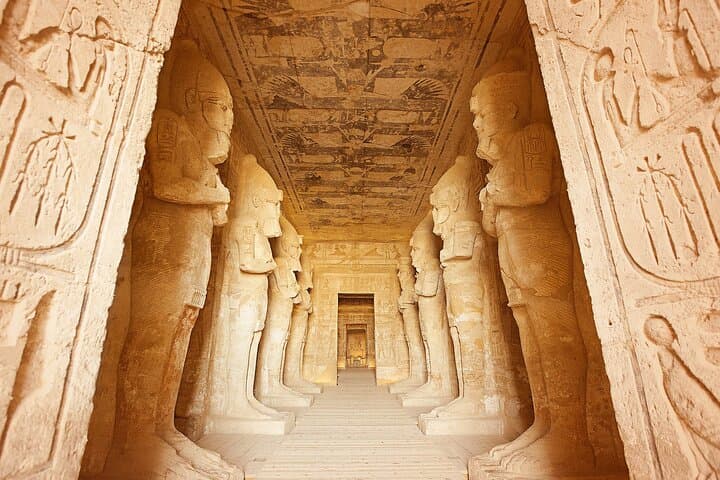
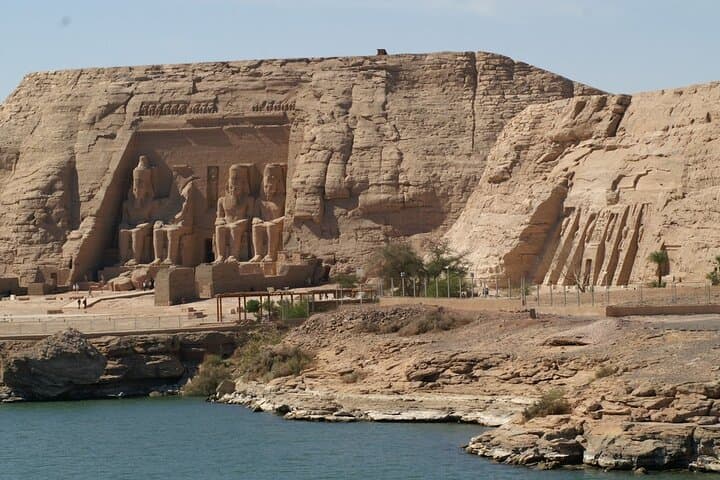
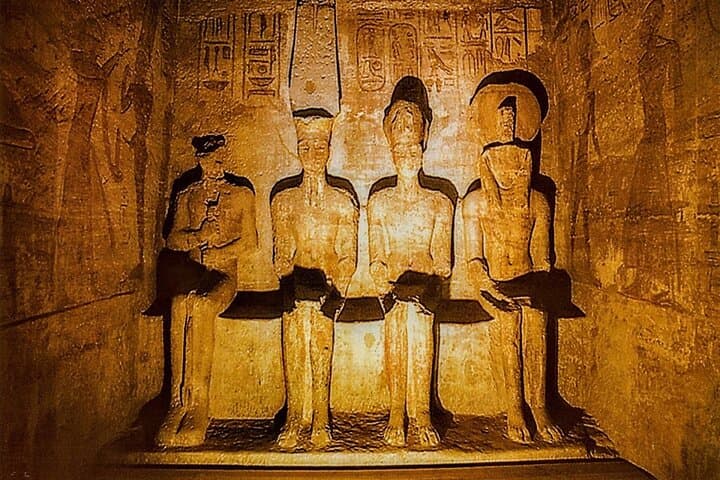
The twin temples at Abu Simbel date to the 13th century BC and were cut directly from the cliff by orders of Ramses II; in the 1960s they were famously relocated to higher ground to avoid Lake Nasser. Geologically the site sits on Nubian sandstone; culturally it’s both monument and message — imperial power carved into stone and aligned to sunlight on select days. Local guides bring these facts to life with measured context and photography tips for the scale and relief work.
Practically, a private tour from Aswan bundles transportation, licensed guide, and entrance tickets into a single day: plan for a 7–8 hour outing including stops. Wear sturdy shoes for uneven stone floors, bring sun protection and at least 1–2 liters of water, and expect brief periods of standing to take in the façades and interior reliefs. The private format lets you set pacing — linger by the seated colossi or move quickly back to the air-conditioned vehicle.
Accessibility is better than many desert sites: the operator provides wheelchair-accessible transport and flexibility for slower walkers. Time your visit for early morning light or late afternoon return to avoid peak heat and to catch stronger shadows on the carvings.
easy.
7–8 hours.
Suitable for most fitness levels; requires ability to walk short distances on uneven stone and tolerate a long vehicle ride.
The road distance is about 280 km and typically takes around 3 hours each way by car, depending on stops and traffic.
Yes — this private tour includes entrance tickets so you skip ticket lines and enter with your guide’s assistance.
The operator lists wheelchair-accessible transport and the site has some accessible paths, but interiors include carved stone surfaces and ramps are limited; notify the operator when booking.
Photography is generally allowed; guides will advise on lighting and where flash may be restricted to protect reliefs.
Constructed under Ramses II in the 13th century BC, the temples were relocated in the 1960s to avoid the rising waters of Lake Nasser after the Aswan High Dam was built.
The relocation was a landmark conservation project; ongoing efforts focus on visitor impact management and protecting fragile wall reliefs from humidity and flash photography.
Eyes of Egypt operates guided outdoor trips and adventures with an emphasis on safety, stewardship, and memorable experiences.
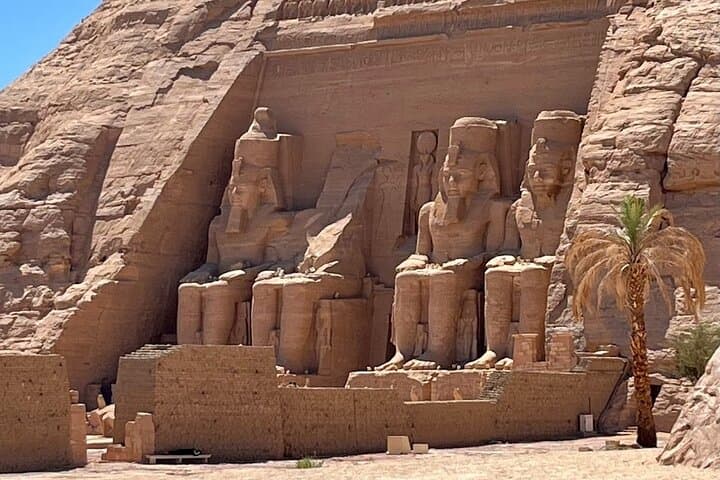
You arrive before the palms thin out, the desert flattening to a pale, wind-polished plain. The road from Aswan unfurls for roughly 280 km — about three hours each way — and the soundscape changes from Nile traffic to long, steady hum of tires and the occasional desert hawk. When the rock face appears, the colossal statues of Ramses II loom like an engineered sunrise, their shadows slicing across the sand.
You arrive before the palms thin out, the desert flattening to a pale, wind-polished plain. The road from Aswan unfurls for roughly 280 km — about three hours each way — and the soundscape changes from Nile traffic to long, steady hum of tires and the occasional desert hawk. When the rock face appears, the colossal statues of Ramses II loom like an engineered sunrise, their shadows slicing across the sand.
The twin temples at Abu Simbel date to the 13th century BC and were cut directly from the cliff by orders of Ramses II; in the 1960s they were famously relocated to higher ground to avoid Lake Nasser. Geologically the site sits on Nubian sandstone; culturally it’s both monument and message — imperial power carved into stone and aligned to sunlight on select days. Local guides bring these facts to life with measured context and photography tips for the scale and relief work.
Practically, a private tour from Aswan bundles transportation, licensed guide, and entrance tickets into a single day: plan for a 7–8 hour outing including stops. Wear sturdy shoes for uneven stone floors, bring sun protection and at least 1–2 liters of water, and expect brief periods of standing to take in the façades and interior reliefs. The private format lets you set pacing — linger by the seated colossi or move quickly back to the air-conditioned vehicle.
Accessibility is better than many desert sites: the operator provides wheelchair-accessible transport and flexibility for slower walkers. Time your visit for early morning light or late afternoon return to avoid peak heat and to catch stronger shadows on the carvings.