THE ADVENTURE COLLECTIVE® · Independent discovery and booking for outdoor travel

See Lisbon’s highlights in 90 minutes by tuk‑tuk: winding Alfama lanes, hilltop viewpoints, Praça do Comércio and Time Out Market. Fast, photo‑friendly and ideal for first‑time visitors who want a concentrated introduction to the city.
See Lisbon’s highlights in 90 minutes by tuk‑tuk: winding Alfama lanes, hilltop viewpoints, Praça do Comércio and Time Out Market. Fast, photo‑friendly and ideal for first‑time visitors who want a concentrated introduction to the city.
The tuk‑tuk hums down a tile-streaked street, the Tagus winking at the edge of view as old roofs give way to a panoramic sweep from Senhora do Monte. In 90 minutes a local driver-guide threads you through Alfama’s maze of cobbled lanes, pauses at miradouros that frame São Jorge Castle, and eases along the riverside to Praça do Comércio — all while you sit higher than a walking tour, close enough to smell roasted chestnuts and canned sardines grilling at the market.
Verified experiences and guided adventures in the surrounding area.
Operated by Tourism Hub Lisbon · Lisbon, Lisbon
The tuk‑tuk hums down a tile-streaked street, the Tagus winking at the edge of view as old roofs give way to a panoramic sweep from Senhora do Monte. In 90 minutes a local driver-guide threads you through Alfama’s maze of cobbled lanes, pauses at miradouros that frame São Jorge Castle, and eases along the riverside to Praça do Comércio — all while you sit higher than a walking tour, close enough to smell roasted chestnuts and canned sardines grilling at the market.
Lisbon’s story is visible in the stone and azulejos: an 18th‑century reconstruction after the 1755 earthquake reshaped the Baixa grid, while Moorish, Gothic and Pombaline layers remain in narrow alleys and church facades. Geologically, the city rests on sedimentary terraces above the Tagus estuary; that river shaped Lisbon’s maritime culture, bringing spices, sailors and the Fado songs that rise from Alfama’s taverns at dusk.
Culturally the tour highlights both grand monuments — Lisbon Cathedral, National Pantheon — and modern life at Time Out Market, where contemporary chefs remix tradition. Expect quick stops for photos and short walks; tuk‑tuks make steep, narrow streets accessible but can’t replace exploring on foot.
Practical notes: the route is compact and ideal for first‑time visitors or those with limited mobility, but it’s not suitable for serious back problems or late‑stage pregnancy. Bring a light layer for hilltop breezes, a small bottle of water, and a camera with spare battery. Morning or golden‑hour departures reduce traffic and heat; ask your guide to tailor stops if you want more time at a viewpoint or the market.
easy.
1.5 hours.
Minimal fitness required — able to sit for 90 minutes and walk short, uneven sections.
Yes — this is a private tour for your party, so you can request slight itinerary adjustments and ask the guide for extra time at certain stops.
Only short walks from parking points to viewpoints or attractions; the tuk‑tuk handles steep, narrow streets, but expect uneven cobbles at stops.
Generally yes — it’s family friendly and accessible for many older travelers, but it’s not recommended for those with serious back problems or late‑stage pregnancy.
Bring some euros for small purchases, tips, or snacks at markets; most established vendors and market stalls accept cards but small vendors may prefer cash.
Lisbon’s urban fabric was reshaped after the catastrophic 1755 earthquake; the Pombaline Baixa is a planned reconstruction that introduced anti‑seismic design and a rational street grid.
Historic districts cope with high tourist footfall; support family‑run cafes and local artisans, avoid littering, and follow local rules to help preserve narrow streets and traditional buildings.
Tourism Hub Lisbon operates guided outdoor trips and adventures with an emphasis on safety, stewardship, and memorable experiences.
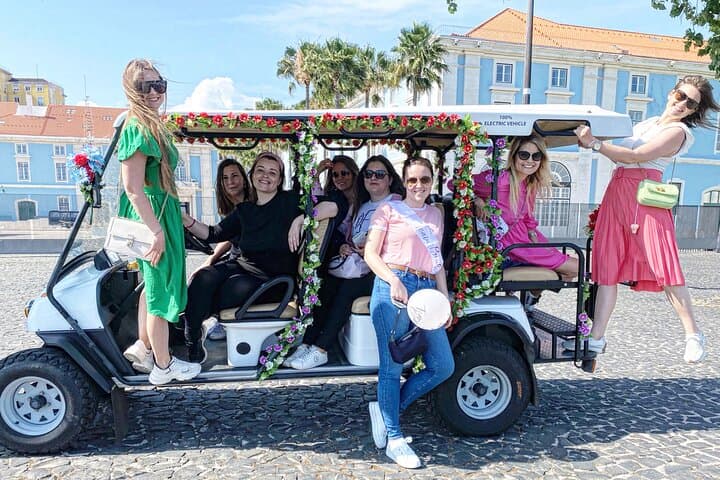


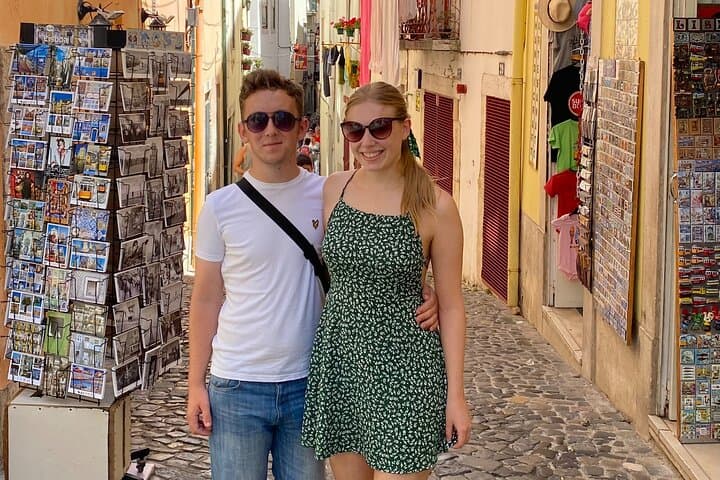
The tuk‑tuk hums down a tile-streaked street, the Tagus winking at the edge of view as old roofs give way to a panoramic sweep from Senhora do Monte. In 90 minutes a local driver-guide threads you through Alfama’s maze of cobbled lanes, pauses at miradouros that frame São Jorge Castle, and eases along the riverside to Praça do Comércio — all while you sit higher than a walking tour, close enough to smell roasted chestnuts and canned sardines grilling at the market.
The tuk‑tuk hums down a tile-streaked street, the Tagus winking at the edge of view as old roofs give way to a panoramic sweep from Senhora do Monte. In 90 minutes a local driver-guide threads you through Alfama’s maze of cobbled lanes, pauses at miradouros that frame São Jorge Castle, and eases along the riverside to Praça do Comércio — all while you sit higher than a walking tour, close enough to smell roasted chestnuts and canned sardines grilling at the market.
Lisbon’s story is visible in the stone and azulejos: an 18th‑century reconstruction after the 1755 earthquake reshaped the Baixa grid, while Moorish, Gothic and Pombaline layers remain in narrow alleys and church facades. Geologically, the city rests on sedimentary terraces above the Tagus estuary; that river shaped Lisbon’s maritime culture, bringing spices, sailors and the Fado songs that rise from Alfama’s taverns at dusk.
Culturally the tour highlights both grand monuments — Lisbon Cathedral, National Pantheon — and modern life at Time Out Market, where contemporary chefs remix tradition. Expect quick stops for photos and short walks; tuk‑tuks make steep, narrow streets accessible but can’t replace exploring on foot.
Practical notes: the route is compact and ideal for first‑time visitors or those with limited mobility, but it’s not suitable for serious back problems or late‑stage pregnancy. Bring a light layer for hilltop breezes, a small bottle of water, and a camera with spare battery. Morning or golden‑hour departures reduce traffic and heat; ask your guide to tailor stops if you want more time at a viewpoint or the market.