THE ADVENTURE COLLECTIVE® · Independent discovery and booking for outdoor travel

Spend a full day exploring Kyoto’s temples, shrines and historic districts with a licensed English guide departing from Kobe. This private 9‑hour walking tour combines top sites like Fushimi Inari and Kiyomizu‑dera with local market stops and cultural context.
Spend a full day exploring Kyoto’s temples, shrines and historic districts with a licensed English guide departing from Kobe. This private 9‑hour walking tour combines top sites like Fushimi Inari and Kiyomizu‑dera with local market stops and cultural context.
The day begins in Kobe before the train slows into Kyoto station and you step into a city where history still moves at human pace. Walk past weathered wooden storefronts, feel the river at your feet as it dares you to linger, and let a licensed English-speaking guide point out details a map can’t explain.
Verified experiences and guided adventures in the surrounding area.
Operated by Japan Guide Agency · Kyoto, Kyoto Prefecture
The day begins in Kobe before the train slows into Kyoto station and you step into a city where history still moves at human pace. Walk past weathered wooden storefronts, feel the river at your feet as it dares you to linger, and let a licensed English-speaking guide point out details a map can’t explain.
Kyoto was Japan’s capital for over a millennium; its layout, temples and gardens reflect layers of Heian court life, samurai rule and Zen aesthetics. Geology here is gentle—low mountains frame the east and west, feeding clear streams and creating the microclimates that shaped temple gardens and rice terraces. Culture is tangible: teahouses in Gion, torii gates at Fushimi Inari, and the measured steps of temple rituals. Your guide will link architecture to history—from Kiyomizu-dera’s wooden stage to Nijo Castle’s shogunal legacy—and point out local crafts and Kyoto specialties at Nishiki Market.
Practically, this private 9‑hour itinerary is customizable (choose 3–4 sites) and includes a 90‑minute transit each way from Kobe by public transport. Expect mostly paved walking, some stairs at temple sites, and short urban transfers. Bring a charged portable battery, a reloadable IC card for trains, modest clothing for shrine visits, and comfortable shoes for 6–10 km of walking spread through the day. Start early to avoid peak crowds at Fushimi Inari and Kiyomizu, and allow time for a relaxed lunch or market tasting. The tour is wheelchair accessible in many areas, but check specific temple access in advance. With a private guide you’ll move deliberately—seeing Kyoto’s big names and discovering the quieter corners locals still keep to themselves.
moderate.
9 hours.
Comfortable for most travelers who can walk 6–10 km over a day with periodic stops; some stair climbing required.
You meet the guide in Kobe and travel together by public train (about 90 minutes each way); train fare is typically paid by the traveler via IC card or cash.
Yes — the private format lets you choose 3–4 sites from the listed options and adjust pacing to your interests.
Admissions are usually not included in the base tour price; expect to pay entry fees at major sites like Kiyomizu‑dera or Nijo Castle.
Many urban areas and markets are wheelchair accessible, but some historic temples have stairs or uneven ground—check specifics with the operator when booking.
Kyoto served as Japan’s capital from 794 until 1868, preserving court-era architecture and the development of Zen and tea-culture that shaped modern Japanese aesthetics.
Popular sites manage crowds through timed entries and signage—minimize impact by staying on paths, avoiding flash photography in sacred spaces, and using refillable water bottles.
Japan Guide Agency operates guided outdoor trips and adventures with an emphasis on safety, stewardship, and memorable experiences.
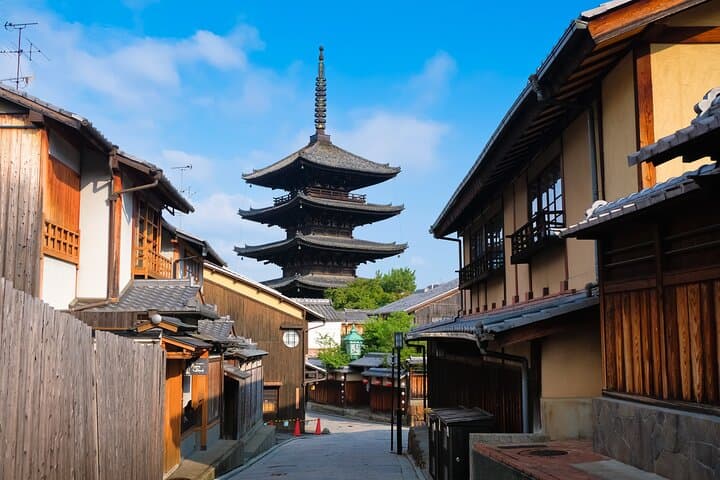
The day begins in Kobe before the train slows into Kyoto station and you step into a city where history still moves at human pace. Walk past weathered wooden storefronts, feel the river at your feet as it dares you to linger, and let a licensed English-speaking guide point out details a map can’t explain.
The day begins in Kobe before the train slows into Kyoto station and you step into a city where history still moves at human pace. Walk past weathered wooden storefronts, feel the river at your feet as it dares you to linger, and let a licensed English-speaking guide point out details a map can’t explain.
Kyoto was Japan’s capital for over a millennium; its layout, temples and gardens reflect layers of Heian court life, samurai rule and Zen aesthetics. Geology here is gentle—low mountains frame the east and west, feeding clear streams and creating the microclimates that shaped temple gardens and rice terraces. Culture is tangible: teahouses in Gion, torii gates at Fushimi Inari, and the measured steps of temple rituals. Your guide will link architecture to history—from Kiyomizu-dera’s wooden stage to Nijo Castle’s shogunal legacy—and point out local crafts and Kyoto specialties at Nishiki Market.
Practically, this private 9‑hour itinerary is customizable (choose 3–4 sites) and includes a 90‑minute transit each way from Kobe by public transport. Expect mostly paved walking, some stairs at temple sites, and short urban transfers. Bring a charged portable battery, a reloadable IC card for trains, modest clothing for shrine visits, and comfortable shoes for 6–10 km of walking spread through the day. Start early to avoid peak crowds at Fushimi Inari and Kiyomizu, and allow time for a relaxed lunch or market tasting. The tour is wheelchair accessible in many areas, but check specific temple access in advance. With a private guide you’ll move deliberately—seeing Kyoto’s big names and discovering the quieter corners locals still keep to themselves.