THE ADVENTURE COLLECTIVE® · Independent discovery and booking for outdoor travel

A private, guided walk through Ground Zero and the 9/11 Memorial that pairs eyewitness accounts with memorial interpretation. Upgrade for skip-the-line access to the 9/11 Museum and plan 2–4 hours for a full visit.
A private, guided walk through Ground Zero and the 9/11 Memorial that pairs eyewitness accounts with memorial interpretation. Upgrade for skip-the-line access to the 9/11 Museum and plan 2–4 hours for a full visit.
You meet inside the cavernous Oculus, sunlight slicing between glass ribs, and step out into a neighborhood still shaped by its past — the plaza where two towers once stood. The guide, often with a personal connection to September 11, 2001, leads a measured walk past St. Paul’s Chapel and into the Memorial Plaza where water pours into the voids that mark the footprints of the towers.
Verified experiences and guided adventures in the surrounding area.
Operated by ExperienceFirst · New York, NY
You meet inside the cavernous Oculus, sunlight slicing between glass ribs, and step out into a neighborhood still shaped by its past — the plaza where two towers once stood. The guide, often with a personal connection to September 11, 2001, leads a measured walk past St. Paul’s Chapel and into the Memorial Plaza where water pours into the voids that mark the footprints of the towers.
This is a site of recent history and layered geology: Manhattan’s schist and filled shoreline allowed skyscrapers to rise here, and the plaza now sits where bedrock meets reclaimed land along the Hudson. The tour threads history with street-level culture — how first responders, volunteers, and families reshaped Lower Manhattan in the years after the attacks — and explains memorial design choices like the Survivor Tree and the Reflecting Absence pools.
Expect a sober, interpretive experience rather than spectacle. Guides point out architectural details, excavation lines, and the museum’s role preserving artifacts and oral histories (museum entry is optional and requires security screening). Local insights include quieter corners like St. Paul’s Chapel’s reliefs and the Skyscraper Museum nearby, both useful for context.
Practical guidance: wear comfortable walking shoes, allow 2–4 hours if you add the museum, and leave large bags at your hotel — the museum uses airport-style security. Visit early in the day to avoid crowds and bring water and layers; Lower Manhattan’s wind off the Hudson can be sharp. Respect the memorial’s rules and give yourself time afterward to process what you’ve seen.
easy.
2–4 hours.
Suitable for most fitness levels; participants should be able to walk continuously for 60–90 minutes with short stops.
Museum entry is optional and must be selected at booking; the guided tour covers the memorial plaza and exterior sites even without museum access.
Yes — the route and memorial plaza are wheelchair accessible; notify the operator of special requirements when booking.
The museum enforces airport-style screening; large bags may need to be checked and some items are not allowed — travel light to speed entry.
Full refunds are available if you cancel at least 24 hours before the scheduled departure; no refund within 24 hours.
The World Trade Center attacks in 2001 reshaped Lower Manhattan’s urban fabric; the memorial opened in 2011 and the museum preserves artifacts and personal stories.
The memorial is actively maintained by a foundation — visitors are asked to stay on designated paths, avoid leaving items at memorial pools, and follow photography rules to protect the site.
ExperienceFirst operates guided outdoor trips and adventures with an emphasis on safety, stewardship, and memorable experiences.
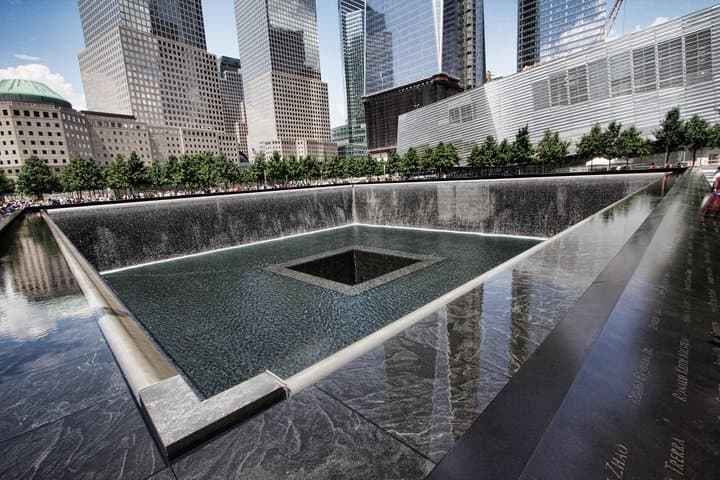
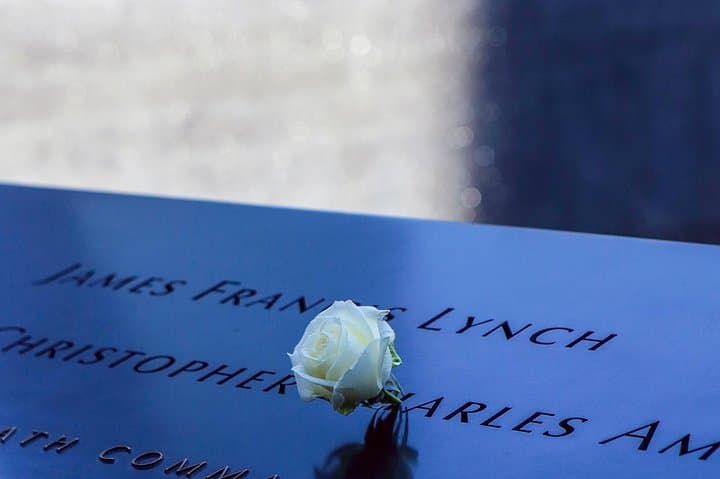
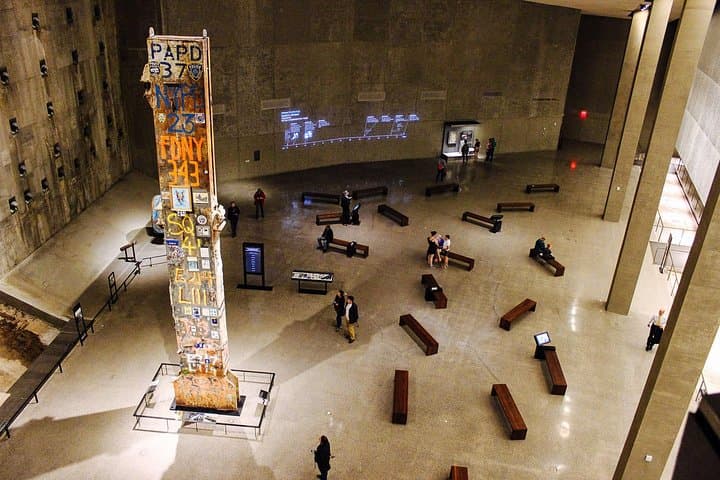
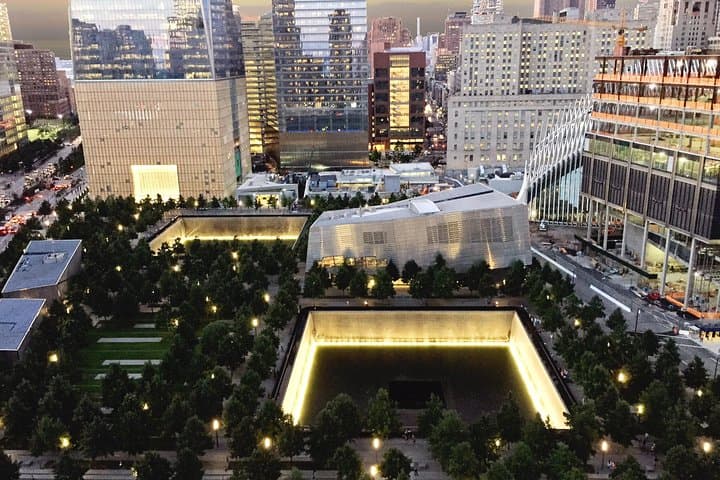
You meet inside the cavernous Oculus, sunlight slicing between glass ribs, and step out into a neighborhood still shaped by its past — the plaza where two towers once stood. The guide, often with a personal connection to September 11, 2001, leads a measured walk past St. Paul’s Chapel and into the Memorial Plaza where water pours into the voids that mark the footprints of the towers.
You meet inside the cavernous Oculus, sunlight slicing between glass ribs, and step out into a neighborhood still shaped by its past — the plaza where two towers once stood. The guide, often with a personal connection to September 11, 2001, leads a measured walk past St. Paul’s Chapel and into the Memorial Plaza where water pours into the voids that mark the footprints of the towers.
This is a site of recent history and layered geology: Manhattan’s schist and filled shoreline allowed skyscrapers to rise here, and the plaza now sits where bedrock meets reclaimed land along the Hudson. The tour threads history with street-level culture — how first responders, volunteers, and families reshaped Lower Manhattan in the years after the attacks — and explains memorial design choices like the Survivor Tree and the Reflecting Absence pools.
Expect a sober, interpretive experience rather than spectacle. Guides point out architectural details, excavation lines, and the museum’s role preserving artifacts and oral histories (museum entry is optional and requires security screening). Local insights include quieter corners like St. Paul’s Chapel’s reliefs and the Skyscraper Museum nearby, both useful for context.
Practical guidance: wear comfortable walking shoes, allow 2–4 hours if you add the museum, and leave large bags at your hotel — the museum uses airport-style security. Visit early in the day to avoid crowds and bring water and layers; Lower Manhattan’s wind off the Hudson can be sharp. Respect the memorial’s rules and give yourself time afterward to process what you’ve seen.