
Private 8-Day Tibet Everest Base Camp Tour — Lhasa to Rongbuk Adventure
An eight-day private circuit from Lhasa to Everest Base Camp that balances high-altitude horizons with centuries of Tibetan culture. Expect long drives across 5,000m passes, one night at Rongbuk/EBC and careful acclimatization.
An Adventure In Lhasa.
An eight-day private circuit from Lhasa to Everest Base Camp that balances high-altitude horizons with centuries of Tibetan culture. Expect long drives across 5,000m passes, one night at Rongbuk/EBC and careful acclimatization.
Read the full experience
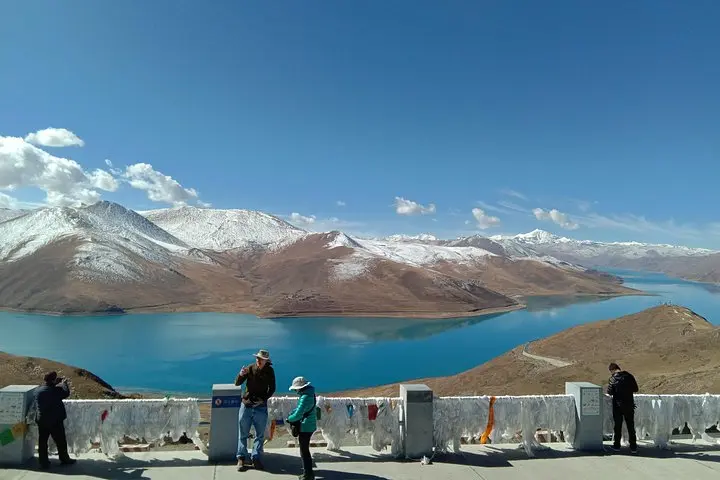
The first time you step out of Lhasa Gonggar Airport the air has a different weight: thinner, cooler, as if the whole plateau is holding its breath. From the hotel windows in downtown Lhasa the city hums with prayer flags and morning circumambulations; by day three you’re trading traffic for the broad, wind-swept highway that climbs past turquoise Yamdrok Lake and up toward the sharp teeth of the Nyenchen Kangsar glacier.
The first time you step out of Lhasa Gonggar Airport the air has a different weight: thinner, cooler, as if the whole plateau is holding its breath. From the hotel windows in downtown Lhasa the city hums with prayer flags and morning circumambulations; by day three you’re trading traffic for the broad, wind-swept highway that climbs past turquoise Yamdrok Lake and up toward the sharp teeth of the Nyenchen Kangsar glacier.
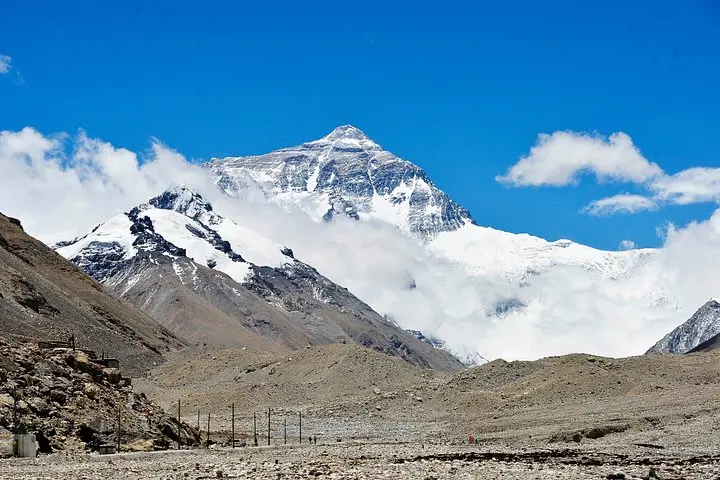
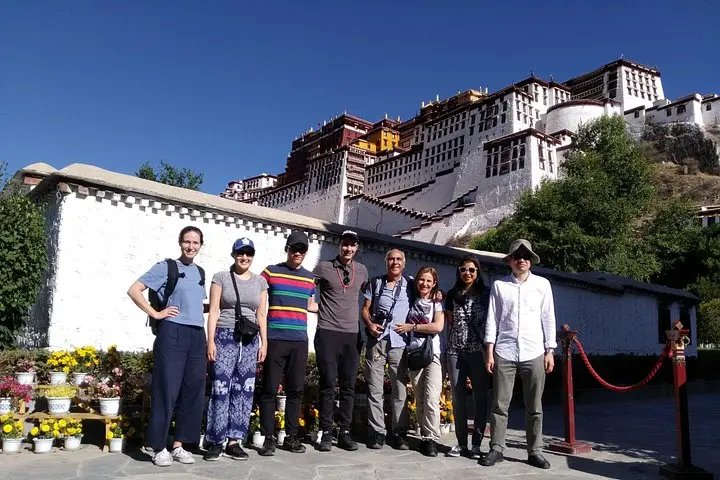
This is a route shaped by geology and faith. Centuries of Tibetan Buddhism press at the edges of the itinerary—inside Potala Palace and the Jokhang Temple pilgrims move in steady, bowed knots—while the land itself tells an older story: uplifted folds of the Himalayan orogeny, glaciated cirques, and high passes that live at elevations most travelers rarely see. Expect to cross Kampala Pass (~4,794 m) and later Gyatsola and Gawula passes above 5,200 m; from those heights the panorama unspools to include Makalu, Lhotse, Everest and Cho Oyu in a single sweep.
Cultural notes thread through the trip. Gyantse’s Kumbum stupa compresses a world of murals into a compact pilgrimage, and Tashilhunpo Monastery in Shigatse recalls the political and spiritual history of the Panchen Lama. Local guides explain practices that may seem arcane—prostrations, butter-lamp offerings—grounding them in community life rather than tourism spectacle.
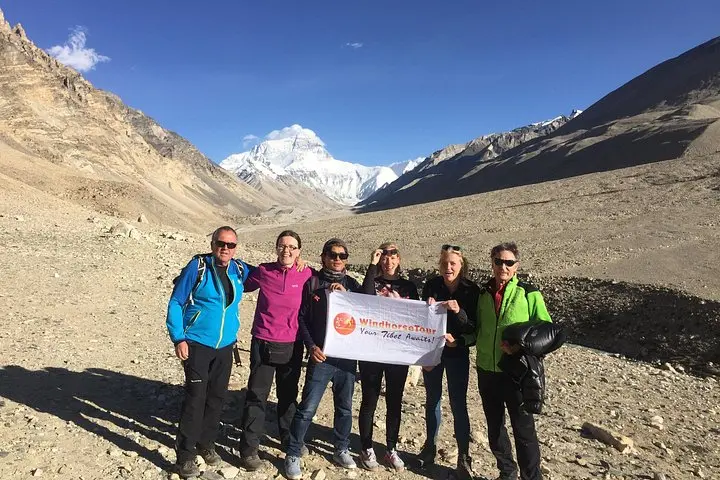
By day five the road descends into the dry valley that leads to Rongbuk and Everest Base Camp (EBC). You’ll arrive late afternoon for a high plateau sunset—an hour when the ridge-line becomes an object of stern beauty. One night is spent in a communal EBC tent or Rongbuk guesthouse dorm; waking for sunrise at 5,000 m is elemental and humbling.
Practical guidance: acclimatization is the trip’s axis. The itinerary spaces nights in Lhasa and Shigatse deliberately—use them to hydrate, sleep early, and avoid alcohol. The operator provides bottled water, portable oxygen inhalers (7–14L) and basic dorm accommodation at EBC. Bring layered, windproof clothing, solid hiking boots, and personal medication for altitude sensitivity; a doctor’s consultation before travel is recommended. Expect long drives (Lhasa–Shigatse ~8 hours; Shigatse–EBC 8–9 hours) on paved but winding roads; motion-sickness preparations help.
Logistics also matter: Tibet permits and sometimes group visa paperwork are required, and the operator collects passport copies in advance—book at least 25 days ahead. For photographers, plan sunrise at Rongbuk and golden-hour light over Yamdrok for the clearest mountain silhouettes. This is a trip that asks for patience and respect—of altitudes, local customs, and a landscape that refuses to be rushed.
Frequently asked questions
Yes—Tibet Travel Permits are required and the operator obtains them; provide passport and visa copies at booking and allow at least 25 days.
The itinerary averages above 3,600 m and reaches ~5,000 m at EBC; mild AMS symptoms are common—rest, hydrate, and use oxygen if advised.
One night is in a communal EBC tent or Rongbuk monastery guesthouse dorm bed with shared facilities, as noted in the inclusions.
Yes—Lhasa Gonggar Airport is a common arrival; the guide will meet you at the airport or train station per pickup arrangements.
Yes—this listing is a private 8-day tour with a local Tibetan guide and private vehicle transfers included.
Daily breakfasts are included (6 breakfasts); other meals are typically at local restaurants and not all are covered by the tour price.
About This Experience
WindhorseTour (Chengdu) operates guided outdoor trips and adventures with an emphasis on safety, stewardship, and memorable experiences.
Adventure tips
Recommended gear
- Insulated down jacket: Warmth for pre-dawn and evening conditions above 4,500 m.
- Sturdy hiking boots: Support and traction for rocky approaches and cold, dusty paths at high elevation.
- Personal altitude medication & doctor consultation: Preventative prescription for AMS risk and medical guidance before travel.
- UV sunglasses and sunscreen: High-altitude sun is intense year-round; protect skin and eyes on the plateau.
Photos of the experience
Related adventures & guides
Read the full experience
The first time you step out of Lhasa Gonggar Airport the air has a different weight: thinner, cooler, as if the whole plateau is holding its breath. From the hotel windows in downtown Lhasa the city hums with prayer flags and morning circumambulations; by day three you’re trading traffic for the broad, wind-swept highway that climbs past turquoise Yamdrok Lake and up toward the sharp teeth of the Nyenchen Kangsar glacier.
The first time you step out of Lhasa Gonggar Airport the air has a different weight: thinner, cooler, as if the whole plateau is holding its breath. From the hotel windows in downtown Lhasa the city hums with prayer flags and morning circumambulations; by day three you’re trading traffic for the broad, wind-swept highway that climbs past turquoise Yamdrok Lake and up toward the sharp teeth of the Nyenchen Kangsar glacier.
This is a route shaped by geology and faith. Centuries of Tibetan Buddhism press at the edges of the itinerary—inside Potala Palace and the Jokhang Temple pilgrims move in steady, bowed knots—while the land itself tells an older story: uplifted folds of the Himalayan orogeny, glaciated cirques, and high passes that live at elevations most travelers rarely see. Expect to cross Kampala Pass (~4,794 m) and later Gyatsola and Gawula passes above 5,200 m; from those heights the panorama unspools to include Makalu, Lhotse, Everest and Cho Oyu in a single sweep.
Cultural notes thread through the trip. Gyantse’s Kumbum stupa compresses a world of murals into a compact pilgrimage, and Tashilhunpo Monastery in Shigatse recalls the political and spiritual history of the Panchen Lama. Local guides explain practices that may seem arcane—prostrations, butter-lamp offerings—grounding them in community life rather than tourism spectacle.
By day five the road descends into the dry valley that leads to Rongbuk and Everest Base Camp (EBC). You’ll arrive late afternoon for a high plateau sunset—an hour when the ridge-line becomes an object of stern beauty. One night is spent in a communal EBC tent or Rongbuk guesthouse dorm; waking for sunrise at 5,000 m is elemental and humbling.
Practical guidance: acclimatization is the trip’s axis. The itinerary spaces nights in Lhasa and Shigatse deliberately—use them to hydrate, sleep early, and avoid alcohol. The operator provides bottled water, portable oxygen inhalers (7–14L) and basic dorm accommodation at EBC. Bring layered, windproof clothing, solid hiking boots, and personal medication for altitude sensitivity; a doctor’s consultation before travel is recommended. Expect long drives (Lhasa–Shigatse ~8 hours; Shigatse–EBC 8–9 hours) on paved but winding roads; motion-sickness preparations help.
Logistics also matter: Tibet permits and sometimes group visa paperwork are required, and the operator collects passport copies in advance—book at least 25 days ahead. For photographers, plan sunrise at Rongbuk and golden-hour light over Yamdrok for the clearest mountain silhouettes. This is a trip that asks for patience and respect—of altitudes, local customs, and a landscape that refuses to be rushed.
Make a day of it nearby.
Verified experiences and guided adventures in the surrounding area.