THE ADVENTURE COLLECTIVE® · Independent discovery and booking for outdoor travel

Trade the city grid for windswept dunes, geyser-fed springs, and rivers that trace the cradle of nomadic empires. This private 8-day circuit from Ulaanbaatar threads Gobi sand, Orkhon Valley, hot springs and wild horses into a compact, culturally rich introduction to Mongolia.
Trade the city grid for windswept dunes, geyser-fed springs, and rivers that trace the cradle of nomadic empires. This private 8-day circuit from Ulaanbaatar threads Gobi sand, Orkhon Valley, hot springs and wild horses into a compact, culturally rich introduction to Mongolia.
The first light over Ulaanbaatar is thin and cool, smoke from a hundred ger stoves lifting like pale threads into an open blue. You meet your guide at the airport, climb into an air-conditioned SUV and, within an hour, the city skyline gives way to a patchwork of fields, then to an expanse where road and sky argue for distance. Five hours later you step onto the Elsen Tasarkhai dunes of the Bayan Gobi: wind-sculpted sand ripples underfoot, willows guarding intermittent rivers, and a horizon that dares you to keep moving.
Verified experiences and guided adventures in the surrounding area.
Operated by Travel China Guide · Ulaanbaatar, Ulaanbaatar
The first light over Ulaanbaatar is thin and cool, smoke from a hundred ger stoves lifting like pale threads into an open blue. You meet your guide at the airport, climb into an air-conditioned SUV and, within an hour, the city skyline gives way to a patchwork of fields, then to an expanse where road and sky argue for distance. Five hours later you step onto the Elsen Tasarkhai dunes of the Bayan Gobi: wind-sculpted sand ripples underfoot, willows guarding intermittent rivers, and a horizon that dares you to keep moving.
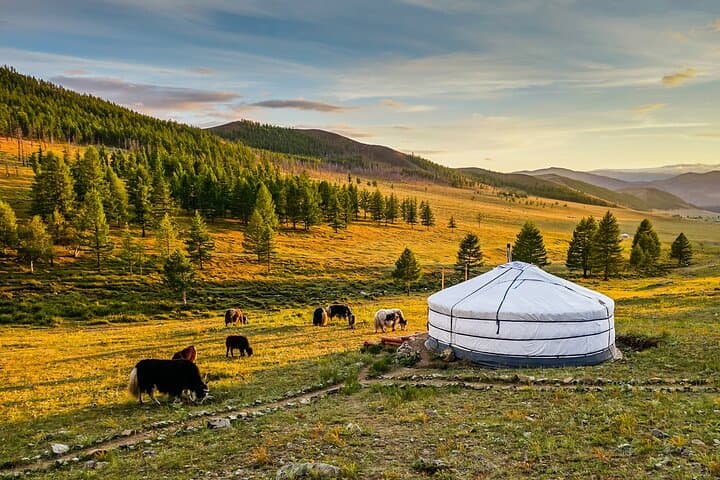
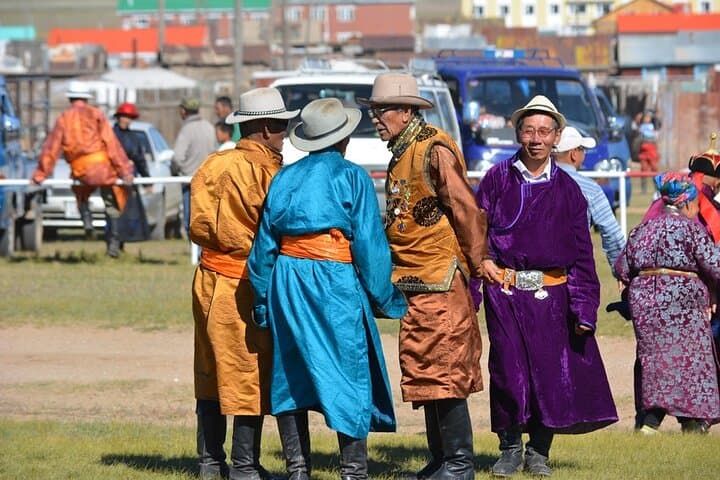
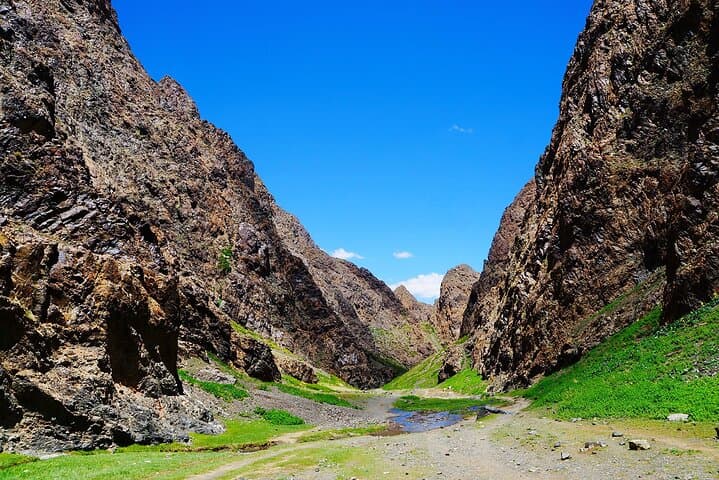
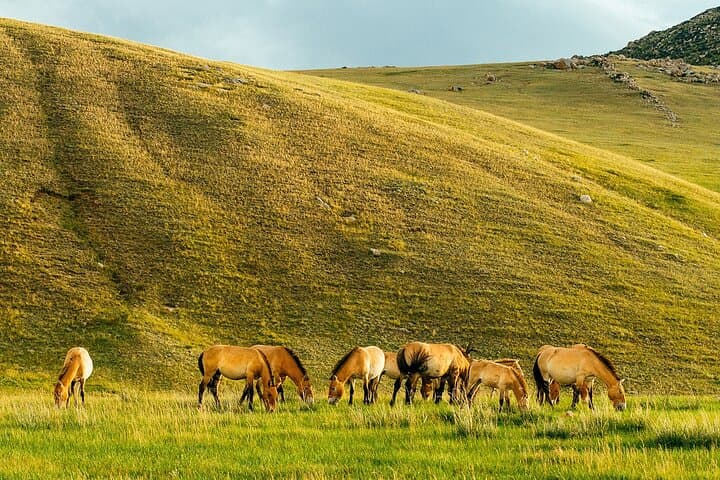
This itinerary stitches together Mongolia's essential landscapes and lived culture: the semi-arid ridges of the Mini Gobi, the grass-carpeted Orkhon Valley — a UNESCO World Heritage site tied to nomadic empires — and the geothermal softness of Tsenkher hot springs. Geologically these places tell a short, sharp story of ice, volcanic action, and steppe rivers. Orkhon River carved its valley over millennia; waterfalls here tumble over basalt formed in distant eruptions. Culturally, visits to herder families and ger camps provide direct contact with a pastoral life that still centers on horses, herds, and seasonal migration. In Hustai National Park you have a strong chance of seeing Przewalski's horse, one of the handful of success stories in rewilding.
Practically, expect long driving legs on unpaved or semi-paved roads — plan for multiple 3–5 hour drives, with one-way distances commonly 150–300 km depending on routing. Elevations sit generally between 1,200 and 1,800 meters, so altitude is moderate; the tougher element is terrain variability and dust. Days combine active walks (dune climbs, short valley hikes, a one-hour horse ride) with restful stops: ger camp evenings, hot springs, and museum visits in Karakorum and Ulaanbaatar.
Pack layers for wide diurnal swings, decent gaiters or trekking shoes for sand and grassland, and a soft daypack for water and camera gear. Hydration matters — carry at least 2 liters per day when out on the steppe — and bring cash for remote purchases and modest tipping. Respect local rules: remove shoes in gers if asked, accept hospitality politely, and ask before photographing people. This private tour is tailor-friendly: if your legs want more riding or your camera craves longer wildlife stakeouts, the guide can adjust pacing. By the time you are driven back into Ulaanbaatar on day seven, the city will feel like the final, civilized stretch of a journey that has re-tuned pace, view, and expectations.
moderate.
8 days / 7 nights.
Moderate fitness recommended for long drives, short hikes, and an optional 1-hour horse ride; not strenuous but expect uneven terrain.
Most travelers require a visa; check Mongolia's current entry rules for your nationality well before travel and ensure passport validity exceeds six months.
Expect a mix of paved and unpaved roads; many sections are gravel or dirt and can be bumpy, so travel times are longer than distance suggests.
Yes, but the operator requires a minimum of two travelers per booking; contact the supplier about single-traveler options or surcharges.
Routine vaccinations are recommended; bring any personal medications, basic first aid supplies, and consider altitude awareness, though elevations are generally moderate.
Yes, this private tour is adjustable—guides can extend or simplify days according to interests such as extra riding, photography stops, or more time at Hustai.
An English-speaking guide is included; ask in advance if you need another language or specialist guides for birding or cultural history.
Karakorum was the 13th-century capital of the Mongol Empire; Erdene Zuu monastery was later built nearby using stones from the old city, linking imperial and spiritual histories.
Hustai is a conservation success story for reintroducing Przewalski's horse; travelers should stick to paths, avoid feeding wildlife, and follow park guidelines to minimize disturbance.
Travel China Guide operates guided outdoor trips and adventures with an emphasis on safety, stewardship, and memorable experiences.
The first light over Ulaanbaatar is thin and cool, smoke from a hundred ger stoves lifting like pale threads into an open blue. You meet your guide at the airport, climb into an air-conditioned SUV and, within an hour, the city skyline gives way to a patchwork of fields, then to an expanse where road and sky argue for distance. Five hours later you step onto the Elsen Tasarkhai dunes of the Bayan Gobi: wind-sculpted sand ripples underfoot, willows guarding intermittent rivers, and a horizon that dares you to keep moving.
The first light over Ulaanbaatar is thin and cool, smoke from a hundred ger stoves lifting like pale threads into an open blue. You meet your guide at the airport, climb into an air-conditioned SUV and, within an hour, the city skyline gives way to a patchwork of fields, then to an expanse where road and sky argue for distance. Five hours later you step onto the Elsen Tasarkhai dunes of the Bayan Gobi: wind-sculpted sand ripples underfoot, willows guarding intermittent rivers, and a horizon that dares you to keep moving.
This itinerary stitches together Mongolia's essential landscapes and lived culture: the semi-arid ridges of the Mini Gobi, the grass-carpeted Orkhon Valley — a UNESCO World Heritage site tied to nomadic empires — and the geothermal softness of Tsenkher hot springs. Geologically these places tell a short, sharp story of ice, volcanic action, and steppe rivers. Orkhon River carved its valley over millennia; waterfalls here tumble over basalt formed in distant eruptions. Culturally, visits to herder families and ger camps provide direct contact with a pastoral life that still centers on horses, herds, and seasonal migration. In Hustai National Park you have a strong chance of seeing Przewalski's horse, one of the handful of success stories in rewilding.
Practically, expect long driving legs on unpaved or semi-paved roads — plan for multiple 3–5 hour drives, with one-way distances commonly 150–300 km depending on routing. Elevations sit generally between 1,200 and 1,800 meters, so altitude is moderate; the tougher element is terrain variability and dust. Days combine active walks (dune climbs, short valley hikes, a one-hour horse ride) with restful stops: ger camp evenings, hot springs, and museum visits in Karakorum and Ulaanbaatar.
Pack layers for wide diurnal swings, decent gaiters or trekking shoes for sand and grassland, and a soft daypack for water and camera gear. Hydration matters — carry at least 2 liters per day when out on the steppe — and bring cash for remote purchases and modest tipping. Respect local rules: remove shoes in gers if asked, accept hospitality politely, and ask before photographing people. This private tour is tailor-friendly: if your legs want more riding or your camera craves longer wildlife stakeouts, the guide can adjust pacing. By the time you are driven back into Ulaanbaatar on day seven, the city will feel like the final, civilized stretch of a journey that has re-tuned pace, view, and expectations.