THE ADVENTURE COLLECTIVE® · Independent discovery and booking for outdoor travel

An eight-day private circuit that pairs Bhutan’s signature cultural sites with manageable mountain walks — from Thimphu’s dzongs to the Tiger’s Nest above Paro and the glacial Phobjikha Valley. Expect high passes, carved woodwork and close encounters with black‑necked cranes.
An eight-day private circuit that pairs Bhutan’s signature cultural sites with manageable mountain walks — from Thimphu’s dzongs to the Tiger’s Nest above Paro and the glacial Phobjikha Valley. Expect high passes, carved woodwork and close encounters with black‑necked cranes.
You step out of a small plane and the air tastes like cold tea and stone — the Paro runway framed by ridgelines that rise abruptly into the lower Himalaya. Prayer flags snap at the edges of the tarmac and your guide points toward a distant white monastery clinging to a cliff: Taktsang, the Tiger's Nest.
Verified experiences and guided adventures in the surrounding area.
Operated by Travel China Guide · Paro, Paro District
You step out of a small plane and the air tastes like cold tea and stone — the Paro runway framed by ridgelines that rise abruptly into the lower Himalaya. Prayer flags snap at the edges of the tarmac and your guide points toward a distant white monastery clinging to a cliff: Taktsang, the Tiger's Nest.
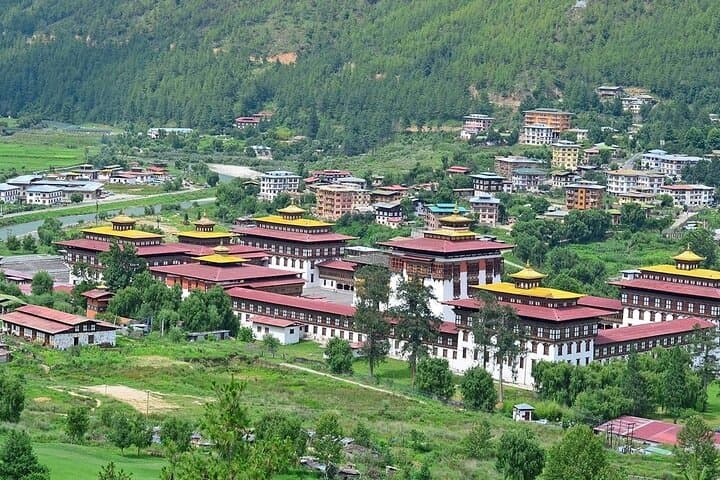
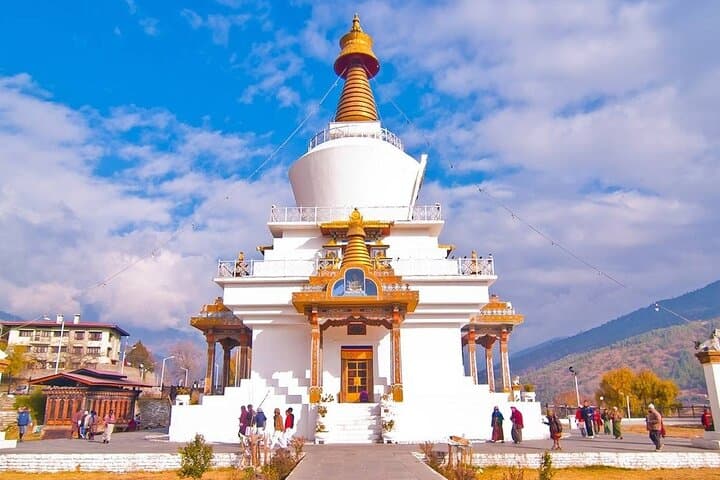
Over eight days the route threads Bhutan’s cultural spine: Thimphu’s carved dzongs and the Buddha Dordenma; Simtokha and Paro Dzong’s fortress walls; the Dochula Pass where 108 chortens puncture the skyline; and the wide, glacially carved bowl of Phobjikha Valley where black‑necked cranes winter. Geologically, you move from river-cut valleys to high passes formed by Himalayan uplift — expect steep switchbacks and narrow mountain roads. Culturally, monasteries, prayer wheels and local crafts dominate the rhythm: monks chanting in assembly, farmers tending buckwheat terraces.
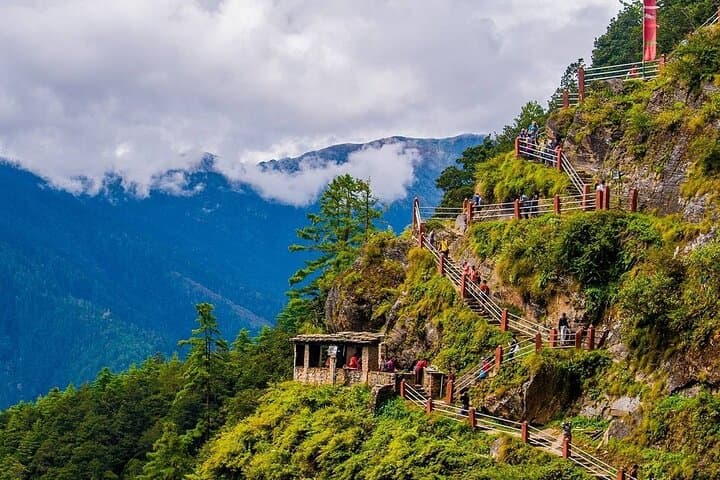
Practically, this is a paced, private driving tour with short hikes. The Tiger’s Nest trek takes roughly 2–3 hours one way on steep, rocky trails with ~600–900 m of exposed vertical; Gangtey Nature Trail offers relaxed 45‑minute walks. Altitude varies: Paro ~2,200 m, Dochula ~3,100 m, Phobjikha higher — allow time to acclimatize and favor layered clothing. Permits and visa fees are arranged in advance; your private vehicle and English-speaking guide handle transfers and site fees. Bring sturdy shoes, sun protection and a light daypack; be ready for variable mountain weather and modest temple dress codes. With straightforward logistics and scenic highs, this itinerary balances cultural depth with accessible mountain walking — Bhutan’s landscapes will keep pushing you onward.
moderate.
8 days.
Moderate fitness recommended — capable of several hours walking and short steep hikes; not technical but involves altitude and uneven trails.
Yes—visas and the mandatory Sustainable Development Fee are arranged prior to arrival by your tour operator; you must provide passport details at booking.
The hike is steep with rocky steps and takes about 2–3 hours each way for most visitors; moderate fitness and good footwear are recommended.
Cell and internet coverage are variable outside major towns; hotels provide electricity and limited Wi‑Fi, but remote valleys may be offline.
Yes—elevations range from ~2,200 m in Paro to over 3,000 m at Dochula; pace yourself, hydrate, and notify guides of symptoms of altitude sickness.
Bhutan’s dzongs date to the 17th century when Zhabdrung Ngawang Namgyel unified regional fiefdoms; many structures combine administrative and monastic functions.
Bhutan manages tourism through a sustainable development fee and regulated permits to limit environmental impact and support conservation and cultural preservation.
Travel China Guide operates guided outdoor trips and adventures with an emphasis on safety, stewardship, and memorable experiences.
You step out of a small plane and the air tastes like cold tea and stone — the Paro runway framed by ridgelines that rise abruptly into the lower Himalaya. Prayer flags snap at the edges of the tarmac and your guide points toward a distant white monastery clinging to a cliff: Taktsang, the Tiger's Nest.
You step out of a small plane and the air tastes like cold tea and stone — the Paro runway framed by ridgelines that rise abruptly into the lower Himalaya. Prayer flags snap at the edges of the tarmac and your guide points toward a distant white monastery clinging to a cliff: Taktsang, the Tiger's Nest.
Over eight days the route threads Bhutan’s cultural spine: Thimphu’s carved dzongs and the Buddha Dordenma; Simtokha and Paro Dzong’s fortress walls; the Dochula Pass where 108 chortens puncture the skyline; and the wide, glacially carved bowl of Phobjikha Valley where black‑necked cranes winter. Geologically, you move from river-cut valleys to high passes formed by Himalayan uplift — expect steep switchbacks and narrow mountain roads. Culturally, monasteries, prayer wheels and local crafts dominate the rhythm: monks chanting in assembly, farmers tending buckwheat terraces.
Practically, this is a paced, private driving tour with short hikes. The Tiger’s Nest trek takes roughly 2–3 hours one way on steep, rocky trails with ~600–900 m of exposed vertical; Gangtey Nature Trail offers relaxed 45‑minute walks. Altitude varies: Paro ~2,200 m, Dochula ~3,100 m, Phobjikha higher — allow time to acclimatize and favor layered clothing. Permits and visa fees are arranged in advance; your private vehicle and English-speaking guide handle transfers and site fees. Bring sturdy shoes, sun protection and a light daypack; be ready for variable mountain weather and modest temple dress codes. With straightforward logistics and scenic highs, this itinerary balances cultural depth with accessible mountain walking — Bhutan’s landscapes will keep pushing you onward.