THE ADVENTURE COLLECTIVE® · Independent discovery and booking for outdoor travel

A seven-day private circuit from Siem Reap that pairs sunrise at Angkor with off-grid temple complexes, Tonle Sap boat trips and border-mountain ruins. Expect long drives, detailed local guides, and a deep immersion in Khmer history and rural life.
A seven-day private circuit from Siem Reap that pairs sunrise at Angkor with off-grid temple complexes, Tonle Sap boat trips and border-mountain ruins. Expect long drives, detailed local guides, and a deep immersion in Khmer history and rural life.
Dawn breaks behind Angkor Wat and the silhouette of carved towers sharpens against pale sky — the first day sets the tone: a week of stone, river, and remote plains. Travelers move from shadowed galleries of Ta Prohm and Bayon’s carved faces to long drives across rice paddies, stopping at market lanes and small roadside stalls where sticky rice still steams in bamboo.
Verified experiences and guided adventures in the surrounding area.
Operated by ANGKOR CAB-OFF BEATEN TRUCK · Siem Reap, Siem Reap Province
Dawn breaks behind Angkor Wat and the silhouette of carved towers sharpens against pale sky — the first day sets the tone: a week of stone, river, and remote plains. Travelers move from shadowed galleries of Ta Prohm and Bayon’s carved faces to long drives across rice paddies, stopping at market lanes and small roadside stalls where sticky rice still steams in bamboo.
This route traces the rise and partial fall of the Khmer Empire: 9th–13th century capitals, mountain temples like Preah Vihear, and little-visited pyramid sites at Koh Ker and Bakong. Geology matters here — sandstone blocks quarried from distant hills, laterite foundations that weather differently, and Tonle Sap’s seasonal pulse that turns flooded forests into open water each wet season. Culture is immediate: licensed guides explain temple iconography, monks tend gilded pagodas, and palm-sugar makers demonstrate techniques unchanged for generations.
Practically, expect long driving days balanced with walking at temples that include steep steps and uneven surfaces. Mornings are best for Angkor sunrise; mid-day is hot and humid. Bring cash for remote sites, be prepared for basic facilities outside Siem Reap, and plan hotel pickup since rural transfers are part of the program.
Health and respect matter: dress modestly in temples, stay hydrated in tropical heat, and move deliberately on worn stone. With moderate fitness and a willingness to trade time on roads for off-the-beaten-path sites, this seven-day loop delivers an immersive, historically rich view of Cambodia’s landscapes and living culture.
moderate.
7 days.
Moderate fitness: able to walk 2–4 miles per day on uneven ground and tolerate multi-hour vehicle transfers
The itinerary notes the Angkor Pass is purchased at the start of the tour; inclusion depends on the booking option — confirm if entrance fees are covered when you reserve.
Hotel pickup in Siem Reap is standard on this private tour, but you’ll be asked to specify a pickup point; long intercity drives are part of the route.
The tour is moderate: expect walking on uneven temple stone, some steep staircases and full days in humid conditions—people with limited mobility may find certain temples difficult.
Some booking options include accommodation and entrance fees; verify your selected package to see which components are covered and which are optional extras.
The route follows sites from the height of the Khmer Empire (9th–13th centuries) through later capital shifts; several temples here were expanded over centuries and reflect both Hindu and Buddhist phases.
Tonle Sap’s fish and bird populations are sensitive to water-level change and overfishing; choose operators who support local communities and minimize plastic waste.
ANGKOR CAB-OFF BEATEN TRUCK operates guided outdoor trips and adventures with an emphasis on safety, stewardship, and memorable experiences.
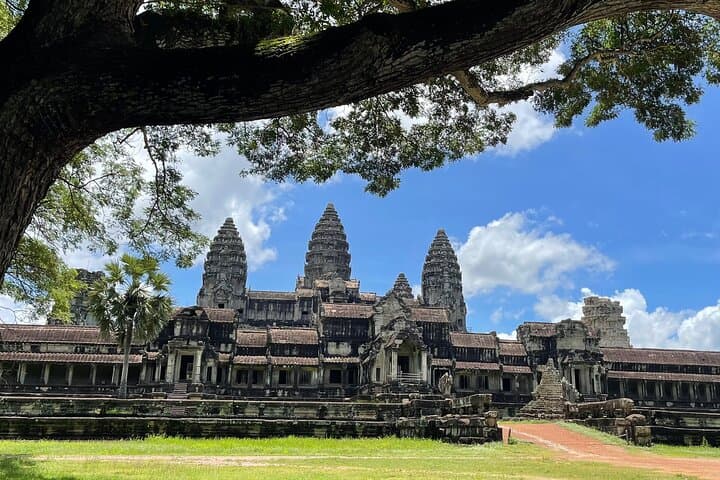
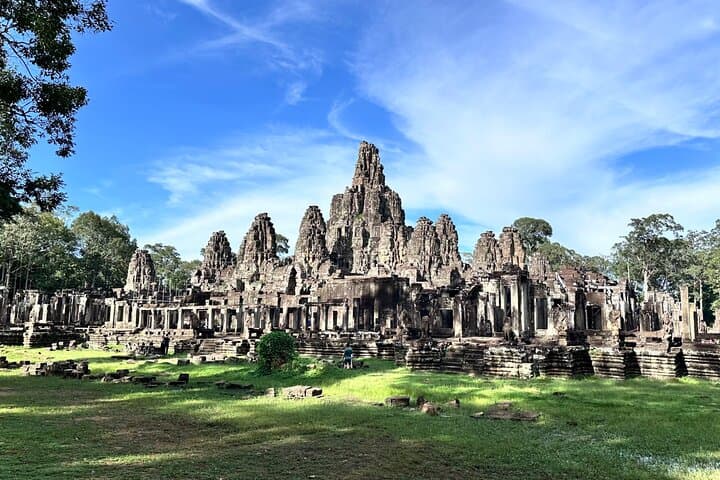
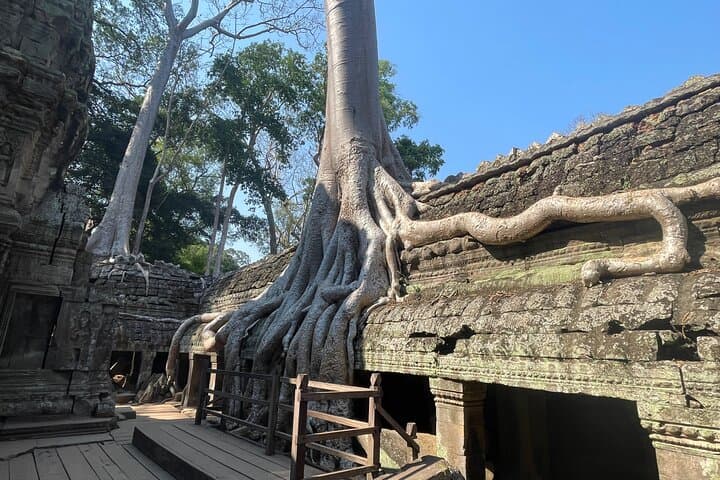
Dawn breaks behind Angkor Wat and the silhouette of carved towers sharpens against pale sky — the first day sets the tone: a week of stone, river, and remote plains. Travelers move from shadowed galleries of Ta Prohm and Bayon’s carved faces to long drives across rice paddies, stopping at market lanes and small roadside stalls where sticky rice still steams in bamboo.
Dawn breaks behind Angkor Wat and the silhouette of carved towers sharpens against pale sky — the first day sets the tone: a week of stone, river, and remote plains. Travelers move from shadowed galleries of Ta Prohm and Bayon’s carved faces to long drives across rice paddies, stopping at market lanes and small roadside stalls where sticky rice still steams in bamboo.
This route traces the rise and partial fall of the Khmer Empire: 9th–13th century capitals, mountain temples like Preah Vihear, and little-visited pyramid sites at Koh Ker and Bakong. Geology matters here — sandstone blocks quarried from distant hills, laterite foundations that weather differently, and Tonle Sap’s seasonal pulse that turns flooded forests into open water each wet season. Culture is immediate: licensed guides explain temple iconography, monks tend gilded pagodas, and palm-sugar makers demonstrate techniques unchanged for generations.
Practically, expect long driving days balanced with walking at temples that include steep steps and uneven surfaces. Mornings are best for Angkor sunrise; mid-day is hot and humid. Bring cash for remote sites, be prepared for basic facilities outside Siem Reap, and plan hotel pickup since rural transfers are part of the program.
Health and respect matter: dress modestly in temples, stay hydrated in tropical heat, and move deliberately on worn stone. With moderate fitness and a willingness to trade time on roads for off-the-beaten-path sites, this seven-day loop delivers an immersive, historically rich view of Cambodia’s landscapes and living culture.