THE ADVENTURE COLLECTIVE® · Independent discovery and booking for outdoor travel

Drive from Rabat through imperial cities, Atlas passes and river-carved gorges to reach the towering orange dunes of Merzouga. This six-day private circuit balances cultural stops with desert nights, one-hour camel transfers and luxury camp comforts.
Drive from Rabat through imperial cities, Atlas passes and river-carved gorges to reach the towering orange dunes of Merzouga. This six-day private circuit balances cultural stops with desert nights, one-hour camel transfers and luxury camp comforts.
Morning light in Rabat slides across tiled roofs and you climb into a private 4x4 with a map of two worlds: Atlantic plains behind you, Sahara ahead. Over six days the road becomes the itinerary — imperial cities, cedar forests, red-rock gorges and the great orange waves of Erg Chebbi — ending where it began.
Verified experiences and guided adventures in the surrounding area.
Operated by Quiet Merzouga Desert- Day Tours · Merzouga, Drâa-Tafilalet
Morning light in Rabat slides across tiled roofs and you climb into a private 4x4 with a map of two worlds: Atlantic plains behind you, Sahara ahead. Over six days the road becomes the itinerary — imperial cities, cedar forests, red-rock gorges and the great orange waves of Erg Chebbi — ending where it began.
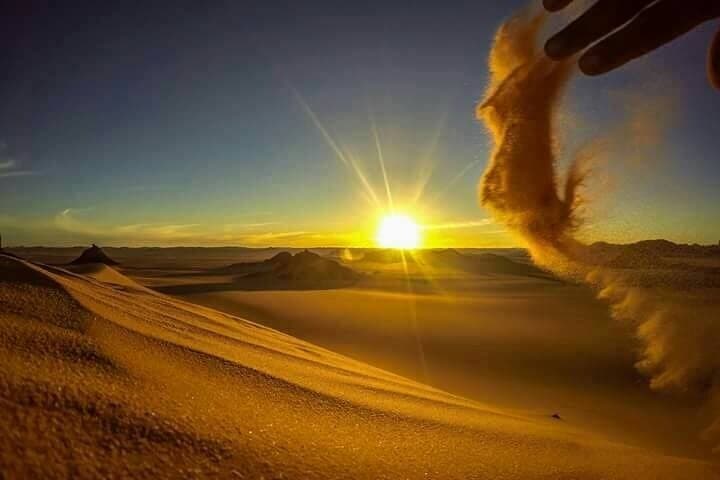
This route threads Morocco’s history: the Almohad minarets of Rabat and Meknes, the Roman stones at Volubilis, Fez’s medina with its medieval craft quarters, and the fortified ksar of Ait Ben Haddou, a UNESCO film backdrop. Geology tells a parallel story — the High Atlas, carved by uplift to passes above 2,200 m at Tizi n’Tichka, funnels runoff into valleys that feed palm oases; wind has piled Erg Chebbi’s dunes into ridges up to roughly 120–150 m high.
Cultural life here is tactile — Berber hospitality in riads, market calls in Rissani, and communal music under the stars in Merzouga’s luxury camp. Todra’s river has carved canyon walls you can walk beneath; Dades offers roadside kasbah viewpoints along the ‘‘road of a thousand kasbahs.’’
Practical edge: expect long driving segments (multiple 4–7 hour legs), one-hour camel transfers into the dunes, short guided walks in Fez and the gorges, and cool desert nights even after hot days. Pack sun protection, layered clothing, cash for souks, and a flexible itinerary window for mountain weather. Early departures and sunset/sunrise timing make the landscape come alive — and keep your camera charged.
moderate.
6 days.
Light-to-moderate fitness: fine for travelers comfortable with several hours in a vehicle, one-hour camel rides and short walks in uneven terrain.
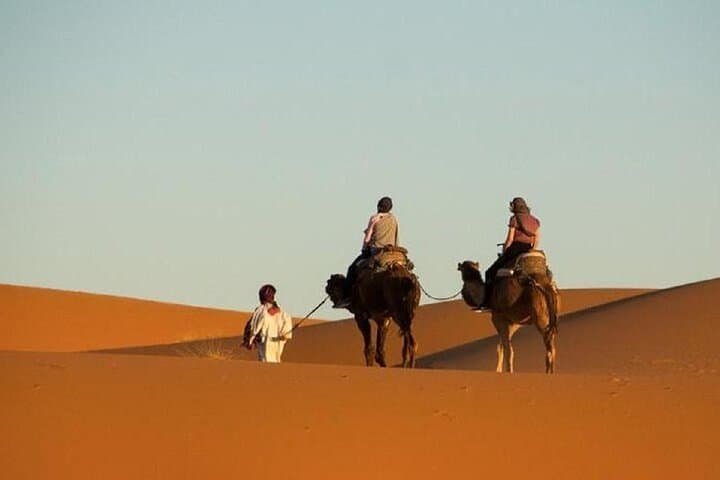
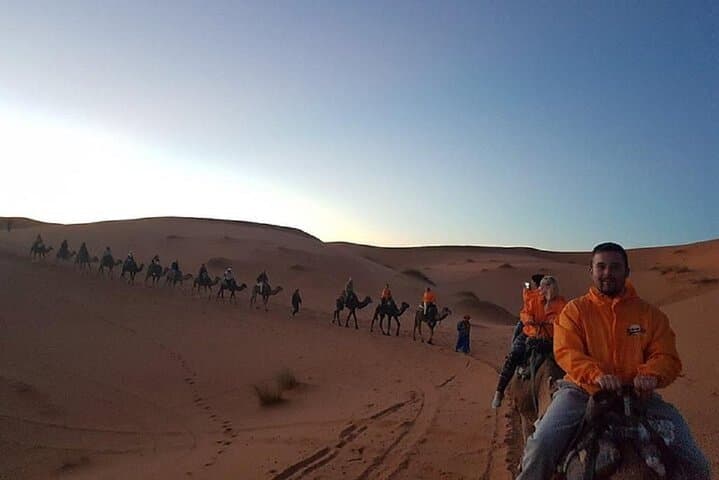
Camels typically carry guests about 45–75 minutes from the village to the edge of the camp — enough for a dune-top sunset or sunrise view.
Hotels and the luxury desert camp have restrooms; during road legs expect village facilities or planned stops at hotels and service stations.
Yes — the tour is private and paced, with short walks and mostly vehicle transfer; consult the operator about specific mobility needs or health concerns.
A local guide is included in Fez for the medina; drivers typically brief you at other stops and offer local insights, but some sites are best explored with specialist guides.
This route crosses former caravan corridors and imperial capitals — Volubilis shows Roman occupation, while kasbahs and ksour reflect centuries of Saharan trade and Berber settlement.
Water is scarce across the region; opt for refillable bottles, support locally run camps and avoid disturbing dune vegetation and wildlife.
Quiet Merzouga Desert- Day Tours operates guided outdoor trips and adventures with an emphasis on safety, stewardship, and memorable experiences.
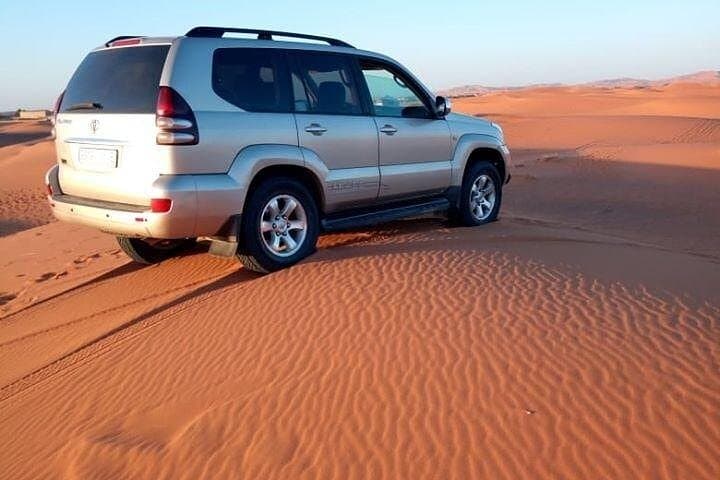
Morning light in Rabat slides across tiled roofs and you climb into a private 4x4 with a map of two worlds: Atlantic plains behind you, Sahara ahead. Over six days the road becomes the itinerary — imperial cities, cedar forests, red-rock gorges and the great orange waves of Erg Chebbi — ending where it began.
Morning light in Rabat slides across tiled roofs and you climb into a private 4x4 with a map of two worlds: Atlantic plains behind you, Sahara ahead. Over six days the road becomes the itinerary — imperial cities, cedar forests, red-rock gorges and the great orange waves of Erg Chebbi — ending where it began.
This route threads Morocco’s history: the Almohad minarets of Rabat and Meknes, the Roman stones at Volubilis, Fez’s medina with its medieval craft quarters, and the fortified ksar of Ait Ben Haddou, a UNESCO film backdrop. Geology tells a parallel story — the High Atlas, carved by uplift to passes above 2,200 m at Tizi n’Tichka, funnels runoff into valleys that feed palm oases; wind has piled Erg Chebbi’s dunes into ridges up to roughly 120–150 m high.
Cultural life here is tactile — Berber hospitality in riads, market calls in Rissani, and communal music under the stars in Merzouga’s luxury camp. Todra’s river has carved canyon walls you can walk beneath; Dades offers roadside kasbah viewpoints along the ‘‘road of a thousand kasbahs.’’
Practical edge: expect long driving segments (multiple 4–7 hour legs), one-hour camel transfers into the dunes, short guided walks in Fez and the gorges, and cool desert nights even after hot days. Pack sun protection, layered clothing, cash for souks, and a flexible itinerary window for mountain weather. Early departures and sunset/sunrise timing make the landscape come alive — and keep your camera charged.