THE ADVENTURE COLLECTIVE® · Independent discovery and booking for outdoor travel

This private five-day journey links Angkor’s great temples with the sacred slopes of Kulen and the historical, often painful, sites of Phnom Penh. Expect long days of walking on stone, short jungle hikes, and intimate cultural context delivered by a local guide.
This private five-day journey links Angkor’s great temples with the sacred slopes of Kulen and the historical, often painful, sites of Phnom Penh. Expect long days of walking on stone, short jungle hikes, and intimate cultural context delivered by a local guide.
Dawn arrives over the outer moat of Angkor Wat and the first light sharpens carved apsaras and lotus columns into silhouette. On this private five-day route, travelers move from the slow river of temple stones at Angkor to the high green shoulders of Kulen Mountain, then cross Cambodia’s lowland rice plains toward Phnom Penh’s colonial avenues and sobering memorials.
Verified experiences and guided adventures in the surrounding area.
Operated by Private Tour Guide-Cambodia · Siem Reap, Siem Reap Province
Dawn arrives over the outer moat of Angkor Wat and the first light sharpens carved apsaras and lotus columns into silhouette. On this private five-day route, travelers move from the slow river of temple stones at Angkor to the high green shoulders of Kulen Mountain, then cross Cambodia’s lowland rice plains toward Phnom Penh’s colonial avenues and sobering memorials.
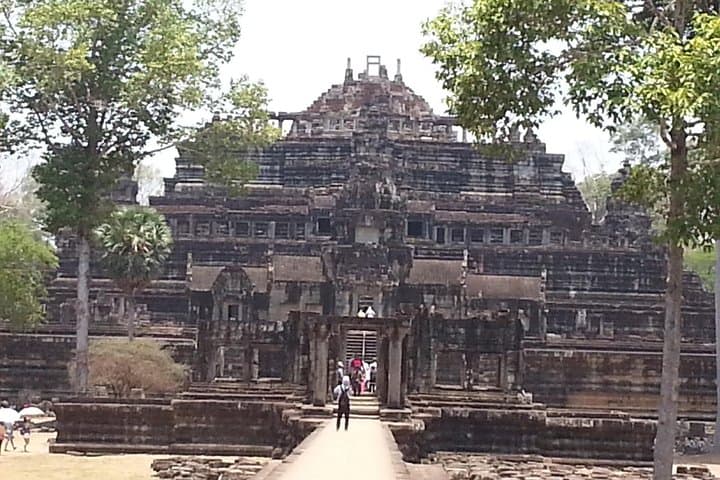
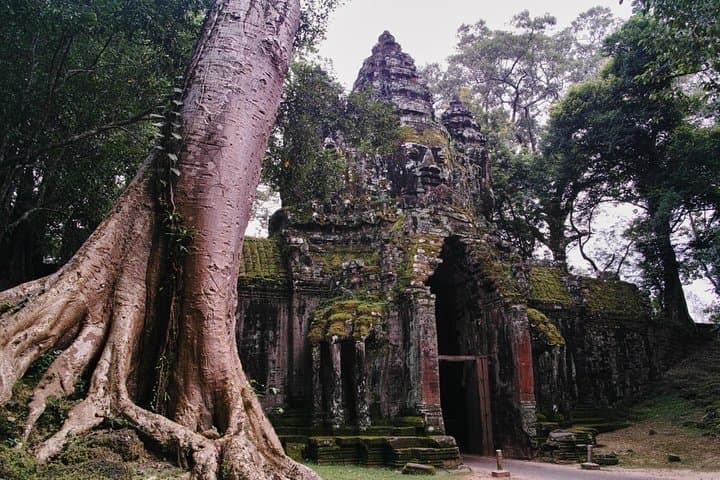
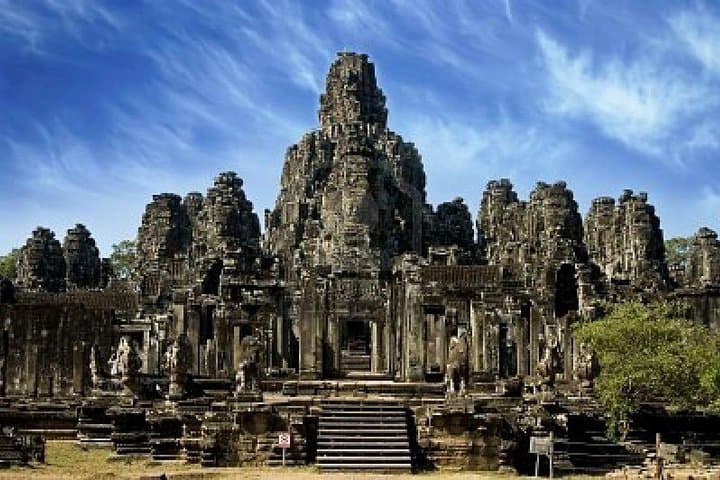
The itinerary threads centuries of Khmer history: 9th–12th century brick prasats at Sambor Prei Kuk and the compact pink carvings of Banteay Srei through to the high-classical massing of Angkor Wat. Geology here is simple but visible — sandstone blocks quarried and mortared into towers, kapok and fig trees prying at joints and reworking surfaces. Local life still orbits these sites: village markets, paddy irrigation, and monks in saffron moving through temple courtyards.
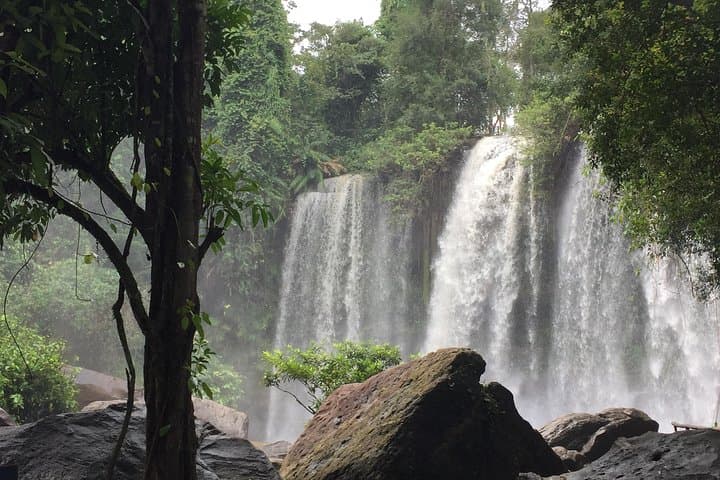
Expect varied terrain — broad flagstones, moss-slick steps, jungle tracks up Kulen, and short swims beneath a waterfall — and long travel days between Siem Reap and Phnom Penh. The Phnom Penh portion is modern history in stark relief: the Royal Palace’s 19th-century pavilions, then the memorial sites that document the Khmer Rouge era.
Practical guidance: book sunrise at Angkor Wat and reserve time at Ta Prohm and Beng Mealea when light softens and crowds thin. Carry a refillable water bottle, sun protection, sturdy soles for uneven stone, and a lightweight rain shell during the wet season. Respect temple dress codes and allow extra time for rural photo stops; the private guide will pace each day to match mobility and interest.
moderate.
5 days.
Comfortable with multiple long days of walking and short hikes; able to navigate uneven stone and steps.
Most private tour rates exclude the official Angkor Archaeological Park pass; confirm whether the tour price covers park entry and purchase tickets in advance if needed.
It’s moderate: long days of walking and short uphill sections at sites like Kulen, but the itinerary is suitable for most who can manage several hours on foot each day.
Yes — visits to Toul Sleng and the Killing Fields are confronting; guides provide context and you can shorten or skip these visits if preferred.
The tour offers transport and many sites are accessible, but temple interiors and jungle sites have uneven terrain; discuss needs with the operator to plan alternatives.
The Khmer Empire built Angkor as a hydraulic and religious capital between the 9th and 15th centuries; many temples reflect shifts from Hindu to Buddhist practice over time.
Visitor pressure stresses sandstone monuments and forested temple environs — stick to marked paths, avoid touching carvings, and use refillable bottles to reduce plastic waste.
Private Tour Guide-Cambodia operates guided outdoor trips and adventures with an emphasis on safety, stewardship, and memorable experiences.
Dawn arrives over the outer moat of Angkor Wat and the first light sharpens carved apsaras and lotus columns into silhouette. On this private five-day route, travelers move from the slow river of temple stones at Angkor to the high green shoulders of Kulen Mountain, then cross Cambodia’s lowland rice plains toward Phnom Penh’s colonial avenues and sobering memorials.
Dawn arrives over the outer moat of Angkor Wat and the first light sharpens carved apsaras and lotus columns into silhouette. On this private five-day route, travelers move from the slow river of temple stones at Angkor to the high green shoulders of Kulen Mountain, then cross Cambodia’s lowland rice plains toward Phnom Penh’s colonial avenues and sobering memorials.
The itinerary threads centuries of Khmer history: 9th–12th century brick prasats at Sambor Prei Kuk and the compact pink carvings of Banteay Srei through to the high-classical massing of Angkor Wat. Geology here is simple but visible — sandstone blocks quarried and mortared into towers, kapok and fig trees prying at joints and reworking surfaces. Local life still orbits these sites: village markets, paddy irrigation, and monks in saffron moving through temple courtyards.
Expect varied terrain — broad flagstones, moss-slick steps, jungle tracks up Kulen, and short swims beneath a waterfall — and long travel days between Siem Reap and Phnom Penh. The Phnom Penh portion is modern history in stark relief: the Royal Palace’s 19th-century pavilions, then the memorial sites that document the Khmer Rouge era.
Practical guidance: book sunrise at Angkor Wat and reserve time at Ta Prohm and Beng Mealea when light softens and crowds thin. Carry a refillable water bottle, sun protection, sturdy soles for uneven stone, and a lightweight rain shell during the wet season. Respect temple dress codes and allow extra time for rural photo stops; the private guide will pace each day to match mobility and interest.