THE ADVENTURE COLLECTIVE® · Independent discovery and booking for outdoor travel

Explore Easter Island’s moai, volcanic craters and coastal ahu on a private five-day tour that combines guided archaeology, cave trekking, horseback to Terevaka and sunrise at Ahu Tongariki. Ideal for travelers with moderate fitness seeking a focused cultural immersion.
Explore Easter Island’s moai, volcanic craters and coastal ahu on a private five-day tour that combines guided archaeology, cave trekking, horseback to Terevaka and sunrise at Ahu Tongariki. Ideal for travelers with moderate fitness seeking a focused cultural immersion.
You step off the plane into a wind that smells of salt and volcanic rock, and Hanga Roa opens in low, sun-bleached houses and a horizon where the Pacific keeps its distance like an attentive guardian.
Verified experiences and guided adventures in the surrounding area.
Operated by Kava Kava Tours · Hanga Roa, Valparaíso Region
You step off the plane into a wind that smells of salt and volcanic rock, and Hanga Roa opens in low, sun-bleached houses and a horizon where the Pacific keeps its distance like an attentive guardian.
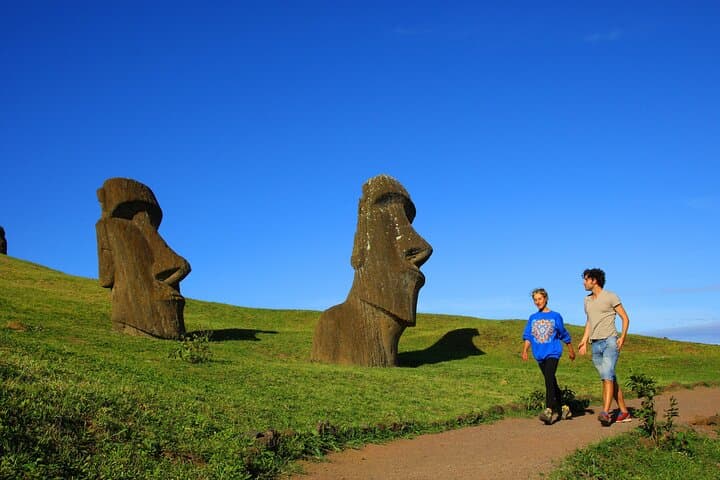
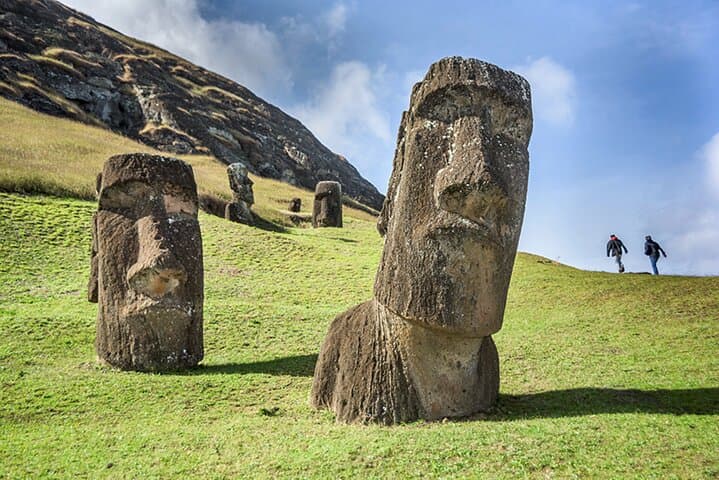
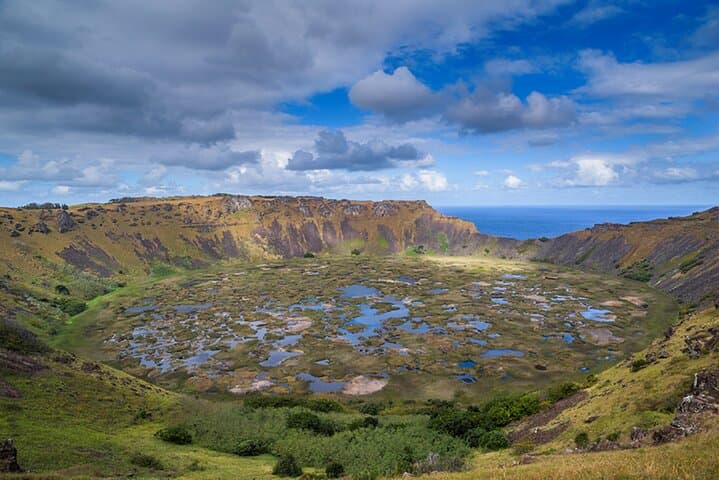
Over five days this private itinerary stitches together crater rims, quarry faces, ceremonial ahu and white coral beaches. Start at Rano Kau’s green crater — its rim guarding endemic flora and the ruins of Orongo, where the Birdman ritual once crowned leaders — then move to Rano Raraku, the tuff quarry where half-finished moai still lean against the earth like interrupted thoughts.
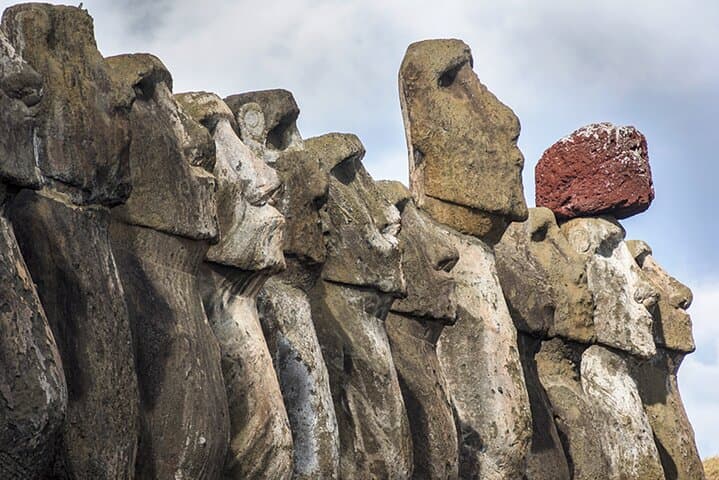
Geology here is literal: tuff, basalt and red scoria define how statues were carved, rolled and re-erected on stone platforms facing out to the sea. Culturally, the moai and ahu trace a society that linked astronomy, ancestry and ocean travel; later conflict and resource strain explain the toppling seen at many sites.
Practically, expect mixed terrain: dirt tracks, rocky quarry slopes and short cave scrambles in Ana Te Pahu and Ana Kakenga. The days balance walking, short drives and a horseback ascent of Terevaka for a 360° view. Weather can shift quickly — sun, wind and occasional showers — so layer and time outdoor sessions for morning or late afternoon light, especially at Tongariki for sunrise.
Bring a moderate fitness baseline: several hours on your feet, uneven ground and brief climbs. Guides handle logistics and local context; you provide steady shoes, sun protection and curiosity. With private transport and lunches included, the tour compresses the island’s deep past into five active days of discovery.
moderate.
5 days.
Moderate fitness—able to walk 3–6 hours per day on uneven ground, short climbs and some stair or cave scrambles
Most major sites are accessible without a special permit, but entry fees to the Rapa Nui National Park apply and are typically handled at park kiosks or by your guide.
The tour is private and can be paced, but several activities include uneven terrain and cave passages; guests should disclose mobility limits when booking.
Many guides speak Spanish and English; confirm language needs at booking for a private guide who meets your preference.
The itinerary lists private transportation, hotel pickup/drop-off and two lunches included—verify exact meal coverage at booking confirmation.
Rapa Nui’s monumental moai were carved primarily from the volcanic tuff of Rano Raraku; shifting social structures and environmental pressures later led to statue toppling and population decline.
Rapa Nui National Park protects archaeological sites and endemic species; visitors are asked to stay on trails, avoid removing artifacts and support local conservation fees.
Kava Kava Tours operates guided outdoor trips and adventures with an emphasis on safety, stewardship, and memorable experiences.
You step off the plane into a wind that smells of salt and volcanic rock, and Hanga Roa opens in low, sun-bleached houses and a horizon where the Pacific keeps its distance like an attentive guardian.
You step off the plane into a wind that smells of salt and volcanic rock, and Hanga Roa opens in low, sun-bleached houses and a horizon where the Pacific keeps its distance like an attentive guardian.
Over five days this private itinerary stitches together crater rims, quarry faces, ceremonial ahu and white coral beaches. Start at Rano Kau’s green crater — its rim guarding endemic flora and the ruins of Orongo, where the Birdman ritual once crowned leaders — then move to Rano Raraku, the tuff quarry where half-finished moai still lean against the earth like interrupted thoughts.
Geology here is literal: tuff, basalt and red scoria define how statues were carved, rolled and re-erected on stone platforms facing out to the sea. Culturally, the moai and ahu trace a society that linked astronomy, ancestry and ocean travel; later conflict and resource strain explain the toppling seen at many sites.
Practically, expect mixed terrain: dirt tracks, rocky quarry slopes and short cave scrambles in Ana Te Pahu and Ana Kakenga. The days balance walking, short drives and a horseback ascent of Terevaka for a 360° view. Weather can shift quickly — sun, wind and occasional showers — so layer and time outdoor sessions for morning or late afternoon light, especially at Tongariki for sunrise.
Bring a moderate fitness baseline: several hours on your feet, uneven ground and brief climbs. Guides handle logistics and local context; you provide steady shoes, sun protection and curiosity. With private transport and lunches included, the tour compresses the island’s deep past into five active days of discovery.