THE ADVENTURE COLLECTIVE® · Independent discovery and booking for outdoor travel

A full-day private 4x4 from Djerba or Zarzis that crosses Roman causeways and desert plains to reach the thermal oasis of Ksar Ghilane, with time for a soak, lunch and visits to Ksar Hadada and a Roman fort.
A full-day private 4x4 from Djerba or Zarzis that crosses Roman causeways and desert plains to reach the thermal oasis of Ksar Ghilane, with time for a soak, lunch and visits to Ksar Hadada and a Roman fort.
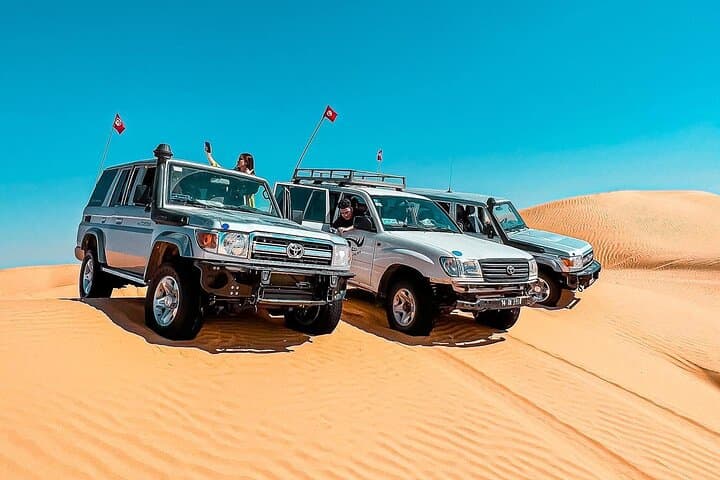
Sand lifts and falls like pages turning as your 4x4 pushes away from the coast and into open Saharan light. Early in the day the road slips from scrubby hills to wind-swept plains; by midafternoon the palms of Ksar Ghilane appear like an unexpected green grammar in a desert sentence. The oasis’s warm spring invites a quiet soak while dunes lean in with the promise of a short, sharp climb.
Verified experiences and guided adventures in the surrounding area.
Operated by Israa Travel Agency · Ksar Ghilane, Tataouine Governorate
Sand lifts and falls like pages turning as your 4x4 pushes away from the coast and into open Saharan light. Early in the day the road slips from scrubby hills to wind-swept plains; by midafternoon the palms of Ksar Ghilane appear like an unexpected green grammar in a desert sentence. The oasis’s warm spring invites a quiet soak while dunes lean in with the promise of a short, sharp climb.
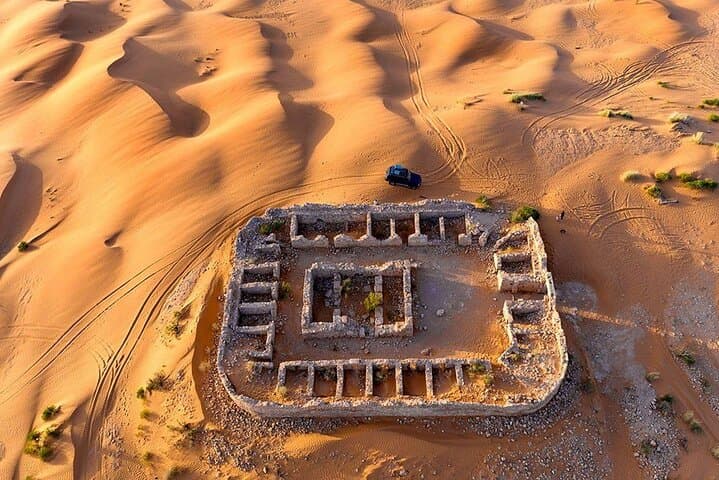
This route threads Roman engineering, Berber architecture and recent pop culture: the causeway linking Djerba to the mainland dates to the late 2nd century, and nearby Ksar Hadada preserves thick adobe walls and narrow lanes—one of the sites used in Star Wars filming. Geologically the region is limestone and sandstone shaped by wind, with sand seas forming where occasional wadis slow and drop their load.
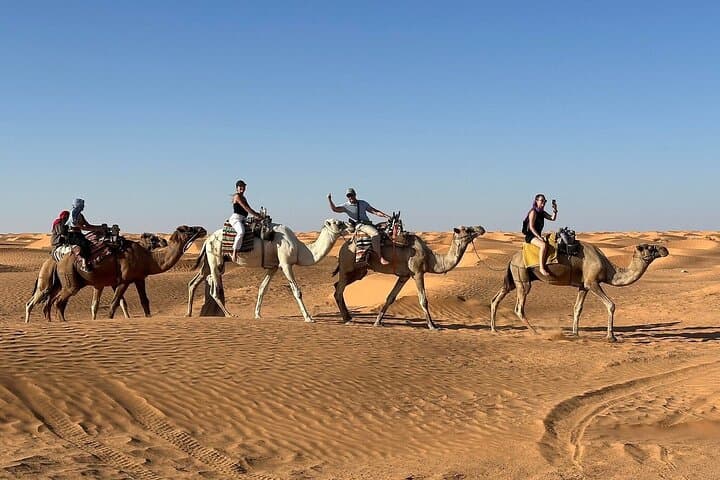
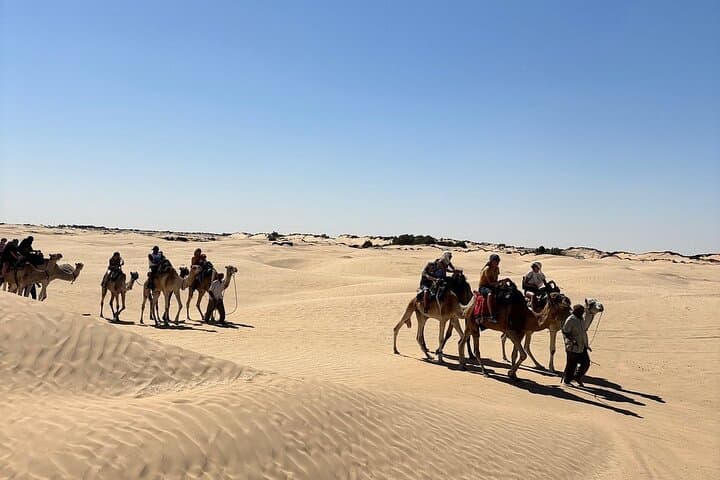
Culturally, expect simple hospitality: a staffed restaurant near the dunes and local guides approved by Tunisia’s tourist office. Typical day-trip rhythms include long highway drives punctuated by short walks, a lunch of regional staples, optional camel or quad rides, and time to bathe in the thermal spring.
Practical guidance: bring layered sun protection, at least 2 liters of water, and comfortable shoes for uneven sand and stone. If you’re prone to motion sickness, take precautions for the long drives across corrugated desert roads. Travel light during summer heat; aim to visit in morning or late afternoon for softer light and cooler temperatures. The trip suits travelers who want cultural touchpoints alongside straightforward desert adventure.
easy.
10–11 hours.
Light fitness; mostly driven with short walks on sand and uneven village streets
Expect roughly 2 to 2.5 hours of driving each way from Djerba depending on traffic and stops; the full tour runs about 10–11 hours.
Yes—locals and visitors commonly bathe in the warm spring; avoid if you have open wounds and rinse with fresh water afterward.
Camel and quad rides are usually optional extras on site, not included in the standard tour price—confirm and budget accordingly.
Yes; the tour notes it’s suitable for all ages with minimal walking, though the long vehicle time may be tiring for very young children or those with mobility issues.
The Roman causeway (El Kantara) connecting Djerba to the mainland dates to the late 2nd century, and ksour like Ksar Hadada reflect centuries of fortified Berber settlement and adobe construction.
The oasis is a fragile water source—avoid littering, minimize groundwater use, and choose operators who limit vehicle impact on dunes.
Israa Travel Agency operates guided outdoor trips and adventures with an emphasis on safety, stewardship, and memorable experiences.
Sand lifts and falls like pages turning as your 4x4 pushes away from the coast and into open Saharan light. Early in the day the road slips from scrubby hills to wind-swept plains; by midafternoon the palms of Ksar Ghilane appear like an unexpected green grammar in a desert sentence. The oasis’s warm spring invites a quiet soak while dunes lean in with the promise of a short, sharp climb.
Sand lifts and falls like pages turning as your 4x4 pushes away from the coast and into open Saharan light. Early in the day the road slips from scrubby hills to wind-swept plains; by midafternoon the palms of Ksar Ghilane appear like an unexpected green grammar in a desert sentence. The oasis’s warm spring invites a quiet soak while dunes lean in with the promise of a short, sharp climb.
This route threads Roman engineering, Berber architecture and recent pop culture: the causeway linking Djerba to the mainland dates to the late 2nd century, and nearby Ksar Hadada preserves thick adobe walls and narrow lanes—one of the sites used in Star Wars filming. Geologically the region is limestone and sandstone shaped by wind, with sand seas forming where occasional wadis slow and drop their load.
Culturally, expect simple hospitality: a staffed restaurant near the dunes and local guides approved by Tunisia’s tourist office. Typical day-trip rhythms include long highway drives punctuated by short walks, a lunch of regional staples, optional camel or quad rides, and time to bathe in the thermal spring.
Practical guidance: bring layered sun protection, at least 2 liters of water, and comfortable shoes for uneven sand and stone. If you’re prone to motion sickness, take precautions for the long drives across corrugated desert roads. Travel light during summer heat; aim to visit in morning or late afternoon for softer light and cooler temperatures. The trip suits travelers who want cultural touchpoints alongside straightforward desert adventure.