THE ADVENTURE COLLECTIVE® · Independent discovery and booking for outdoor travel

Four days of karst lakes, ethnic homestays and one of Vietnam’s widest waterfalls—this private tour moves from Hanoi into the wild north to combine boat rides on Ba Be Lake with the dramatic Ban Gioc cascade. Expect riverside stilt houses, cave passages and market stops in a remote borderland.
Four days of karst lakes, ethnic homestays and one of Vietnam’s widest waterfalls—this private tour moves from Hanoi into the wild north to combine boat rides on Ba Be Lake with the dramatic Ban Gioc cascade. Expect riverside stilt houses, cave passages and market stops in a remote borderland.
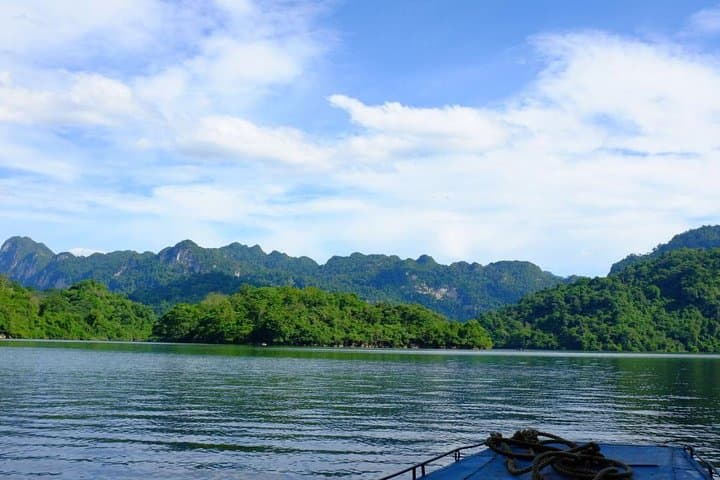
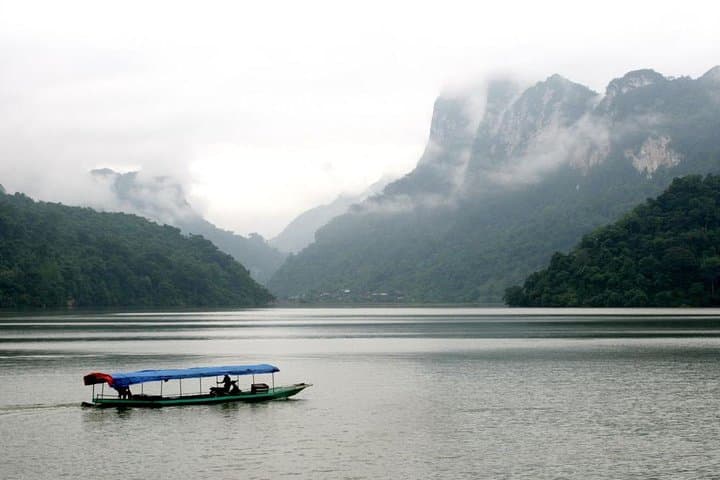
You begin before dawn on a highway that peels away from Hanoi’s bustle and climbs into limestone ridges, the road pointing you toward quiet water and a frontier waterfall. At Ba Be Lake the Nang River threads through karst cliffs; wooden boats slip around jutting islands and the water dares you to slow down. At Puong Grotto and Widow Island, limestone cliffs watch like patient hosts while stilt houses and Tay village life mark the shoreline.
Verified experiences and guided adventures in the surrounding area.
Operated by Asia Package Travel · Ba Be, Bac Kan Province
You begin before dawn on a highway that peels away from Hanoi’s bustle and climbs into limestone ridges, the road pointing you toward quiet water and a frontier waterfall. At Ba Be Lake the Nang River threads through karst cliffs; wooden boats slip around jutting islands and the water dares you to slow down. At Puong Grotto and Widow Island, limestone cliffs watch like patient hosts while stilt houses and Tay village life mark the shoreline.
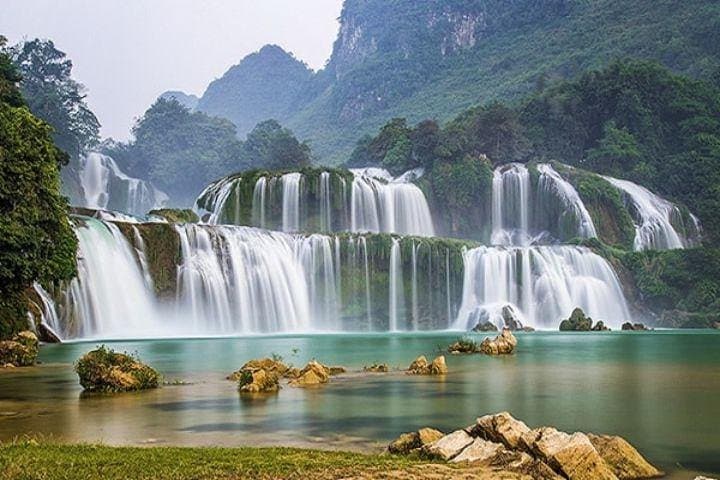
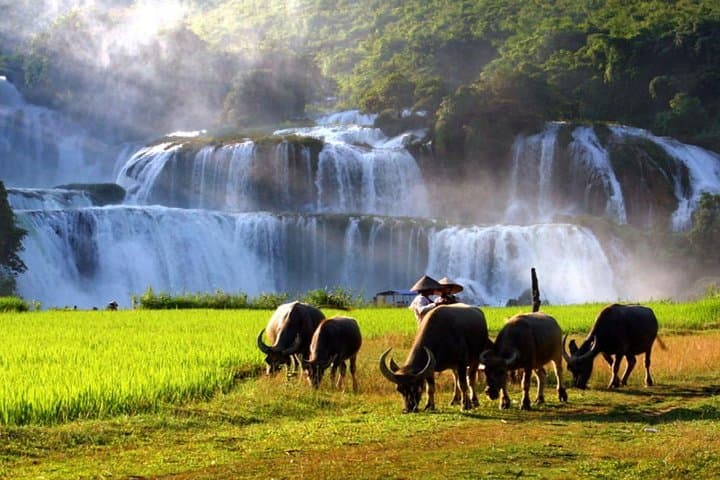
The region’s history is carved from geology and culture: Ba Be’s freshwater basin sits in a collapsed karst valley formed millions of years ago, while nearby borderlands around Ban Gioc have long been a crossroads for Tay, Nung and other ethnic groups trading across rugged passes. Ban Gioc itself is a curtain of water divided by islets and the border, pouring over multiple drops across a 300-meter span; downstream the Nguom Ngao cave fibers tell an erosional story in stalactites and flowstone.
Practically, the itinerary is travel-forward: expect two nights in homestays, one hotel night, multiple drives (Hanoi–Ba Be ≈230 km), a private boat on the Nang River, and a bamboo boat ride close to the falls. Bring adaptable footwear for wet riverbanks and cave floors, carry cash for small markets, and set aside time to rise early for better light and cooler travel. Guides will arrange transfers and most meals, but a small daypack with rain layers, water, and insect repellent keeps the experience smooth. This is a trip that balances cultural immersion and active sightseeing—perfect for travelers who want scenery, geology and local life without roughing it beyond a moderate level of effort.
moderate.
4 days.
Moderate fitness—comfortable with long vehicle transfers, short hikes, boat boarding and uneven cave floors.
Yes—bring a current valid passport on the day of travel; border-area checkpoints may request identification.
The tour is moderate: mostly sightseeing, short hikes, boat rides and cave walks; a basic level of mobility is required.
Homestays are simple and locally run—expect shared facilities, basic bedding, home-cooked meals and strong cultural interaction.
Fall (September–November) and spring (March–May) offer the most comfortable weather and good waterfall flow; summer can be very wet.
The Ba Be basin and surrounding highlands have long been inhabited by Tay, Nung and other minorities; trade routes here have linked communities across what is now the Vietnam-China border for centuries.
Ba Be is a protected national park—travelers should avoid single-use plastics, stick to marked paths and follow guides to minimize disturbance to water and cave ecosystems.
Asia Package Travel operates guided outdoor trips and adventures with an emphasis on safety, stewardship, and memorable experiences.
You begin before dawn on a highway that peels away from Hanoi’s bustle and climbs into limestone ridges, the road pointing you toward quiet water and a frontier waterfall. At Ba Be Lake the Nang River threads through karst cliffs; wooden boats slip around jutting islands and the water dares you to slow down. At Puong Grotto and Widow Island, limestone cliffs watch like patient hosts while stilt houses and Tay village life mark the shoreline.
You begin before dawn on a highway that peels away from Hanoi’s bustle and climbs into limestone ridges, the road pointing you toward quiet water and a frontier waterfall. At Ba Be Lake the Nang River threads through karst cliffs; wooden boats slip around jutting islands and the water dares you to slow down. At Puong Grotto and Widow Island, limestone cliffs watch like patient hosts while stilt houses and Tay village life mark the shoreline.
The region’s history is carved from geology and culture: Ba Be’s freshwater basin sits in a collapsed karst valley formed millions of years ago, while nearby borderlands around Ban Gioc have long been a crossroads for Tay, Nung and other ethnic groups trading across rugged passes. Ban Gioc itself is a curtain of water divided by islets and the border, pouring over multiple drops across a 300-meter span; downstream the Nguom Ngao cave fibers tell an erosional story in stalactites and flowstone.
Practically, the itinerary is travel-forward: expect two nights in homestays, one hotel night, multiple drives (Hanoi–Ba Be ≈230 km), a private boat on the Nang River, and a bamboo boat ride close to the falls. Bring adaptable footwear for wet riverbanks and cave floors, carry cash for small markets, and set aside time to rise early for better light and cooler travel. Guides will arrange transfers and most meals, but a small daypack with rain layers, water, and insect repellent keeps the experience smooth. This is a trip that balances cultural immersion and active sightseeing—perfect for travelers who want scenery, geology and local life without roughing it beyond a moderate level of effort.