THE ADVENTURE COLLECTIVE® · Independent discovery and booking for outdoor travel

Leave the city lights behind and let a private guide hunt for clear sky. This three-hour Reykjavík pickup tour prioritizes mobility and timing to give you the best short-window chance of seeing the Aurora Borealis.
Leave the city lights behind and let a private guide hunt for clear sky. This three-hour Reykjavík pickup tour prioritizes mobility and timing to give you the best short-window chance of seeing the Aurora Borealis.
You step out of Reykjavík’s grid of streetlamps and into a different dark—one that feels intentional, wide and expectant. The van hums as the guide scans the sky and the weather apps; headlights slice through coastal fog while the driver steers toward clearer horizons. In the hours that follow, the black above becomes restless: pale green curtains swell, then ripple into bands that push and fold, as if the sky itself is breathing.
Verified experiences and guided adventures in the surrounding area.
Operated by Otto The Viking · Reykjavík, Capital Region
You step out of Reykjavík’s grid of streetlamps and into a different dark—one that feels intentional, wide and expectant. The van hums as the guide scans the sky and the weather apps; headlights slice through coastal fog while the driver steers toward clearer horizons. In the hours that follow, the black above becomes restless: pale green curtains swell, then ripple into bands that push and fold, as if the sky itself is breathing.
Iceland’s aurora shows are a collision of solar storms and magnetism. Charged particles from the sun meet Earth’s magnetic field high above, exciting atoms and producing the light show many travelers prize. Geographically, Iceland sits near the auroral oval, which increases odds of sightings; practically, success often comes down to clouds and timing. That’s why private, three-hour outings out of Reykjavík exist—to chase open sky quickly when conditions shift.
This short, private run is a night-driven, logistics-minded approach: guides monitor KP indices and local cloud cover, then ferry small groups to coastal or inland vantage points chosen for darkness and horizon breadth. Stops are flexible—fields west of the city, lava plains on the Reykjanes Peninsula, or sheltered bays—so guests trade the ritual of a fixed viewpoint for dynamic placement.
Culturally, seeing the aurora in Icelandity is part spectacle and part comfort: guides frequently hand out thermal blankets, hot coffee and bite-sized local snacks to keep the wait convivial. Historically, Northern Lights shaped northern lore—interpreted over centuries as omens or spirits—while modern Icelanders treat aurora-chasing as a practical night craft, blending meteorology with hospitality.
Practicalities are straightforward. The tour runs 180 minutes and includes pickup from central Reykjavík hotels (pickup starts 10 minutes before departure). Guides supply on-board Wi‑Fi, snacks, and hot drinks; infant seats and stroller access are available. Because visibility is weather-dependent, the exact viewing site can change mid-tour; cancellations for a full refund are accepted up to 24 hours beforehand.
Prepare for cold, not cardio: nights are still and sharp, and even brief pauses outside can chill you. Dress in layered, insulated clothing, bring a charged camera and spare batteries (they drain fast in low temperatures), and plan to be flexible—sometimes the lights arrive as a vivid crescendo, sometimes as a distant whisper. For travelers who want high odds without committing to a multi-night chase, this private three-hour option balances mobility, local insight and the quiet thrill of standing beneath a moving sky.
easy.
3 hours.
No special fitness required beyond the ability to stand outdoors in cold for the duration; suitable for most travelers.
Auroras are most likely between September and April when nights are long; departures run after dark and last about three hours.
Guides monitor conditions and will move locations during the tour; if weather prevents any opportunity, cancelations within 24 hours are fully refundable per policy.
Yes—stroller access and infant seats are available, but bring warm clothing for little ones as temperatures can be extreme.
No—the tour is for observers and photographers; guides can offer basic tips, but you do not need prior experience to enjoy the show.
This listing is for a private tour, meaning the vehicle and guide are dedicated to your booking to increase flexibility and viewing options.
Yes—guides supply hot coffee or tea and snacks to keep the wait comfortable while you watch for aurora activity.
Aurora lore runs deep in northern cultures; Icelandic sagas and seafaring records note auroral sightings for centuries, blending observation with superstition.
Tours emphasize low-impact viewing—stay on established parking areas, pack out waste, and avoid bright lights that reduce visibility for others.
Otto The Viking operates guided outdoor trips and adventures with an emphasis on safety, stewardship, and memorable experiences.
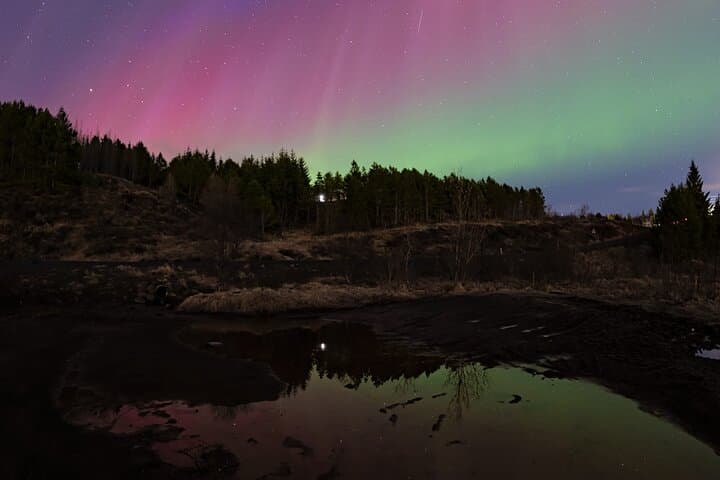
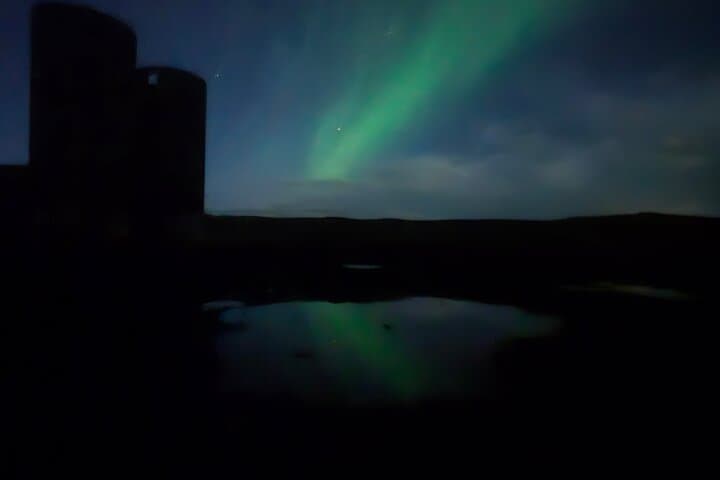
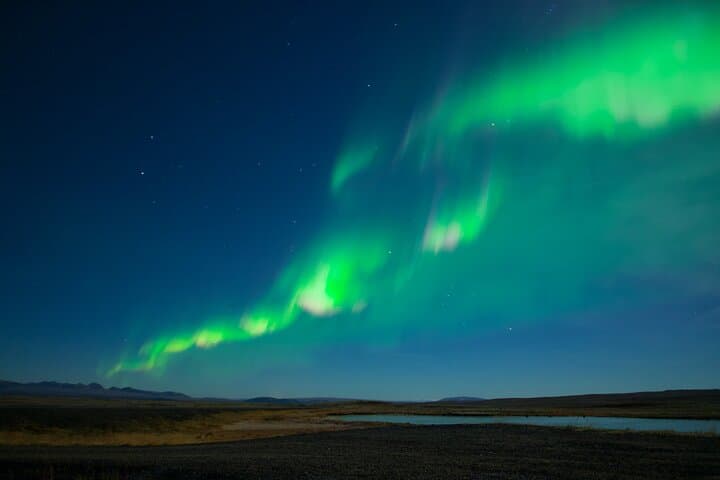
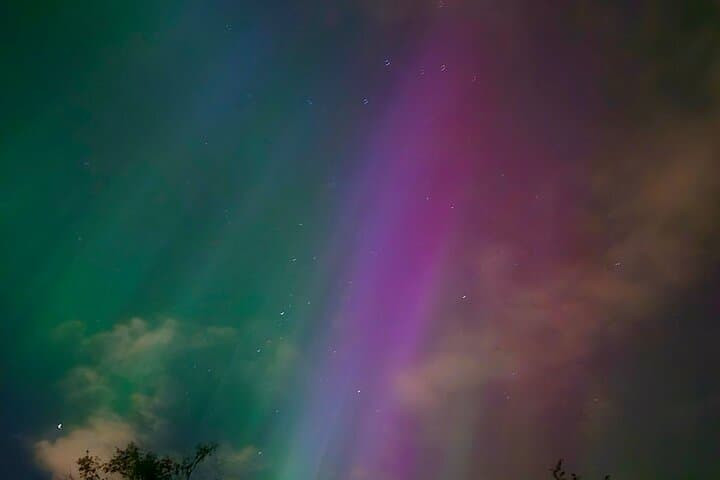
You step out of Reykjavík’s grid of streetlamps and into a different dark—one that feels intentional, wide and expectant. The van hums as the guide scans the sky and the weather apps; headlights slice through coastal fog while the driver steers toward clearer horizons. In the hours that follow, the black above becomes restless: pale green curtains swell, then ripple into bands that push and fold, as if the sky itself is breathing.
You step out of Reykjavík’s grid of streetlamps and into a different dark—one that feels intentional, wide and expectant. The van hums as the guide scans the sky and the weather apps; headlights slice through coastal fog while the driver steers toward clearer horizons. In the hours that follow, the black above becomes restless: pale green curtains swell, then ripple into bands that push and fold, as if the sky itself is breathing.
Iceland’s aurora shows are a collision of solar storms and magnetism. Charged particles from the sun meet Earth’s magnetic field high above, exciting atoms and producing the light show many travelers prize. Geographically, Iceland sits near the auroral oval, which increases odds of sightings; practically, success often comes down to clouds and timing. That’s why private, three-hour outings out of Reykjavík exist—to chase open sky quickly when conditions shift.
This short, private run is a night-driven, logistics-minded approach: guides monitor KP indices and local cloud cover, then ferry small groups to coastal or inland vantage points chosen for darkness and horizon breadth. Stops are flexible—fields west of the city, lava plains on the Reykjanes Peninsula, or sheltered bays—so guests trade the ritual of a fixed viewpoint for dynamic placement.
Culturally, seeing the aurora in Icelandity is part spectacle and part comfort: guides frequently hand out thermal blankets, hot coffee and bite-sized local snacks to keep the wait convivial. Historically, Northern Lights shaped northern lore—interpreted over centuries as omens or spirits—while modern Icelanders treat aurora-chasing as a practical night craft, blending meteorology with hospitality.
Practicalities are straightforward. The tour runs 180 minutes and includes pickup from central Reykjavík hotels (pickup starts 10 minutes before departure). Guides supply on-board Wi‑Fi, snacks, and hot drinks; infant seats and stroller access are available. Because visibility is weather-dependent, the exact viewing site can change mid-tour; cancellations for a full refund are accepted up to 24 hours beforehand.
Prepare for cold, not cardio: nights are still and sharp, and even brief pauses outside can chill you. Dress in layered, insulated clothing, bring a charged camera and spare batteries (they drain fast in low temperatures), and plan to be flexible—sometimes the lights arrive as a vivid crescendo, sometimes as a distant whisper. For travelers who want high odds without committing to a multi-night chase, this private three-hour option balances mobility, local insight and the quiet thrill of standing beneath a moving sky.