THE ADVENTURE COLLECTIVE® · Independent discovery and booking for outdoor travel

Three days of Iceland’s headline landscapes without the logistics: Þingvellir and geysers on day one, waterfalls and black sand beaches on day two, and Jökulsárlón’s glacial ice on day three. This private tour balances scenic stops with local insights and winter options like ice caves and northern lights.
Three days of Iceland’s headline landscapes without the logistics: Þingvellir and geysers on day one, waterfalls and black sand beaches on day two, and Jökulsárlón’s glacial ice on day three. This private tour balances scenic stops with local insights and winter options like ice caves and northern lights.
You step out of the van and the air is all edges — cold, sharp, and tasting faintly of volcanic glass. On day one the landscape rearranges itself around you: moss-dark lava fields give way to the rift valley of Þingvellir, where the North American and Eurasian plates pull the earth apart in slow, visible seams. By day three you are watching blue ice calve off a glacier into a lagoon where bergs drift like oversized, deliberate jewelry toward the sea.
Verified experiences and guided adventures in the surrounding area.
Operated by Iceland Settlement Tours · Reykjavik, Capital Region
You step out of the van and the air is all edges — cold, sharp, and tasting faintly of volcanic glass. On day one the landscape rearranges itself around you: moss-dark lava fields give way to the rift valley of Þingvellir, where the North American and Eurasian plates pull the earth apart in slow, visible seams. By day three you are watching blue ice calve off a glacier into a lagoon where bergs drift like oversized, deliberate jewelry toward the sea.
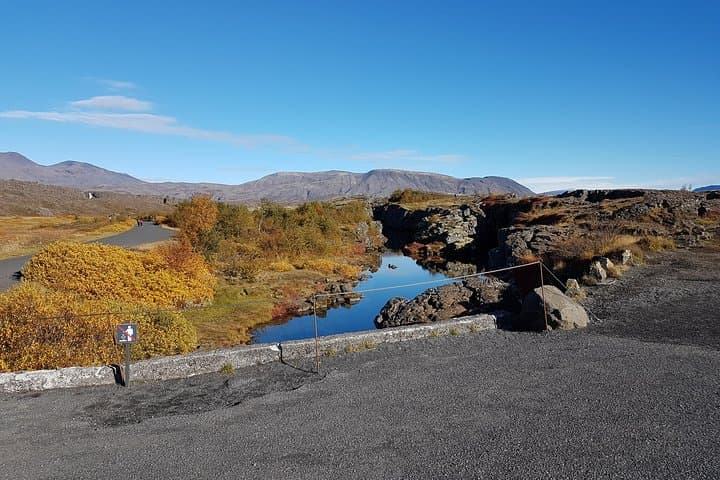
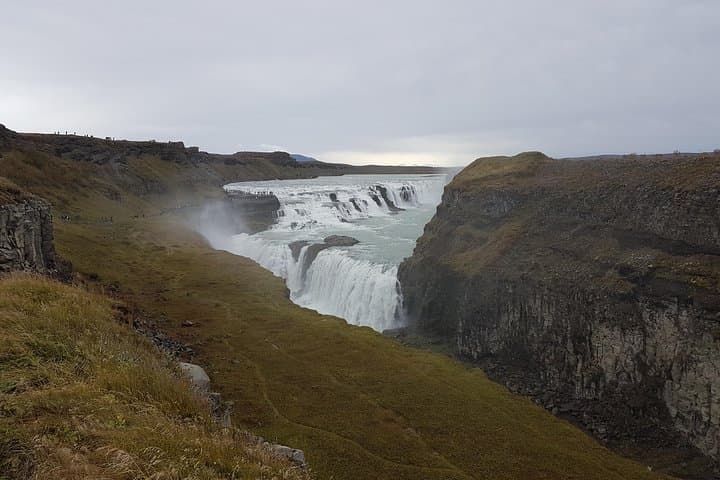
This private, three-day loop from Reykjavík stitches together Iceland’s headline attractions and a few quieter chapters. The Golden Circle lays down myths and geology — Þingvellir’s open fissures and Alþingi site, where Norse settlers founded one of the world’s oldest parliaments in 930 AD; Geysir’s geothermal theater where Strokkur erupts on cue; and Gullfoss, a two-tiered waterfall that drops about 32 meters into a churning canyon, once nearly sacrificed to hydroelectric schemes.
The south coast shifts tone: Eyjafjallajökull and its neighboring ice caps feed Seljalandsfoss and Skógafoss, waterfalls that demand different kinds of attention — one you can walk behind, the other that throws spray like confetti. The black-sand shore at Vík watches the Atlantic batter basalt towers called Reynisdrangar. On the tour’s final act, Jökulsárlón glacier lagoon spills out from Breiðamerkurjökull; icebergs, some ancient and impossibly blue, drift with glacier patience toward Diamond Beach where they flash and melt on black sand.
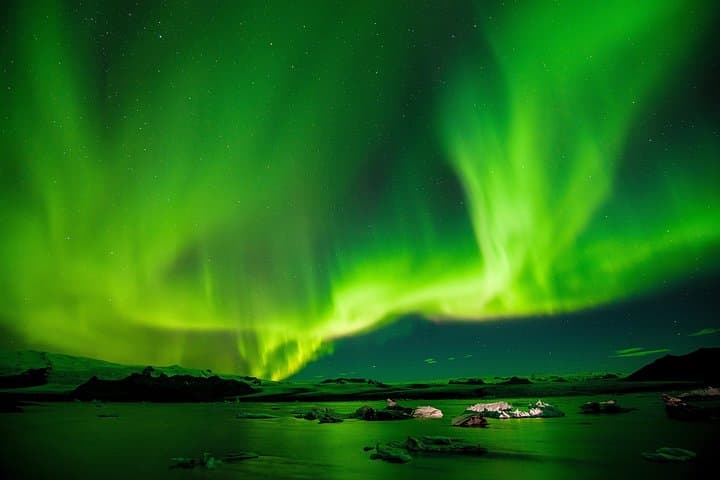
Cultural notes thread through the route: Friðheimar’s greenhouse restaurant that turns geothermal heat into tomato farms, and the Secret Lagoon — a simple, century-old pool fed by hot springs — offer everyday Icelandic uses of steam and soil. In winter, guides may swap a lagoon cruise for a blue ice cave trip and, if skies oblige, hunt the aurora between hotel stops.
Practical guidance is straightforward. Pack waterproof outer layers and robust footwear—especially if you want to skirt waterfalls or walk on beaches. Expect constant microclimates; a sunny stretch can flip to sleet within minutes, and wind does more than inconvenience here. The tour removes driving logistics: hotel pick-up in Reykjavík, private guiding, and two country-hotel nights provide a buffer for late-night aurora hunting.
For photographers, bring lens cloths and a sturdy tripod—spray and low light are inevitable. For conservation-minded travelers, stick to marked paths, carry out waste, and resist collecting ice or sand. This is a curated, pace-managed way to see Iceland’s south coast: dramatic scenery, practical support, and a rhythm that leaves time to watch the landscape do its slow, relentless work.
moderate.
3 days (approx. 72 hours of tour time).
Moderate fitness—able to walk short distances on uneven, wet terrain and manage stairs or short scrambles at viewpoints.
Yes—this private tour includes hotel pick-up in the Reykjavik area and transportation between sites over three days.
Northern lights are seasonally visible (roughly Sep–Mar) but sighting depends on clear skies and solar activity; the tour offers nights in rural hotels positioned for aurora viewing.
Accommodation in comfortable country hotels for two nights is included; specifics depend on the booking and season.
Glacier lagoon sailing is a highlight but seasons and options vary; confirm with the operator whether the zodiac/boat excursion is included or available as an upgrade.
The tour requires moderate mobility; some short walks, stairs, and uneven terrain are part of key stops, so it’s not recommended for those with severe mobility constraints.
Bring swimwear and a towel; some hotels or stops may provide towel service but it’s best to have your own quick-dry towel and a plastic bag for wet items.
Þingvellir was the legal and cultural heart of early Icelandic governance — the Alþingi met there from 930 AD, making it one of the oldest parliamentary sites still recognized today.
Iceland’s fragile moss and volcanic soils recover slowly; follow marked trails, avoid stepping on vegetation, and carry out all waste to limit human impact.
Iceland Settlement Tours operates guided outdoor trips and adventures with an emphasis on safety, stewardship, and memorable experiences.
You step out of the van and the air is all edges — cold, sharp, and tasting faintly of volcanic glass. On day one the landscape rearranges itself around you: moss-dark lava fields give way to the rift valley of Þingvellir, where the North American and Eurasian plates pull the earth apart in slow, visible seams. By day three you are watching blue ice calve off a glacier into a lagoon where bergs drift like oversized, deliberate jewelry toward the sea.
You step out of the van and the air is all edges — cold, sharp, and tasting faintly of volcanic glass. On day one the landscape rearranges itself around you: moss-dark lava fields give way to the rift valley of Þingvellir, where the North American and Eurasian plates pull the earth apart in slow, visible seams. By day three you are watching blue ice calve off a glacier into a lagoon where bergs drift like oversized, deliberate jewelry toward the sea.
This private, three-day loop from Reykjavík stitches together Iceland’s headline attractions and a few quieter chapters. The Golden Circle lays down myths and geology — Þingvellir’s open fissures and Alþingi site, where Norse settlers founded one of the world’s oldest parliaments in 930 AD; Geysir’s geothermal theater where Strokkur erupts on cue; and Gullfoss, a two-tiered waterfall that drops about 32 meters into a churning canyon, once nearly sacrificed to hydroelectric schemes.
The south coast shifts tone: Eyjafjallajökull and its neighboring ice caps feed Seljalandsfoss and Skógafoss, waterfalls that demand different kinds of attention — one you can walk behind, the other that throws spray like confetti. The black-sand shore at Vík watches the Atlantic batter basalt towers called Reynisdrangar. On the tour’s final act, Jökulsárlón glacier lagoon spills out from Breiðamerkurjökull; icebergs, some ancient and impossibly blue, drift with glacier patience toward Diamond Beach where they flash and melt on black sand.
Cultural notes thread through the route: Friðheimar’s greenhouse restaurant that turns geothermal heat into tomato farms, and the Secret Lagoon — a simple, century-old pool fed by hot springs — offer everyday Icelandic uses of steam and soil. In winter, guides may swap a lagoon cruise for a blue ice cave trip and, if skies oblige, hunt the aurora between hotel stops.
Practical guidance is straightforward. Pack waterproof outer layers and robust footwear—especially if you want to skirt waterfalls or walk on beaches. Expect constant microclimates; a sunny stretch can flip to sleet within minutes, and wind does more than inconvenience here. The tour removes driving logistics: hotel pick-up in Reykjavík, private guiding, and two country-hotel nights provide a buffer for late-night aurora hunting.
For photographers, bring lens cloths and a sturdy tripod—spray and low light are inevitable. For conservation-minded travelers, stick to marked paths, carry out waste, and resist collecting ice or sand. This is a curated, pace-managed way to see Iceland’s south coast: dramatic scenery, practical support, and a rhythm that leaves time to watch the landscape do its slow, relentless work.