THE ADVENTURE COLLECTIVE® · Independent discovery and booking for outdoor travel

Drive over snow-topped Atlas passes, cross Kasbah-lined valleys and end on the rust-red ridges of Erg Chebbi. This private 3-day circuit from Marrakech combines culture, geology and a night under the desert sky.
Drive over snow-topped Atlas passes, cross Kasbah-lined valleys and end on the rust-red ridges of Erg Chebbi. This private 3-day circuit from Marrakech combines culture, geology and a night under the desert sky.
A wind-sanded ridge of Erg Chebbi rises into view as the sun lowers, and the long road from Marrakech unwinds behind you — a mixture of High Atlas switchbacks, ochre kasbahs and sudden palms. By late afternoon a caravan waits; camels shift and the dunes dare you to climb them before nightfall.
Verified experiences and guided adventures in the surrounding area.
Operated by Morocco Excursion Tours · Merzouga, Drâa-Tafilalet
A wind-sanded ridge of Erg Chebbi rises into view as the sun lowers, and the long road from Marrakech unwinds behind you — a mixture of High Atlas switchbacks, ochre kasbahs and sudden palms. By late afternoon a caravan waits; camels shift and the dunes dare you to climb them before nightfall.
This route threads centuries of trade and empire. The Tizi n’Tichka pass carves through ancient granitic folds; Ait Ben Haddou stands as a mud-brick memory of trans-Saharan caravans and film crews alike. Geologically, the Sahara here is a living boundary: wind-sculpted sand seas backed by limestone canyons and fertile oases watered by episodic wadis.
Local culture is Berber and nomadic — guesthouses, ksours and camp hosts keep age-old hospitality alive with tagine and drumming under clear skies. Small industries such as rose distillation in Kalaa Mgouna and traditional carpet weaving punctuate the valleys between mountain and sand.
Practical guidance: expect long driving days (Marrakech–Merzouga ~9–10 hours total roundtrip with stops), short camel rides over dunes and an overnight in a desert camp with basic but comfortable tents. Daytime temperatures swing; pack sun protection, layers and plenty of water. Wear sturdy shoes for rocky passes and sand gaiters or closed shoes for dune crossings. Sunrise and sunset are the most photogenic and coolest parts of the day; schedule your dune walks accordingly. Finally, respect local customs and the fragile desert — minimize waste and conserve water to keep these landscapes intact for future travelers.
easy.
3 days.
Suitable for most fitness levels — requires ability to mount camels, walk short distances on sand and endure long vehicle transfers.
Expect long transfers: roughly 9–10 hours roundtrip between Marrakech and Merzouga with scenic stops; time on the road is split across three days.
Camel rides are short and gentle; most travelers find them manageable but mounting can be awkward — inform guides if you need assistance.
Camps are traditional-style tents with basic beds, shared or private wash facilities depending on booking; meals are typically Moroccan tagines around a campfire.
Yes — the itinerary is rated easy and private transport allows flexible pacing, but consider mobility for dune climbs and long vehicle rides.
The corridor between Marrakech and Merzouga preserves trade routes and fortified ksours where Berber communities managed caravans and irrigation for centuries.
The Sahara’s dune fields and oasis ecosystems are fragile; limit campfire impact, pack out waste and minimize water use to protect local resources.
Morocco Excursion Tours operates guided outdoor trips and adventures with an emphasis on safety, stewardship, and memorable experiences.
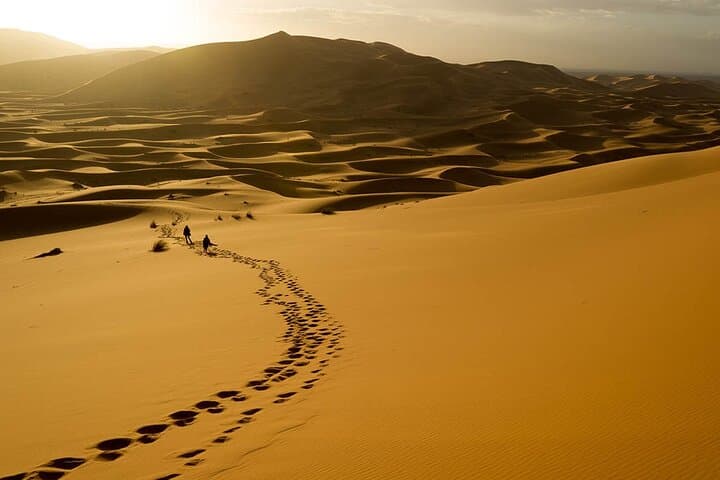
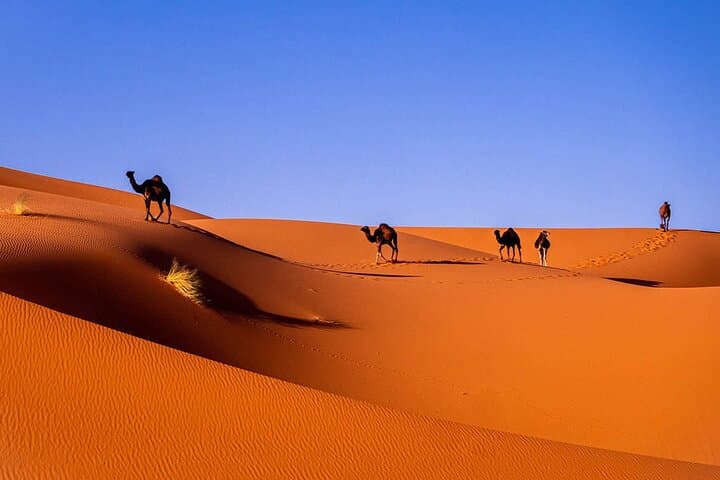
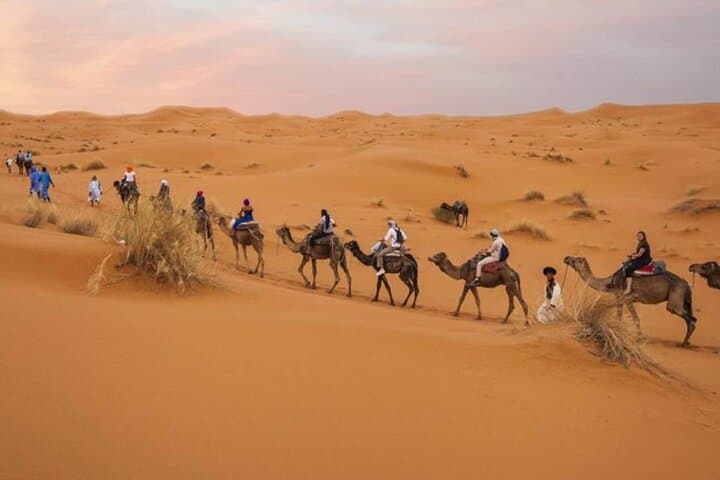
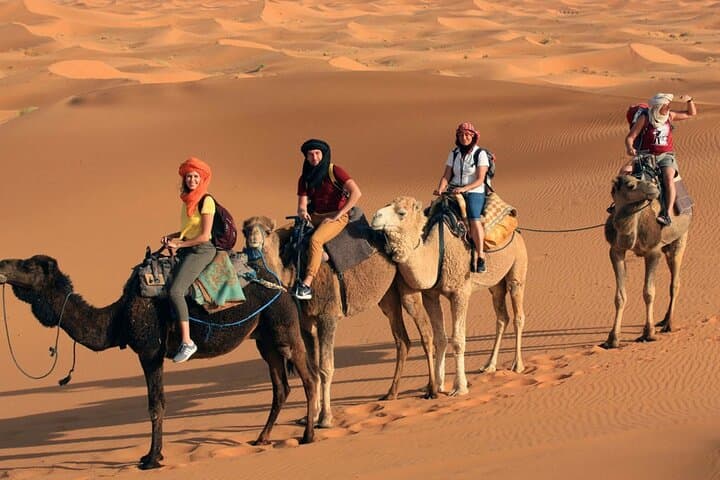
A wind-sanded ridge of Erg Chebbi rises into view as the sun lowers, and the long road from Marrakech unwinds behind you — a mixture of High Atlas switchbacks, ochre kasbahs and sudden palms. By late afternoon a caravan waits; camels shift and the dunes dare you to climb them before nightfall.
A wind-sanded ridge of Erg Chebbi rises into view as the sun lowers, and the long road from Marrakech unwinds behind you — a mixture of High Atlas switchbacks, ochre kasbahs and sudden palms. By late afternoon a caravan waits; camels shift and the dunes dare you to climb them before nightfall.
This route threads centuries of trade and empire. The Tizi n’Tichka pass carves through ancient granitic folds; Ait Ben Haddou stands as a mud-brick memory of trans-Saharan caravans and film crews alike. Geologically, the Sahara here is a living boundary: wind-sculpted sand seas backed by limestone canyons and fertile oases watered by episodic wadis.
Local culture is Berber and nomadic — guesthouses, ksours and camp hosts keep age-old hospitality alive with tagine and drumming under clear skies. Small industries such as rose distillation in Kalaa Mgouna and traditional carpet weaving punctuate the valleys between mountain and sand.
Practical guidance: expect long driving days (Marrakech–Merzouga ~9–10 hours total roundtrip with stops), short camel rides over dunes and an overnight in a desert camp with basic but comfortable tents. Daytime temperatures swing; pack sun protection, layers and plenty of water. Wear sturdy shoes for rocky passes and sand gaiters or closed shoes for dune crossings. Sunrise and sunset are the most photogenic and coolest parts of the day; schedule your dune walks accordingly. Finally, respect local customs and the fragile desert — minimize waste and conserve water to keep these landscapes intact for future travelers.